In the world of industrial automation and smart devices, proximity sensors play a crucial, often unseen role. A proximity sensor is a non-contact device that detects the presence or absence of an object within its sensing range. The term "universal" in this context doesn't refer to a single sensor that works for every single application, but rather to the fundamental principles, common output types, and standardized form factors that make these sensors widely applicable and interchangeable across countless scenarios. Their ability to operate without physical contact makes them exceptionally reliable, durable, and maintenance-free.
The core technology behind proximity sensors varies, leading to distinct types suited for different materials and environments. Inductive proximity sensors are perhaps the most common "universal" type for metallic object detection. They generate an electromagnetic field and detect eddy current losses caused by a metal target. These are workhorses in factories, used for counting metal parts, detecting piston position in cylinders, or as limit switches in machinery. Capacitive proximity sensors, on the other hand, can detect both metallic and non-metallic materials like liquids, plastics, wood, or granules. They sense changes in capacitance caused by the presence of any material that alters the dielectric constant of the field. This makes them universal for level detection in tanks, material handling, and even touch-sensitive interfaces.
Photoelectric sensors, while sometimes categorized separately, are a key part of the proximity family. They use a light beam (visible red, infrared, or laser) to detect objects. Their universal appeal lies in their long sensing ranges and ability to detect virtually any material. The through-beam, retro-reflective, and diffuse reflective modes offer solutions for packaging, material handling, and safety curtains. Ultrasonic sensors complete the major categories, using sound waves to detect objects and measure distance, excellent for challenging environments with dust, smoke, or varying colors.
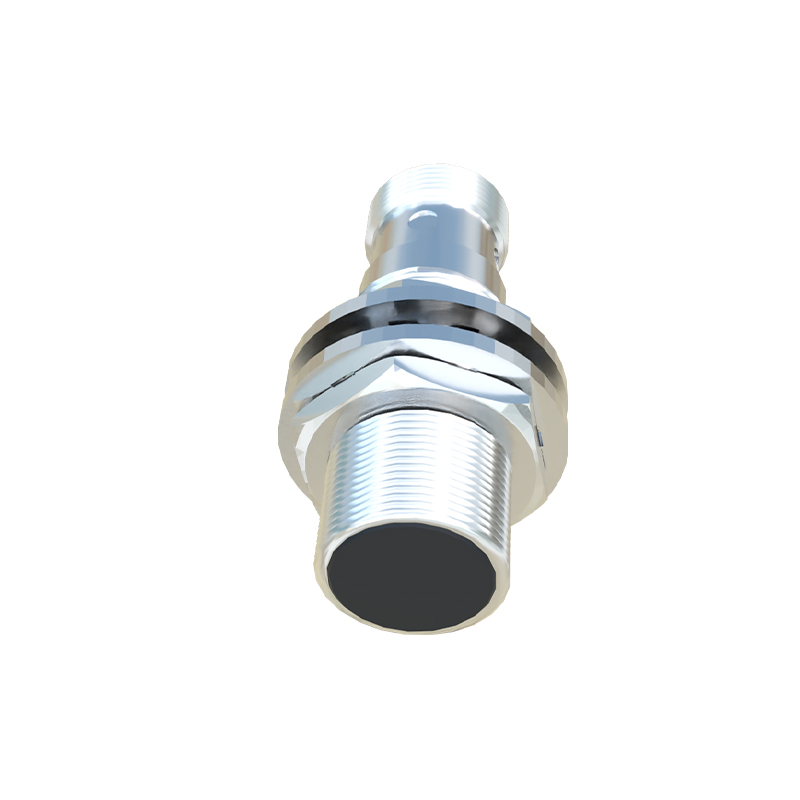
Despite their technological differences, what grants these sensors a degree of universality is their standardized electrical output and mounting. Most modern proximity sensors provide a digital switch output, typically in the form of a PNP (sourcing) or NPN (sinking) transistor. This 3-wire DC configuration (brown for +V, blue for 0V, black for signal) has become a near-universal standard, simplifying wiring and integration with Programmable Logic Controllers (PLCs) and other control systems. Analog outputs (4-20 mA or 0-10V) are also common for applications requiring distance or level proportioning. Furthermore, standardized housing shapes like cylindrical barrels (e.g., M8, M12, M18, M30 threaded barrels) and rectangular blocks allow for easy replacement and mounting in standard fixtures.
Selecting the right "universal" proximity sensor requires careful consideration of several factors. First, identify the target material: metal, non-metal, liquid, or transparent object. This immediately narrows the choice to inductive, capacitive, or photoelectric types. Next, consider the required sensing distance. Inductive sensors have shorter ranges relative to their size, while photoelectric and ultrasonic sensors offer longer ranges. The operating environment is critical; sensors may need to withstand extreme temperatures, washdowns (IP67/IP69K ratings), or resist chemicals and welding spatter. Electrical characteristics like supply voltage (commonly 10-30V DC) and output current capacity must match the control system. Finally, physical constraints such as mounting space and required housing style (shielded or unshielded for inductive sensors) will determine the final form factor.
In application, these sensors are truly ubiquitous. On an automated assembly line, an inductive sensor verifies a metal component is present before a robot welds it. A capacitive sensor in a food processing plant monitors the level of powder in a silo. Photoelectric sensors count bottles on a filling line, regardless of their color or label. Ultrasonic sensors guide autonomous mobile robots in warehouses. The universality lies in their collective ability to provide a simple, reliable "yes" or "no" signal about the physical world, which is the fundamental language of automation.
For maintenance and troubleshooting, understanding universal principles is key. Common issues include incorrect sensor type for the material, sensing distance set too close or too far, electrical overload, or environmental damage. Always refer to the sensor's datasheet for its nominal sensing distance (Sn) and ensure the target is within 80-100% of that range for reliable operation. Checking voltage supply and load connections with a multimeter is a standard first step in diagnosis.
In conclusion, the concept of a universal proximity sensor is best understood as a toolkit of standardized, versatile, and interoperable sensing solutions. By mastering the basic types—inductive, capacitive, photoelectric, and ultrasonic—and their common electrical and mechanical interfaces, engineers and technicians can select and deploy the right sensor for an enormous array of tasks. This interoperability