In the realm of modern industrial automation and high-precision measurement, a technology has steadily risen to prominence, offering unparalleled accuracy and reliability: the lens laser sensor. This sophisticated device represents a convergence of advanced optics, laser technology, and intelligent electronics, creating a powerful tool for non-contact detection, positioning, and quality control across countless applications.
At its core, a lens laser sensor operates by emitting a focused beam of laser light through a precisely engineered optical lens system. This lens assembly is crucial—it shapes and concentrates the laser into a sharp, consistent spot or a thin, defined line. When this projected light strikes a target object, it is reflected back. A receiving lens within the sensor then collects this reflected light and directs it onto a highly sensitive photodetector, such as a CCD (Charge-Coupled Device) or a PSD (Position Sensitive Detector). The sensor's internal processor analyzes the characteristics of the received light, particularly the position where the beam strikes the detector. By applying triangulation principles, the sensor can calculate the exact distance to the target with micron-level precision. This fundamental principle of laser triangulation, enhanced by specialized lenses, is what grants these sensors their remarkable capabilities.
The advantages of using lens laser sensors are transformative. Their non-contact nature means they can measure delicate, hot, moving, or otherwise inaccessible surfaces without causing any wear or damage. The focused laser spot allows for extremely high resolution, enabling the detection of minute height variations, edge positions, or surface defects invisible to the human eye. Furthermore, their response time is exceptionally fast, often in the microsecond range, making them ideal for high-speed production lines where real-time feedback is critical. Unlike simple photoelectric sensors that provide a basic on/off signal, lens laser sensors deliver precise analog or digital measurement values, offering rich data for process control and analysis.
The applications of these sensors are vast and varied, spanning numerous industries. In electronics manufacturing, they are indispensable for measuring component coplanarity, solder paste height on PCBs, and the precise positioning of microchips. The automotive sector relies on them for gap and flush measurement between body panels, brake disc thickness inspection, and robot guidance during assembly. In packaging and logistics, they ensure correct fill levels in bottles, check label placement, and measure box dimensions for automated sorting. Even in fields like pharmaceuticals and food production, they verify tablet thickness, monitor coating uniformity, and inspect seal integrity—all without any physical contact that could contaminate the product.
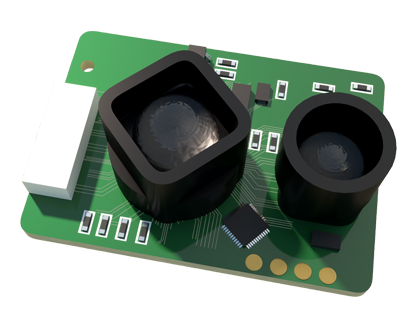
Selecting the right lens laser sensor requires careful consideration of several key parameters. The measuring range defines the minimum and maximum distances over which the sensor can operate accurately. Resolution indicates the smallest change in distance the sensor can detect. The spot size, determined by the lens and laser wavelength, affects the measurement's precision and suitability for small features. Linearity specifies the accuracy of the measurement across the entire working range. Environmental factors are also paramount; sensors designed for harsh industrial environments often feature robust housings, protective coatings on the lenses, and insensitivity to ambient light interference. Modern sensors come with intelligent features like digital interfaces (IO-Link, Ethernet), programmable logic, and advanced filtering algorithms to handle challenging surfaces like glass or shiny metals.
Looking ahead, the evolution of lens laser sensor technology continues unabated. Integration with AI and machine vision systems is creating smarter sensors capable of complex pattern recognition and adaptive decision-making. Miniaturization is pushing the boundaries, allowing these precise measurement tools to be embedded into increasingly compact devices and robotic end-effectors. Furthermore, the development of blue laser sensors has improved performance on organic materials and transparent objects, which traditionally posed challenges for standard red lasers. As Industry 4.0 and the Internet of Things (IoT) mature, lens laser sensors are becoming vital data nodes, feeding precise measurement data into digital twins and predictive maintenance systems, driving efficiency and quality to unprecedented levels.
In conclusion, the lens laser sensor is far more than a simple detection device. It is a cornerstone of precision engineering, a silent enabler of automation, and a critical component in the quest for manufacturing excellence. By harnessing the power of focused light, it provides the eyes for machines, transforming intangible optical signals into actionable, high-fidelity data that shapes the quality and efficiency of the modern industrial world.