In the world of modern electronics, there exists a silent, unseen workforce that makes our interactions with technology seamless and intuitive. These are proximity sensors, the unassuming components that detect the presence or absence of nearby objects without any physical contact. From the moment you lift your smartphone to your ear during a call to the instant you approach an automatic door, these sensors are quietly at work, bridging the gap between human intention and machine response.
At its core, a proximity sensor operates by emitting an electromagnetic field or a beam of radiation, such as infrared light, and then looking for changes in the field or the return signal. The object being detected is often referred to as the sensor's target. Different sensor technologies are employed based on the required detection range, target material, environmental conditions, and cost considerations. The most common types include inductive, capacitive, photoelectric, and ultrasonic sensors.
Inductive proximity sensors are stalwarts in industrial automation. They generate an oscillating electromagnetic field and detect the eddy current losses caused when a metallic target enters this field. Rugged, reliable, and unaffected by dust or oil, they are perfect for counting metal parts on a conveyor belt or ensuring a robotic arm is in the correct position. Their limitation is clear: they only detect metals.
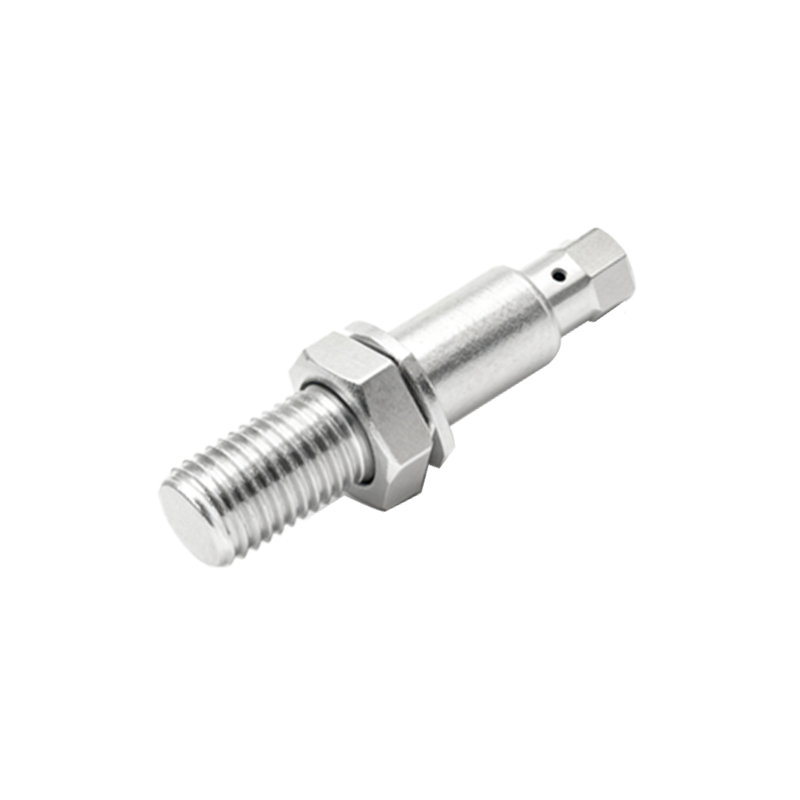
For non-metallic targets, capacitive proximity sensors step in. These sensors can detect almost any material—plastics, wood, liquids, and even granular substances—by measuring changes in capacitance. When a target object enters the electrostatic field generated by the sensor, it alters the capacitance, triggering detection. This makes them invaluable in industries like food and beverage for liquid level detection or in consumer devices like touch-sensitive faucets.
Perhaps the most familiar to the average user are the photoelectric sensors, often using infrared (IR) light. An IR LED emits a beam of light, and a photodetector looks for its reflection. When an object interrupts or reflects this beam back to the sensor, it is detected. This is the technology that turns off your smartphone's display during a call to save power and prevent accidental touches. It's also the principle behind many automatic hand dryers and paper towel dispensers.
Ultrasonic sensors use sound waves beyond human hearing. They measure the time it takes for an emitted sound pulse to bounce back from a target. Excellent for longer ranges and unaffected by color or transparency (unlike optical sensors), they are used in automotive parking assist systems, tank level monitoring, and even in some robots for obstacle avoidance.
The applications of proximity sensing are vast and growing. In the automotive sector, they are critical for parking assistance, blind-spot detection, and gesture control for infotainment systems. In consumer electronics, they enable features like automatic screen wake-up on laptops when a user approaches and "Air Gestures" on some smartphones. Industrial and manufacturing environments rely on them for precise positioning, object counting, and safety interlocks on machinery to protect workers.
When selecting a proximity sensor, engineers must consider several key parameters. Sensing range, or the maximum distance at which the sensor can reliably detect a standard target, is primary. Repeatability, the sensor's ability to consistently detect a target at the same distance, is crucial for precision applications. Response time determines how quickly the sensor can react to a target's presence or absence. Environmental factors like temperature extremes, humidity, and exposure to chemicals can also dictate the choice of housing and technology.
The future of proximity sensing is intertwined with the Internet of Things (IoT) and smarter automation. Sensors are becoming smaller, more energy-efficient, and more intelligent. Some now incorporate microprocessors for onboard logic, allowing for more complex decision-making at the edge of the network. Furthermore, sensor fusion—combining data from proximity sensors with cameras, accelerometers, and other inputs—is enabling more sophisticated context-aware systems. Imagine a smart home that not only turns on the lights when you enter a room but also adjusts the lighting based on how close you are to a specific task area.
From the factory floor to the palm of your hand, proximity sensors form a fundamental layer of the interactive world. They perform a simple task—detecting presence—but this simplicity unlocks profound capabilities in efficiency, safety, and user experience. As technology continues to evolve towards more natural and invisible interfaces, the humble proximity sensor will undoubtedly remain a key enabler, silently sensing our world and making it more responsive to our needs.