In the realm of automation, consumer electronics, and industrial safety, proximity sensors operate as silent, unseen sentinels. Their primary function is deceptively simple: to detect the presence or absence of an object within a specified range without any physical contact. While the end-user experience is one of seamless interaction—a smartphone screen turning off when held to the ear, an automatic door sliding open, or a machine halting before a collision—the underlying technology enabling these feats is a sophisticated interplay of physics, materials science, and electronic engineering. This exploration delves into the fundamental principles that form the bedrock of common proximity sensor technologies.
At its core, every proximity sensor is a transducer. It converts one form of energy or stimulus related to the presence of a target into an electrical signal. The choice of underlying technology dictates the sensor's capabilities, limitations, and ideal applications. The most prevalent types are inductive, capacitive, photoelectric, and ultrasonic sensors.
Inductive proximity sensors are the workhorses of industrial metal detection. Their operation is rooted in electromagnetic induction. The sensor's face contains a coil wound around a ferrite core, which is part of an oscillator circuit. When an alternating current flows through this coil, it generates an oscillating electromagnetic field. When a conductive metal object enters this field, eddy currents are induced on the object's surface. These eddy currents draw energy from the sensor's oscillator, causing a measurable change in its amplitude or frequency. This change is detected by a threshold circuit, which subsequently triggers a solid-state switch to change its output state. Crucially, inductive sensors are largely insensitive to non-metallic materials, making them robust in dirty environments.
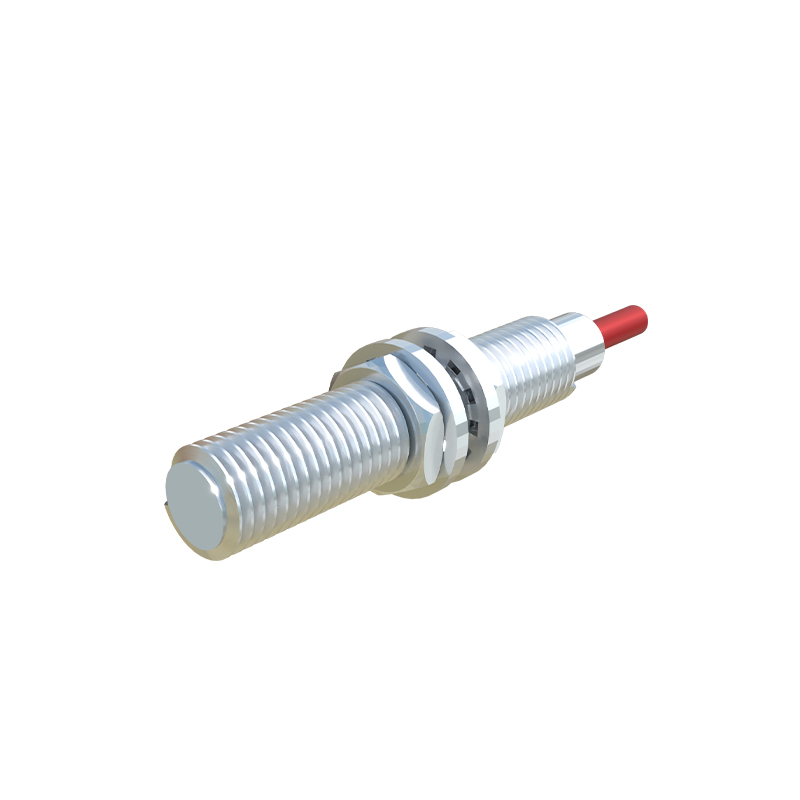
Capacitive sensors, in contrast, can detect both metallic and non-metallic materials, including liquids, plastics, wood, and granular substances. They function based on the principle of capacitance—the ability of a system to store an electrical charge. The sensor's active surface acts as one plate of a capacitor, with the target object acting as the other plate, and the intervening space as the dielectric. As a target approaches, the capacitance of the system increases. The sensor's internal circuitry is tuned to oscillate at a specific frequency related to this capacitance. The presence of the target alters this frequency or the charge/discharge time, which is then converted into a digital output signal. Their sensitivity can often be adjusted, allowing them to "see through" certain non-conductive containers to detect material levels inside.
Photoelectric sensors rely on light, typically in the infrared, visible, or laser spectrum. They consist of an emitter (light source) and a receiver (phototransistor or photodiode). The underlying detection modes are diverse. In a through-beam system, the emitter and receiver are separate units; detection occurs when the target interrupts the light beam. A retro-reflective system uses a single unit and a reflector, detecting the target when it breaks the reflected beam. The most common for proximity detection is the diffuse or reflective mode, where the sensor houses both emitter and receiver. It detects light reflected directly off the target itself. The receiver triggers an output when the reflected light intensity surpasses a set threshold. Advanced versions use modulated LED light and synchronous detection to filter out ambient light interference, ensuring reliability.
Ultrasonic sensors operate on a principle akin to sonar. They emit high-frequency sound waves (typically 40-200 kHz) beyond the range of human hearing and then listen for the echo. A piezoelectric transducer generates the ultrasonic pulse and later acts as the receiver for the reflected wave. An internal timer measures the time interval between the emitted pulse and the received echo. Since the speed of sound in air is known, the sensor's control circuitry can calculate the distance to the target with high accuracy. This time-of-flight measurement makes them excellent for precise distance ranging and level detection, largely unaffected by the target's color, transparency, or material, though they can be influenced by air turbulence, temperature, and the object's sound-absorbing properties.
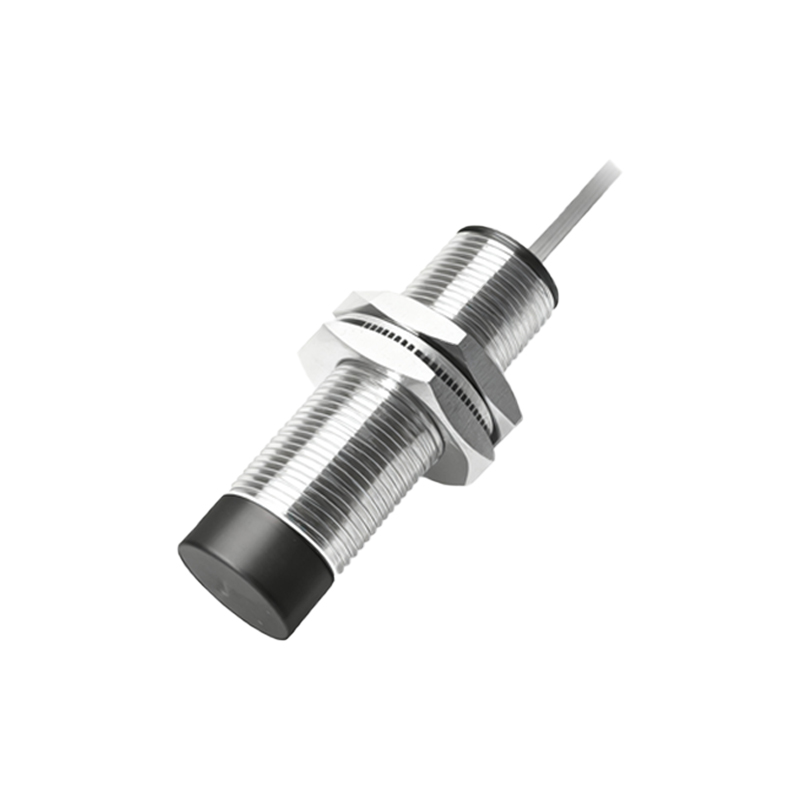
Beneath these distinct physical principles lies a common electronic architecture: the sensing element, signal conditioning circuitry, and output stage. The raw signal from the sensing element (change in oscillation, capacitance, light intensity, or sound echo) is weak and noisy. Signal conditioning involves amplification, filtering (to remove electrical noise), and conversion into a stable, clean DC voltage or digital signal. Finally, the output stage, often a solid-state NPN/PNP transistor or an analog voltage/current output, interfaces with the broader control system like a PLC or microcontroller.
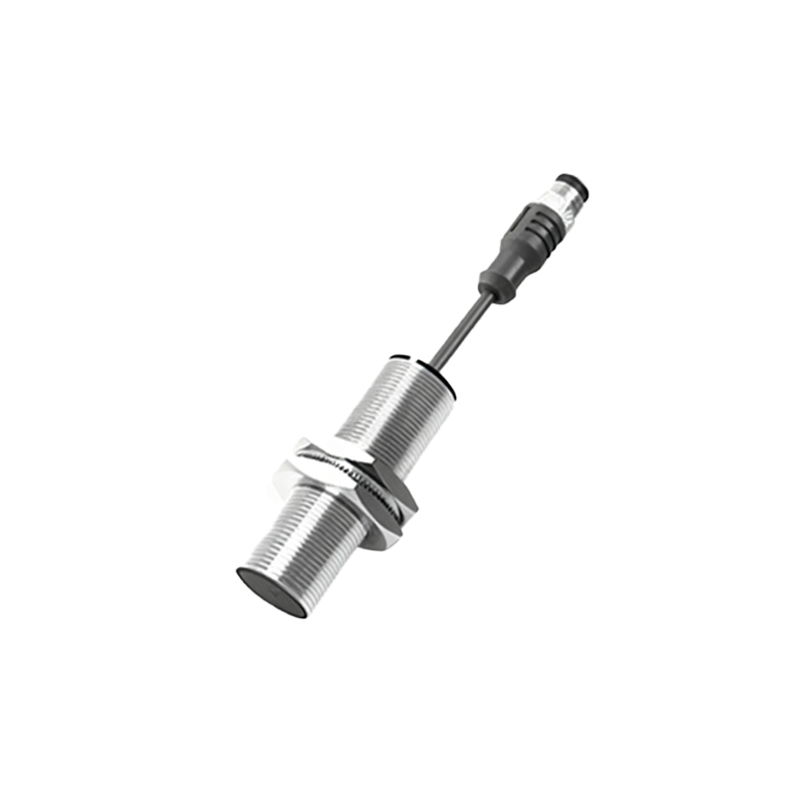
Understanding these fundamentals is crucial for proper sensor selection. Factors such as sensing range, target material, environmental conditions (dust, moisture, temperature), required response speed, and output type all stem from the chosen underlying technology. For instance, an inductive sensor is ideal for counting metal gears on a