In today's fast-paced technological landscape, the demand for smaller, more efficient, and highly accurate sensing solutions has never been greater. Enter the laser sensor mini—a compact powerhouse that is revolutionizing how industries measure, detect, and control processes with unparalleled precision. These miniature devices leverage focused laser beams to perform non-contact measurements, making them ideal for applications where space is limited, environmental conditions are challenging, or delicate materials are involved.
The core principle behind a mini laser sensor is triangulation. The sensor emits a concentrated laser dot onto a target surface. The reflected light is then captured by a receiver, typically a CMOS or CCD array. By calculating the angle of the reflected beam, the sensor's internal processor can determine the exact distance to the target with micron-level accuracy. This method allows for incredibly precise measurements of distance, displacement, thickness, and even surface profile, all without physically touching the object.
One of the most significant advantages of the laser sensor mini is its form factor. Traditional laser sensors can be bulky, limiting their integration into tight spaces on production lines or within complex machinery. Miniaturized versions, often no larger than a matchbox, can be mounted in previously inaccessible locations. This opens up new possibilities for inline inspection in electronics manufacturing, where they verify component placement on circuit boards, or in precision assembly, ensuring tiny parts are correctly positioned. Their small size also contributes to reduced weight and lower power consumption, aligning with the trend toward more energy-efficient and portable industrial equipment.
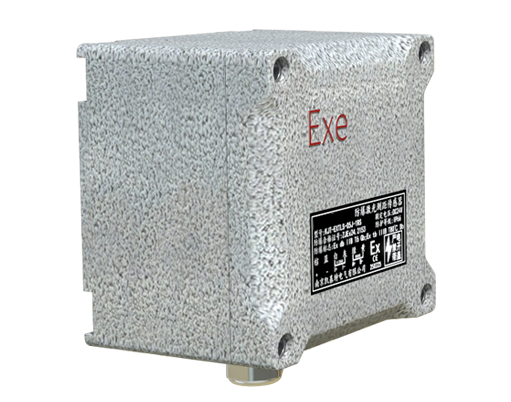
Beyond size, these sensors excel in performance across diverse environments. Many models are built with robust housings rated IP67 or higher, making them resistant to dust, water, and oil splashes. This durability is crucial for harsh settings like automotive workshops, food and beverage processing plants, or outdoor logistics hubs. Furthermore, advanced mini laser sensors feature high sampling speeds, some capable of taking thousands of measurements per second. This speed is essential for dynamic applications, such as monitoring vibration on high-speed rotating machinery or controlling the fill level of bottles on a fast-moving conveyor belt.
The application spectrum for mini laser sensors is vast and growing. In the realm of robotics and automation, they serve as the "eyes" of collaborative robots (cobots), providing precise guidance for pick-and-place operations and ensuring safe human-robot interaction by detecting proximity. In the consumer electronics industry, they are integral to quality control, checking the flatness of smartphone screens or the precise depth of camera lens housings. Even in emerging fields like micromanufacturing and medical device production, these sensors guarantee that minuscule components meet exacting specifications.
Selecting the right laser sensor mini requires careful consideration of several parameters. Key specifications include measuring range, spot size, resolution, and linearity. For instance, a sensor with a sub-millimeter spot size is necessary for measuring very small features, while a longer measuring range might be needed for larger targets. The type of output—analog (e.g., 4-20 mA, 0-10 V), digital (e.g., RS-232, USB), or industrial bus protocols (e.g., IO-Link, Ethernet/IP)—must also match the existing control system. Modern sensors often come with intuitive software for easy configuration, allowing users to set measurement windows, filtering, and output scaling directly from a computer or smartphone.
Despite their advanced capabilities, users must be aware of certain limitations. Highly reflective, transparent, or absorbent surfaces (like mirrors, glass, or black rubber) can sometimes pose challenges for standard sensors, as they may reflect too much, too little, or scatter the laser beam. However, many manufacturers now offer models with specialized algorithms or adjustable laser power to handle such difficult surfaces effectively. Proper installation is also critical; ensuring the sensor is mounted securely and aligned correctly with the target is fundamental to achieving stated accuracy.
Looking ahead, the future of laser sensor minis is intertwined with trends like Industry 4.0 and the Internet of Things (IoT). Next-generation sensors are becoming smarter, with embedded intelligence for edge computing—processing data locally to provide immediate feedback and reduce network latency. Wireless connectivity options are also emerging, simplifying installation in complex setups. As machine vision and artificial intelligence continue to evolve, the integration of mini laser sensors with AI-driven analysis software will enable even more sophisticated tasks, such as predictive maintenance and adaptive process control.
In conclusion, the laser sensor mini is far more than just a shrunken-down version of its larger predecessors. It represents a focused evolution in sensing technology, delivering high-end performance in a minimal footprint. By enabling precise, reliable, and non-contact measurement in confined and demanding environments, these compact devices are empowering innovation across manufacturing, automation, and beyond. For engineers and system integrators seeking to enhance accuracy and efficiency, the laser sensor mini has become an indispensable tool in the quest for smarter, more responsive industrial systems.