In the intricate world of industrial automation and process control, sensors act as the fundamental sensory organs, providing critical data for efficient and safe operations. Among the vast array of sensing technologies, level sensors and proximity sensors stand out as two pivotal categories, each addressing distinct yet equally vital measurement needs. While their names might sound similar to the uninitiated, their principles, applications, and functionalities are distinctly different. This guide delves into the core concepts of these sensors, exploring their working mechanisms, common types, and typical industrial applications.
Understanding Level Sensors
Level sensors are devices designed to detect, monitor, and measure the level of substances—liquids, solids, or slurries—within a container or vessel. The primary function is to determine the height or volume of the material present. This information is crucial for inventory management, process control, preventing overfills or run-dry conditions, and ensuring safety.
Level sensing technologies are broadly categorized into two types: point level detection and continuous level measurement. Point level sensors provide a simple on/off signal when the material reaches a specific, predetermined point (e.g., high-level alarm or low-level alarm). Continuous level sensors, on the other hand, provide a real-time, proportional output signal corresponding to the entire level range within the vessel.
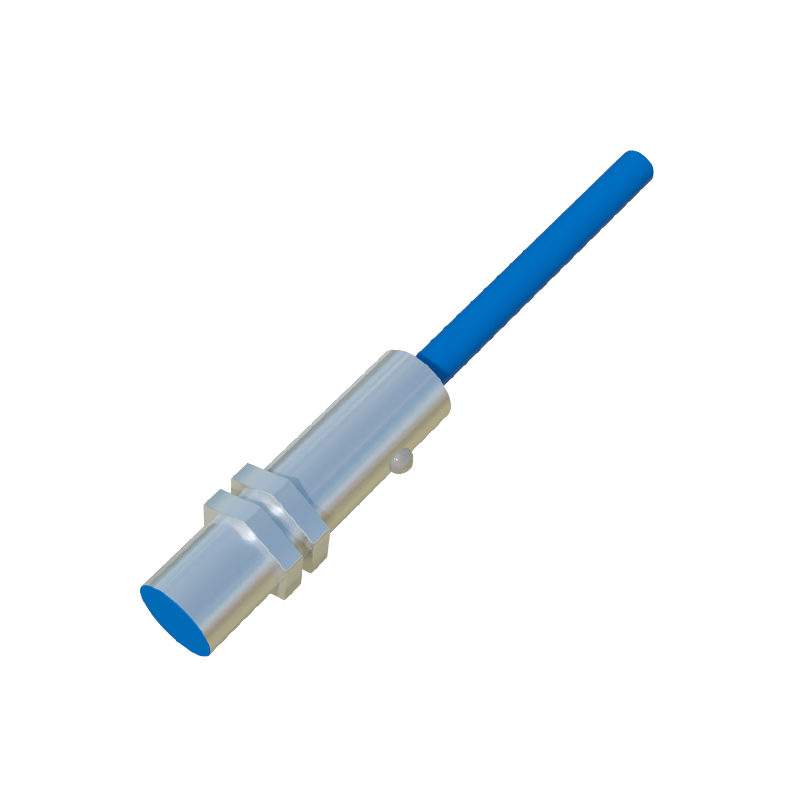
Common types of level sensors include:
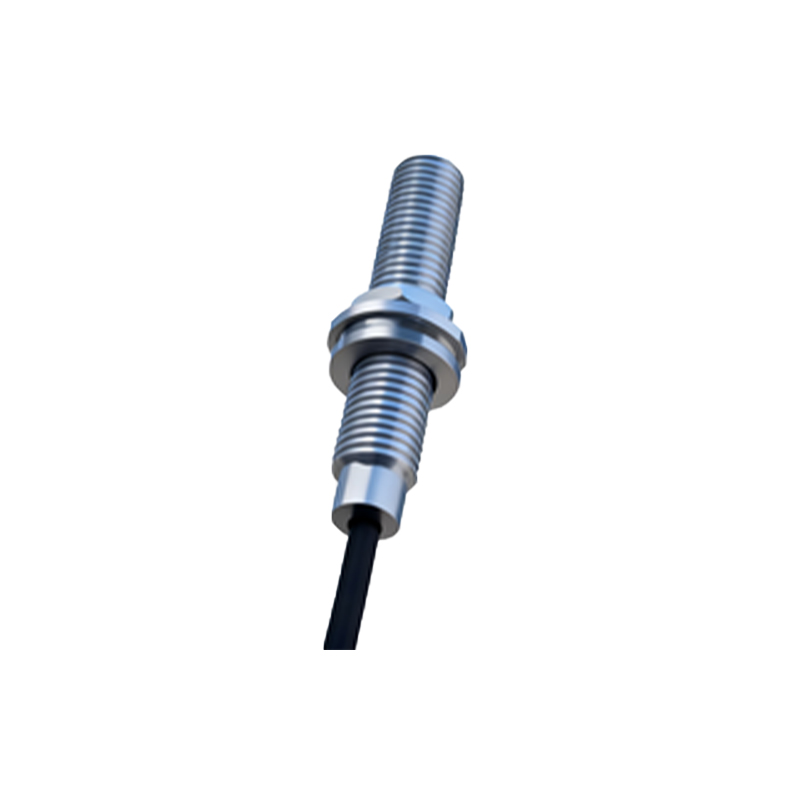
Ultrasonic Level Sensors: These emit high-frequency sound waves towards the material surface. The sensor calculates the level by measuring the time taken for the echo to return. They are non-contact, suitable for a wide range of liquids and solids, and are popular for tank level monitoring.
Radar Level Sensors: Utilizing microwave pulses, radar sensors are highly accurate and reliable, largely unaffected by dust, vapor, or changing process conditions. They are ideal for challenging applications in chemical, food, and power industries.
Capacitive Level Sensors: These detect level changes by measuring the variation in capacitance between the sensor probe and the vessel wall. They can handle both conductive and non-conductive materials and are often used for point level detection in powders and granular solids.
Float Switches: A simple mechanical device where a float moves with the liquid level, actuating a switch at set points. They are cost-effective and widely used for pump control and alarm functions in water tanks and reservoirs.
Hydrostatic Pressure Transmitters: These measure the pressure exerted by the fluid column at the bottom of a tank, which is directly proportional to the level. They are excellent for continuous level measurement of liquids in deep tanks.
Understanding Proximity Sensors
Proximity sensors, in contrast, are non-contact devices designed to detect the presence or absence of an object within a defined sensing range without any physical contact. Their core function is presence detection, not measurement of quantity or height. They are primarily used for object detection, counting, positioning, and limit switching in automated machinery and systems.
Proximity sensors are classified based on their detection principle and the type of target they sense. The most common categories are:
Inductive Proximity Sensors: These detect the presence of metallic objects (ferrous and non-ferrous). They generate an electromagnetic field, and when a metal target enters this field, it causes a change that is detected by the sensor. They are extremely robust, wear-free, and ideal for harsh industrial environments like metal machining and automotive assembly.
Capacitive Proximity Sensors: These can detect both metallic and non-metallic objects (plastics, wood, liquids, granules) by sensing changes in capacitance. They are versatile and used for level detection of non-conductive materials in containers, as well as for detecting filled packages or presence of materials on conveyor belts.
Photoelectric Sensors: These use a light beam (visible, infrared, or laser) to detect objects. The presence of an object interrupts or reflects the beam, triggering the sensor. They offer long sensing ranges and can detect virtually any material. Common types include through-beam, retro-reflective, and diffuse reflective sensors.
Ultrasonic Proximity Sensors: Similar in principle to ultrasonic level sensors but configured for object detection. They measure the time-of-flight of sound waves to determine the presence and sometimes the distance to an object. They are effective for detecting clear objects, uneven surfaces, or in dusty environments where photoelectric sensors may fail.
Key Differences and Application Synergy
The fundamental difference lies in their purpose: level sensors measure how much, while proximity sensors detect if something is there. A level sensor is typically mounted to a tank or silo, focused inward. A proximity sensor is usually mounted on a machine, focused outward to detect passing or positioned objects.
However, their applications can intersect. A capacitive proximity sensor, for instance, can be used as a simple point level