In the realm of industrial automation, precision measurement is paramount. Among the diverse array of sensing technologies, the wide range laser sensor stands out for its versatility, accuracy, and ability to perform in challenging environments. Unlike standard point laser sensors that measure at a single, fixed distance, wide range variants offer a significant measurement field, allowing them to detect objects or measure distances across a broad span without mechanical adjustment. This capability makes them indispensable in dynamic applications where target positions vary.
The core operating principle of most wide range laser sensors is based on optical triangulation. The sensor emits a focused laser beam onto the target surface. The reflected light is then projected onto a position-sensitive detector, such as a CCD or CMOS array. The position of the light spot on this detector shifts depending on the distance to the target. By calculating this shift, the sensor's internal processor precisely determines the distance. Advanced models utilize phase-shift or time-of-flight principles for even longer ranges, but triangulation remains dominant for high-precision, medium-range applications. Key specifications defining a sensor's "width" include the measuring range (the minimum to maximum distance it can handle) and the reference distance (often the midpoint of the range).
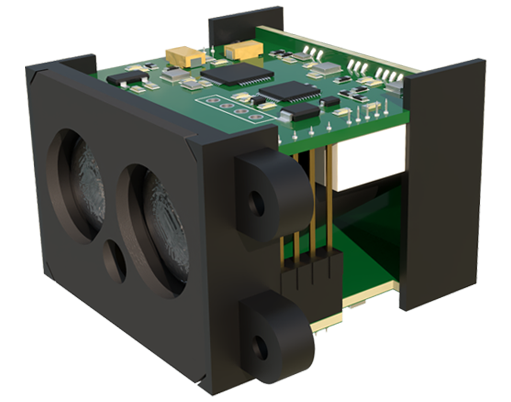
The advantages of deploying wide range laser sensors are substantial. They provide non-contact measurement, eliminating wear and tear and preventing damage to delicate surfaces. Their high sampling speed enables real-time process control in fast-moving production lines. Furthermore, they are largely immune to the color or material of the target object, especially when equipped with automatic exposure control, ensuring stable readings on surfaces from shiny metal to dark, absorbent plastics. This robustness translates directly into reduced setup time and increased production flexibility.
Applications for these sensors are vast and cross-industrial. In automotive manufacturing, they are used for gap and flush measurement between body panels, ensuring perfect alignment. In the electronics industry, they verify component height, coplanarity, and presence on printed circuit boards. Logistics and packaging benefit from their ability to measure box dimensions, check fill levels, and control conveyor belt height. Robotics integrators rely on them for precise bin-picking guidance and collision avoidance, as the wide range allows a robot arm to navigate safely within a large volume. Even in agriculture, they assist in monitoring crop growth and guiding autonomous vehicles.
Selecting the right wide range laser sensor requires careful consideration of several parameters. First, clearly define the required measuring range and resolution. A sensor with a 100-300mm range and 1µm resolution is suited for micron-level inspection, while one with a 0.5-10m range and 1mm resolution is ideal for warehouse logistics. Second, evaluate the environmental conditions: factors like ambient light, dust, steam, or vibration can impact performance, necessitating models with high IP ratings and robust housings. Third, consider the output interface—common options include analog voltage/current, digital IO (NPN/PNP), and serial communication (RS-232, RS-485) or industrial Ethernet protocols like EtherNet/IP or PROFINET for seamless PLC integration. Finally, the spot size matters; a smaller spot allows for more precise measurement of edges or small features, while a larger spot can average over rough surfaces.
Installation and calibration are critical for optimal performance. The sensor should be mounted securely to minimize vibration. It is crucial to ensure the target surface remains within the sensor's declared measuring window and that the laser beam strikes the surface as perpendicularly as possible to avoid cosine error. Most sensors feature teach-in functions, allowing users to easily program measurement thresholds or map the analog output to the desired range by simply positioning the target at the minimum and maximum points.
Looking ahead, the evolution of wide range laser sensors is geared towards smarter, more integrated solutions. Trends include the incorporation of IO-Link for advanced parameterization and diagnostics, the development of multi-point sensors that can profile an object within their field, and the miniaturization of components without sacrificing performance. As Industry 4.0 drives demand for more data and connectivity, these sensors will continue to be pivotal eyes for automated systems, providing the critical dimensional data needed for quality control, process optimization, and intelligent machine operation. Their inherent flexibility ensures they will adapt to meet the ever-changing needs of modern manufacturing and beyond.