In the world of automation and smart technology, devices that detect the presence or absence of objects without physical contact are fundamental. While commonly referred to as proximity sensors, these components are known by several other names in various technical and industrial contexts. Understanding these alternative terms is crucial for engineers, technicians, and procurement specialists to ensure clear communication and accurate specification.
The most prevalent alternative name is the non-contact sensor. This term broadly describes the core functionality of the device: it senses a target without making tactile contact. This category encompasses not only inductive, capacitive, and photoelectric sensors but also ultrasonic sensors. The emphasis here is on the method of detection rather than the specific technology or sensing distance.
In specific applications, particularly in consumer electronics like smartphones and tablets, a proximity sensor is often called a presence sensor. Its primary role in these devices is to detect when a user's face is close to the screen during a call, triggering the screen to turn off to prevent accidental touch inputs and save power. The term "presence" accurately reflects its function of confirming the existence of a nearby object, typically a human body part.
Another technical synonym, especially within industrial automation literature, is proximity switch. This term highlights the device's role as a solid-state switching element. Unlike a mechanical limit switch that requires physical actuation, a proximity switch changes its output state (e.g., from OFF to ON) electronically when a target enters its sensing field. This terminology is deeply entrenched in manufacturing, packaging, and material handling sectors where these sensors control machinery sequences.
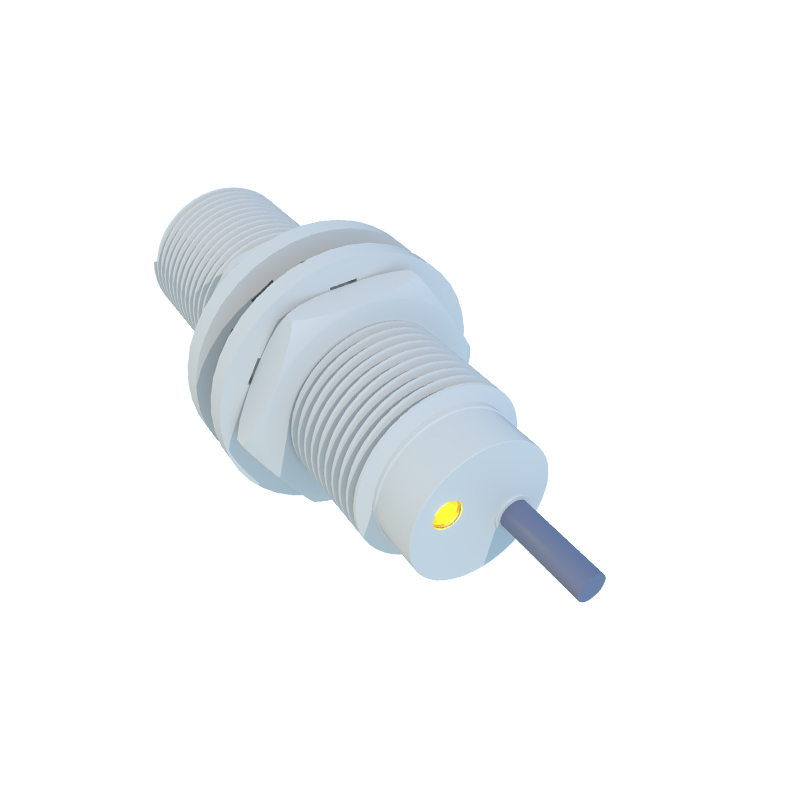
For sensors based on electromagnetic induction, the precise technical name is inductive proximity sensor or simply an inductive sensor. These are specifically designed to detect metallic objects, primarily ferrous metals like iron and steel. In workshops and factory floors, it's common to hear them called metal detectors, although this can cause confusion with devices used for security screening or treasure hunting. Similarly, capacitive proximity sensors are sometimes broadly referred to as level sensors when used to detect the presence of liquids or granular materials in non-metallic containers.
In the realm of optoelectronics, certain types of photoelectric sensors that perform short-range detection are also grouped under the proximity umbrella. These may be called diffuse reflective sensors or photoelectric proximity sensors. They use a beam of light, and the detection occurs when the target is close enough to reflect that beam back to the receiver.
The term distance sensor is occasionally used interchangeably, but this can be a misnomer. True proximity sensors typically provide a binary output: an object is either within a preset detection range or it is not. Devices that provide a continuous analog output or digital reading corresponding to the exact distance to an object are more accurately described as distance measuring sensors or rangefinders, such as ultrasonic rangefinders or laser distance sensors.
Regional and industry-specific jargon also plays a part. In some automotive and aerospace industries, these sensors might be informally called object detection sensors. In safety applications, such as guarding hazardous machine zones, they are integral parts of safety light curtains or area scanners, though these are more complex systems.
The variety in naming stems from the sensor's principle of operation, its specific application, and the industry's historical conventions. Whether you call it a proximity sensor, a non-contact switch, or an inductive pickup, the core purpose remains the same: to provide a reliable, wear-free signal based on the relative closeness of an object. This versatility in function and terminology underscores its indispensable role in enabling the seamless, automated interactions we rely on in modern industrial systems and everyday smart devices.