Laser cylindrical sensors represent a significant advancement in industrial automation and precision measurement technology. Unlike traditional photoelectric sensors, these devices utilize a focused laser beam to create a highly defined cylindrical detection zone. This specific beam shape offers distinct advantages in various challenging applications where pinpoint accuracy and reliability are paramount.
The core operating principle of a laser cylindrical sensor involves the emission of a coherent laser light beam, typically from a Class 1 or Class 2 laser diode, which is optically shaped into a thin, cylindrical column. This beam is projected towards a receiver or, in the case of a reflective model, towards a target. The sensor detects changes within this cylindrical zone, such as the presence, absence, or precise position of an object interrupting the beam. The use of laser light, as opposed to standard LED light, provides exceptional benefits including a very small, consistent spot size even over long distances, minimal beam divergence, and high resistance to ambient light interference. This allows for the detection of extremely small objects or precise edges with micron-level resolution.

The applications for laser cylindrical sensors are vast and critical across modern manufacturing and logistics. One primary use is in precise object detection and counting within automated assembly lines. For instance, they are indispensable in the electronics industry for verifying the presence of miniature components like semiconductor chips or connectors on circuit boards before the soldering process. Their thin beam profile allows them to detect objects in tightly spaced arrays without cross-talk. Another major application is in dimensional gauging and height inspection. By scanning the cylindrical beam across an object, the sensor can determine subtle variations in height, thickness, or diameter, ensuring parts meet stringent quality control specifications. They are also extensively used in web guiding systems for paper, film, and foil processing, where the laser beam detects the precise edge of the material to maintain alignment. Furthermore, in packaging machinery, these sensors reliably detect transparent films, clear bottles, and other low-contrast objects that would challenge conventional sensors.
When selecting a laser cylindrical sensor for a specific task, several key parameters must be carefully evaluated. First, consider the required sensing range and the beam diameter. The sensor must have sufficient range for the application while providing a beam thin enough for the required precision. Second, the response time is crucial for high-speed production lines; faster sensors can detect objects on rapidly moving conveyors. Third, environmental factors cannot be ignored. Sensors are available with robust housings (often IP67 or IP69K rated) to withstand harsh conditions involving dust, moisture, oils, and mechanical vibration. The choice between a through-beam type (separate emitter and receiver) for maximum range and reliability, and a diffuse-reflective type (single unit) for easier installation, is another fundamental decision. Through-beam models offer the highest performance for long-range and small-object detection, while diffuse-reflective models are simpler to set up where mounting space is limited or where installing a receiver opposite the emitter is impractical.
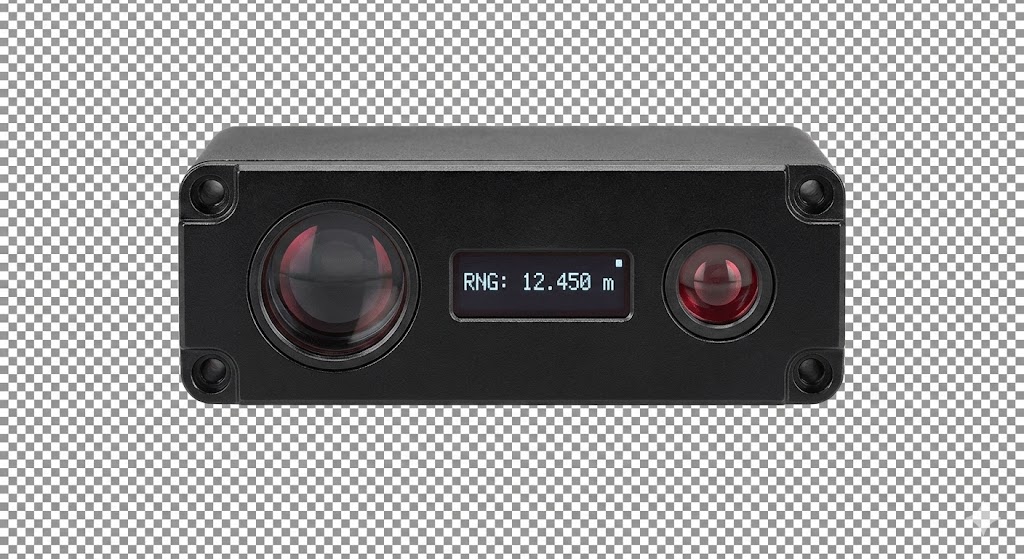
Installation and alignment are critical steps for optimal performance. Precise mechanical mounting fixtures are recommended to ensure the laser beam is positioned correctly. Many modern sensors feature built-in alignment aids like visible red laser beams or precise alignment indicators on a digital display. Proper alignment ensures the target object consistently breaks the beam within its narrow cylindrical profile. Regular maintenance involves keeping the lens clean from dust and debris and verifying the sensor's performance through its monitoring output or diagnostic indicators.
In conclusion, laser cylindrical sensors are powerful tools that bridge the gap between need for high precision and the demands of rugged industrial environments. Their ability to provide a stable, thin-line laser beam enables solutions for detection, measurement, and positioning tasks that are unachievable with other sensing technologies. As automation continues to evolve towards greater precision and flexibility, the role of the laser cylindrical sensor will only become more central, driving efficiency and quality in manufacturing processes worldwide. Understanding their principles, applications, and selection criteria is essential for engineers and technicians aiming to optimize automated systems.
