Proximity sensors are fundamental components in modern automation, robotics, and countless consumer devices. At the heart of their functionality lies a critical parameter: the operating distance, also commonly referred to as the sensing range or nominal sensing distance. This is not merely a theoretical maximum but a practical specification defining the reliable detection zone. Understanding this distance, its influencing factors, and its implications is essential for selecting the right sensor and ensuring robust system performance.
The operating distance is defined as the maximum distance at which a standard target can be reliably detected by the sensor under specified conditions. It is crucial to note that this is typically a nominal value. For inductive sensors, the standard target is a square of mild steel (often Fe360) with a side length equal to the sensor's face diameter or the rated operating distance, whichever is greater. For capacitive sensors, it might be a grounded metal plate. For photoelectric sensors, it is usually a matte white surface of a defined size. Any deviation from this standard target material, size, or orientation will directly affect the actual achievable sensing distance.
Several key factors influence the real-world operating distance. First is the target material. Inductive sensors are designed for metals, but the detection distance varies significantly with the type of metal. For instance, the sensing range for aluminum or copper is substantially less than for mild steel, often requiring a reduction factor (e.g., 0.4 for aluminum). Capacitive sensors react to different materials and dielectric constants, altering their effective range. Second, target size and shape matter. A target smaller than the sensor's active face or presented at an angle will reduce the effective operating distance. The sensor must generate a sufficient field or beam interaction with the target.
Environmental conditions play a major role. Temperature extremes can affect electronic components and oscillation circuits, potentially shrinking the sensing range. For photoelectric and ultrasonic sensors, ambient light, dust, fog, or acoustic noise can interfere with the signal. Inductive and capacitive sensors can be influenced by the presence of other metals or materials in the vicinity, leading to false triggering or shielding effects. Power supply voltage tolerances also have an impact; operating at the lower limit of the voltage range can slightly decrease the sensor's output performance and effective range.
Another vital concept is the hysteresis. This is the difference between the switch-on point (when the target approaches) and the switch-off point (when the target recedes). Hysteresis, typically expressed as a percentage of the operating distance (e.g., 3-10%), is a built-in feature to prevent output oscillation or "chatter" when a target is positioned right at the edge of the sensing range. It ensures clean, stable switching even in the presence of vibration or minor target movement. When designing a system, this hysteresis must be accounted for in positioning tolerances.
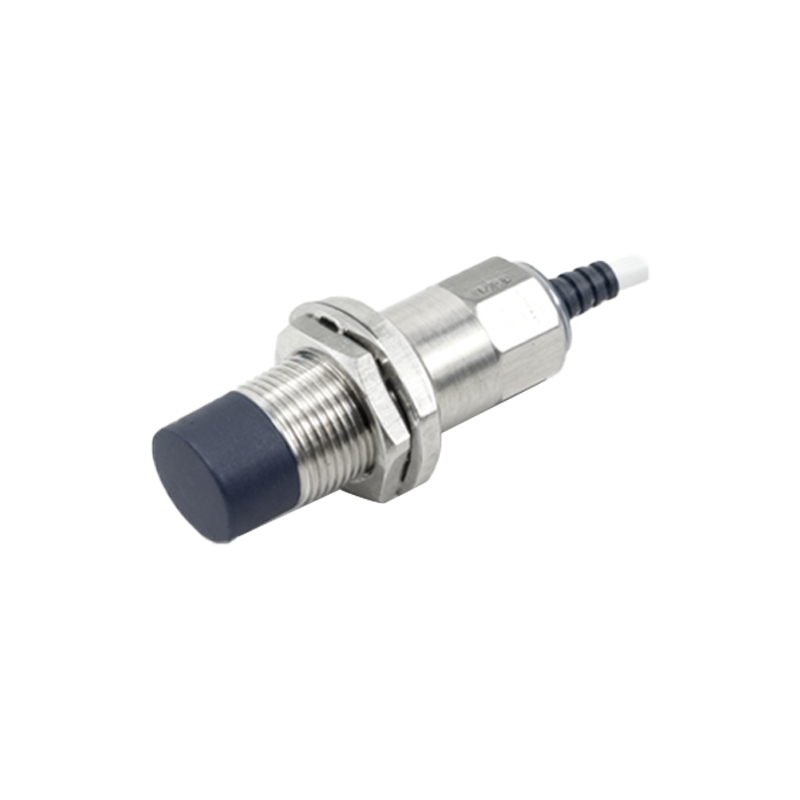
Installation is a practical determinant of operating distance. Embedding a sensor in a metal surround (flush mounting) is standard for inductive types to provide shielding from adjacent metal. However, non-flush mountable sensors offer a longer range but require a clear lateral area to function correctly. The rule of thumb is to maintain a clearance from adjacent metals of at least two to three times the sensor's diameter for non-flush types. Ignoring installation guidelines is a common source of reduced range or malfunction.
Selecting a sensor based solely on the maximum advertised operating distance is a frequent error. Good engineering practice involves applying a safety margin, often derating the nominal distance by 20-30% for reliable operation under varying conditions. This accounts for part tolerances, temperature drift, supply voltage fluctuations, and target variations. For critical applications, testing with the actual target under real environmental conditions is indispensable.
In summary, the proximity sensor operating distance is a foundational specification, but its practical application is nuanced. It is governed by a interplay of target properties, environmental factors, electrical characteristics, and correct installation. A deep understanding of these elements allows engineers to move beyond catalog numbers and build systems that are not only functional but also reliable, repeatable, and resilient in the face of real-world variability. Always consult the manufacturer's detailed datasheets, which provide correction factors, installation drawings, and performance graphs, to make an informed selection for your specific application.