Laser sensors represent a cornerstone technology in modern industrial automation, measurement, and safety systems. This report provides a detailed analysis of their operational principles, diverse applications, and the evolving market landscape. Unlike conventional sensors, laser sensors utilize focused light beams to achieve unparalleled precision in non-contact detection, measurement, and positioning tasks.
The fundamental principle behind laser sensor operation is based on the emission, reflection, and reception of coherent light. A laser diode emits a highly concentrated beam of light towards a target. The interaction of this beam with the target—whether through reflection, interruption, or time-of-flight delay—is then captured by a photodetector within the sensor. The sensor's internal processor analyzes this received signal. Different measurement techniques are employed based on the application. Triangulation is a common method for precise distance and displacement measurement, where the position of the reflected light spot on a receiver changes with the target's distance. Time-of-flight (ToF) sensors calculate distance by measuring the round-trip time for a laser pulse to reflect off an object, making them ideal for longer ranges. Laser contrast sensors excel at detecting marks or differences in surface color and texture by analyzing the intensity of the reflected light.
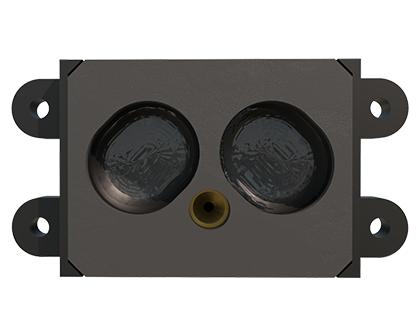
The applications of laser sensors are vast and critical across numerous sectors. In industrial manufacturing, they are indispensable for precise dimensional gauging, part presence verification, edge detection, and thickness measurement on production lines. Their speed and accuracy ensure quality control and process stability. In logistics and warehousing, laser scanners form the core of automated guided vehicles (AGVs) and are used for barcode reading and package dimensioning. The automotive industry relies heavily on laser sensors for robot guidance, weld seam tracking, and advanced driver-assistance systems (ADAS) like LiDAR for object detection. Furthermore, they play vital roles in structural monitoring, agricultural automation, and medical device manufacturing.
A significant trend in laser sensor development is the push towards miniaturization and enhanced intelligence. Modern sensors are becoming smaller, more robust, and increasingly integrated with Industrial Internet of Things (IIoT) capabilities. Features like integrated Ethernet connectivity, IO-Link communication, and cloud-based data analytics are becoming standard. This allows for predictive maintenance, remote monitoring, and seamless integration into smart factory ecosystems. Another key advancement is in safety-rated laser scanners, which create invisible protective fields around hazardous machinery, instantly halting operation if a person or object breaches the zone, thereby ensuring workplace safety.
The global market for laser sensors is experiencing robust growth, driven by the acceleration of Industry 4.0 initiatives and the demand for automation across all industrial domains. Regions with strong manufacturing bases, such as Asia-Pacific, North America, and Europe, are leading in adoption. Key market drivers include the need for higher production efficiency, stringent quality standards, and the reduction of operational costs through automation. However, the market also faces challenges, including the relatively high initial cost of advanced laser sensing systems and the need for specialized technical knowledge for integration and maintenance.
Selecting the appropriate laser sensor requires careful consideration of several parameters. The required measurement range, resolution, accuracy, and response time are primary technical factors. The environmental conditions are equally crucial; sensors must be chosen with suitable ingress protection (IP) ratings to withstand dust, moisture, and temperature variations present in industrial settings. The type of target material, surface color, and reflectivity also significantly impact sensor performance and may necessitate specific models designed for challenging surfaces like shiny metals or dark, absorbent materials.
In conclusion, laser sensors are dynamic and essential components powering automation and precision measurement. Their evolution towards smarter, more connected, and more versatile devices aligns perfectly with the future of digital manufacturing and intelligent systems. As technology progresses, we can anticipate further innovations in measurement speed, environmental robustness, and data fusion capabilities, solidifying their role as a critical enabling technology for years to come.