For centuries, humanity has sought to understand and predict the tremors that shake our world. Traditional seismic monitoring, reliant on electromechanical seismometers, has provided invaluable data. However, a new era of precision is dawning with the advent of earthquake laser sensors, technologies poised to redefine our perception of the Earth's subtle movements.
At its core, this technology leverages laser interferometry. Unlike conventional sensors that measure the inertial motion of a mass, laser sensors measure the displacement between two points with extraordinary accuracy. A highly stable laser beam is split, with one beam traveling a reference path and the other directed towards a distant reflector, often installed in deep boreholes or on stable bedrock. When seismic waves pass through, they minutely alter the distance between the sensor and the reflector. These nanometer-scale changes cause interference patterns in the recombined laser beams, which are then analyzed to reconstruct the precise ground motion.
The advantages over traditional systems are profound. First is sensitivity. Laser interferometric sensors can detect displacements on the order of picometers—far beyond the capability of even the most advanced broadband seismometers. This allows for the detection of ultra-low-frequency seismic signals and micro-tremors that were previously invisible. Such sensitivity is crucial for studying slow-slip earthquakes and the precursory signals that may precede larger events.
Second is bandwidth and dynamic range. These sensors operate effectively across an exceptionally wide frequency spectrum, from tidal movements to high-frequency tremors. They are not susceptible to the saturation that can affect traditional seismometers during extremely strong ground shaking, ensuring data integrity even during a major quake's peak amplitude.
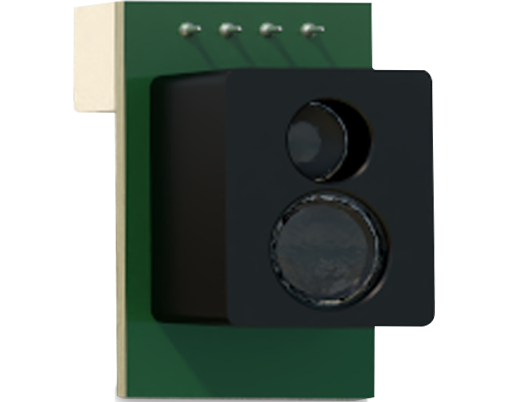
Third is environmental robustness. With no moving mechanical parts, laser sensors are less prone to wear, calibration drift, and damage from extreme environmental conditions. Their installation in deep, thermally stable boreholes further isolates them from cultural noise—the vibrations from traffic, industry, and other human activity that plague surface stations. This results in a dramatically improved signal-to-noise ratio, offering a clearer "listening" channel into the Earth.
The applications are transformative for seismology. Dense networks of these sensors can create ultra-high-resolution maps of fault zones, illuminating the complex mechanics of rupture propagation in unprecedented detail. In volcanic regions, they can monitor minute inflation and deflation of magma chambers with unparalleled precision, aiding eruption forecasting. For critical infrastructure—nuclear power plants, long-span bridges, and large dams—embedded laser sensor arrays provide real-time, nanometer-accurate structural health monitoring, enabling immediate safety assessments post-event.
Perhaps the most tantalizing prospect is in earthquake early warning (EEW) systems. The combination of extreme sensitivity and rapid data processing means these sensors can potentially identify the initial, often weaker P-waves microseconds faster than traditional networks. In the race against time that defines EEW, every millisecond gained translates to more time for automated systems to shut down trains, halt sensitive machinery, and for people to take cover.
Challenges remain, primarily related to cost, complexity of installation, and data management. The infrastructure for a laser interferometric station is currently more expensive than a standard seismic station. However, as the technology matures and scales, costs are expected to decrease. The vast amount of ultra-precise data generated also demands advanced computational resources and novel algorithms for interpretation.
Research institutions and forward-looking geological surveys worldwide are now deploying pilot networks. These efforts are not about replacing the existing global seismic network but augmenting it with a new, powerful layer of observation. They act as a "microscope" on seismic processes, complementing the "telescope" view provided by conventional systems.
In conclusion, earthquake laser sensors represent a paradigm shift in geophysical observation. By harnessing the immutable consistency of light, they offer a window into the infinitesimal whispers of our planet's crust. This leap in measurement fidelity is more than a technical achievement; it is a fundamental tool that will deepen our scientific understanding of earthquakes and enhance our societal resilience against them. The future of seismic monitoring is not just about feeling the Earth move, but about seeing its most subtle quivers with light.