In the realm of precision measurement and timing, laser timing sensors have emerged as a cornerstone technology, enabling advancements across industries from manufacturing and sports to scientific research and autonomous systems. These sophisticated devices utilize laser beams to detect the precise moment an object passes a specific point, translating physical movement into accurate digital timing data. Unlike traditional mechanical or infrared sensors, laser-based systems offer unparalleled resolution, often measuring events with microsecond or even nanosecond accuracy. This capability is not merely an incremental improvement but a transformative leap, allowing processes to be optimized, safety to be enhanced, and new frontiers of experimentation to be explored.
The fundamental operating principle of a laser timing sensor is elegantly straightforward yet relies on advanced physics. A focused, coherent laser beam is projected across a detection zone onto a photodetector. When an object—be it a vehicle part on an assembly line, an athlete crossing a finish line, or a particle in a physics experiment—interrupts this beam, the photodetector registers a sudden change in light intensity. This interruption triggers an electronic signal, which is timestamped by a high-precision internal clock. The core innovation lies in the properties of the laser light itself: its coherence allows it to remain tightly focused over long distances with minimal dispersion, while its monochromatic nature enables highly sensitive detection filters that can ignore ambient light. This makes the sensors exceptionally reliable even in challenging environments with variable lighting or significant background optical noise.
Applications for laser timing sensors are vast and varied. In industrial automation, they are indispensable for synchronizing robotic arms, monitoring production line speeds, and performing quality control checks. For instance, in bottling plants, a laser sensor can precisely time the filling and capping of each bottle, ensuring consistency and minimizing waste. In the world of sports, they have revolutionized officiating and performance analysis. From determining photo-finishes in track and field to measuring puck speed in ice hockey, these sensors provide objective, indisputable data that is critical for fair competition and athlete development. Furthermore, scientific laboratories employ ultra-high-precision laser timing in particle accelerators and optical experiments, where understanding the sequence and duration of events at the smallest scales is paramount.
The advantages of adopting laser timing technology are compelling. First and foremost is accuracy. The speed of light and the rapid response time of solid-state photodetectors eliminate the mechanical lag inherent in contact-based systems. Second is non-contact operation. The sensor does not need to touch the measured object, preventing wear and tear on both the sensor and the object, which is crucial for delicate components or high-speed processes. Third is versatility. Modern laser timing sensors can be configured for different beam shapes, detection ranges, and output signals to integrate seamlessly with PLCs (Programmable Logic Controllers) and data acquisition systems. Finally, their robustness allows for deployment in harsh conditions—factories with dust, outdoor venues with rain, or environments with significant vibration—where other sensing modalities might fail.
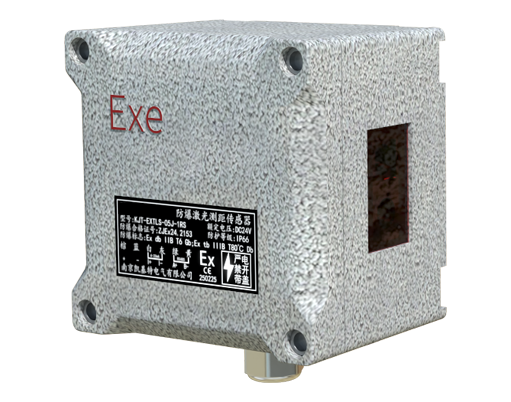
Looking toward the future, the evolution of laser timing sensors is closely tied to progress in photonics and computing. Integration with Internet of Things (IoT) platforms will enable real-time, cloud-based analytics of timing data from distributed sensor networks. Advances in laser diode technology promise smaller, more energy-efficient sensors with even higher repetition rates. Furthermore, the fusion of timing data with other sensor inputs, like high-speed vision systems or LiDAR, is paving the way for more intelligent and adaptive automated systems, particularly in autonomous vehicles and advanced robotics.
In conclusion, laser timing sensors represent a critical fusion of optical engineering and electronics, delivering a level of temporal precision that was once unimaginable. By providing a reliable, non-contact method to capture the exact instant of an event, they form an invisible yet vital infrastructure supporting innovation, efficiency, and accuracy in our increasingly automated and data-driven world. Their continued development will undoubtedly unlock new capabilities and applications, solidifying their role as an essential tool for measuring the modern age.
