Introduction to Photoelectric Sensor MAX
The Photoelectric Sensor MAX is a high-performance device widely used in industrial automation for object detection, distance measurement, and position sensing. It operates on the principle of converting light signals into electrical signals, leveraging advanced optical and electronic components to ensure reliable operation in harsh environments. This sensor is designed to detect a wide range of materials, including opaque, translucent, and reflective surfaces, making it essential in manufacturing, packaging, and logistics.
Core Operating Principle
The basic working principle of the Photoelectric Sensor MAX involves the emission and reception of light beams. It typically consists of an emitter (such as an LED or laser diode) that emits a focused beam of light, and a receiver (a photodiode or phototransistor) that detects the reflected or interrupted light. When an object enters the detection zone, it alters the light path, causing a change in the received signal strength. This change is then processed by the sensor’s internal circuitry to generate a binary or analog output, indicating the presence or absence of the object. The MAX series enhances this by using modulated light to filter out ambient light interference, ensuring high accuracy.
Types of Detection Modes
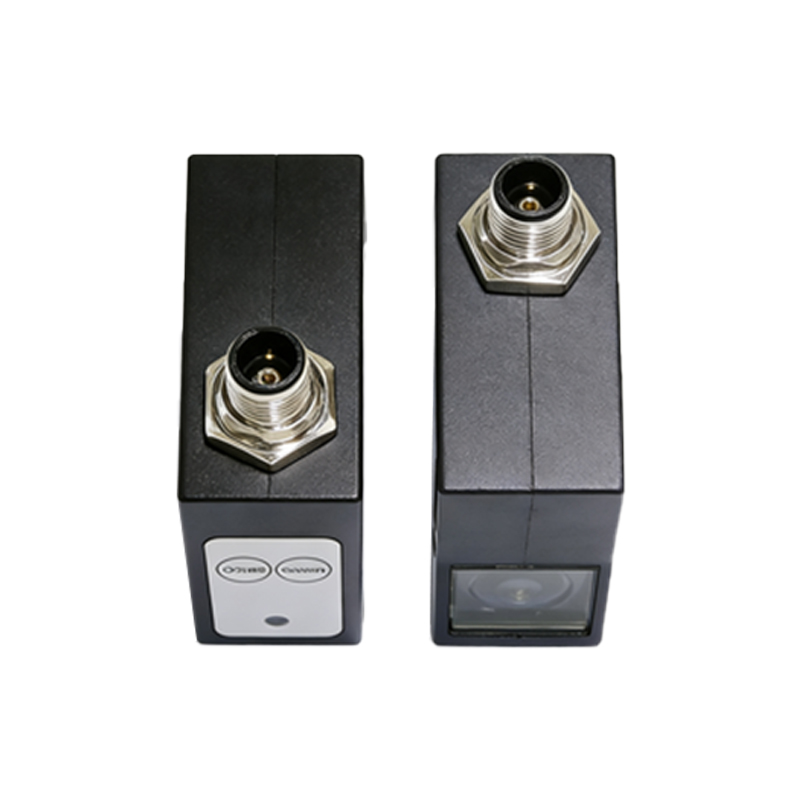
The Photoelectric Sensor MAX supports three main detection modes: through-beam, retro-reflective, and diffuse reflection. In through-beam mode, the emitter and receiver are separate units; the object breaks the light beam when it passes between them, offering the longest range and highest reliability. Retro-reflective mode uses a single housing with a reflector; the sensor detects objects when the reflected light is interrupted, simplifying installation. Diffuse reflection mode combines emitter and receiver in one unit; the sensor detects objects by sensing light reflected directly from the object’s surface, ideal for short-range applications. The MAX model optimizes each mode with adjustable sensitivity and response time.
Key Components and Signal Processing
The internal architecture of the Photoelectric Sensor MAX includes a light source, optics, a photodetector, and a microcontroller. The light source is modulated at a specific frequency to distinguish it from background light. The optics focus the light into a narrow beam, enhancing detection precision. The photodetector converts the received light into an electrical current, which is then amplified and filtered. The microcontroller analyzes the signal using algorithms to compensate for environmental factors, such as dust or temperature variations. This digital processing allows the MAX to output stable signals even in challenging conditions, such as high-speed production lines.
Advantages and Industrial Applications
The Photoelectric Sensor MAX offers several advantages: long detection range (up to 50 meters in through-beam mode), immunity to electromagnetic interference, and fast response times (down to 1 millisecond). It is widely used in conveyor belt systems to detect product jams, in packaging machines for label alignment, and in automated storage systems for pallet positioning. Its robust housing with IP67 rating ensures operation in dusty or wet environments. Additionally, the MAX model features a teach-in function for easy configuration, reducing setup time in complex industrial settings.
Troubleshooting and Maintenance Tips
To maintain optimal performance, regularly clean the sensor’s lens and reflector surfaces to prevent dust buildup. Check for misalignment between emitter and receiver in through-beam setups. If false triggering occurs, adjust the sensitivity setting or verify that ambient light sources (like welding arcs) are not interfering. The MAX sensor includes diagnostic LEDs that indicate signal strength and error codes, simplifying troubleshooting. For long-term reliability, replace the internal components every 5 years, depending on usage intensity.
Conclusion
Understanding the working principle of the Photoelectric Sensor MAX is crucial for engineers to maximize its potential in automation systems. By leveraging modulated light, precise optics, and digital processing, this sensor delivers consistent performance across diverse applications. Its flexibility in detection modes and robust design makes it a cornerstone of modern industrial sensing technology.