In the intricate world of modern technology, where precision and data are paramount, a tiny yet powerful component plays a crucial role: the laser diode. Often hidden within the casings of various devices, these semiconductor devices are the workhorses behind countless sensing applications, fundamentally transforming how machines perceive and interact with their environment. Unlike the broad, diffuse light of an LED, a laser diode emits a highly focused, coherent beam of light. This unique property is the key to its indispensable function in sensors.
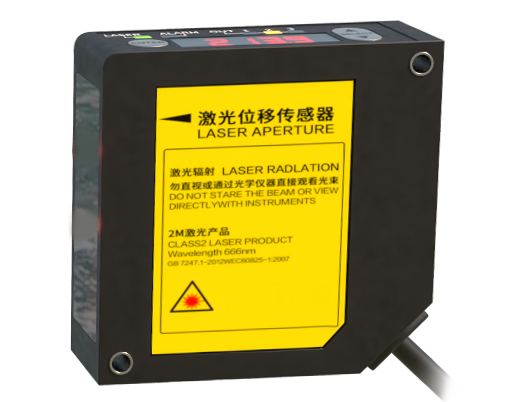
At its core, the primary role of a laser diode in a sensor is to act as a precise and reliable source of illumination. It projects a controlled light signal onto a target—be it an object, a surface, a gas, or even a liquid. The sensor then detects how this light interacts with the target. This interaction can involve reflection, absorption, scattering, or a change in the light's properties. By meticulously analyzing the returning or altered light signal, the sensor's photodetector and processing circuitry can extract a wealth of information. This process enables the measurement of distance, detection of presence, identification of materials, and analysis of composition with remarkable accuracy.
One of the most prevalent applications is in distance measurement and object detection, commonly found in LiDAR (Light Detection and Ranging) systems and various industrial automation sensors. Here, the laser diode emits a short pulse of light. The time it takes for the pulse to travel to the target and reflect back to the sensor is measured. Since the speed of light is a known constant, this time-of-flight data is converted into an exact distance. This principle enables the high-resolution 3D mapping used in autonomous vehicles, the precise positioning in robotics, and the inventory management in smart warehouses.
Beyond simple distance, laser diodes are fundamental to velocity and vibration sensing through Laser Doppler Vibrometry. When light from a laser diode reflects off a moving surface, its frequency shifts slightly—a phenomenon known as the Doppler effect. By detecting this minute frequency shift, sensors can measure surface velocity or vibration with extreme sensitivity, useful in predictive maintenance for machinery and structural health monitoring for bridges and buildings.
In the realm of environmental and safety monitoring, laser diodes enable sophisticated gas detection sensors. Different gas molecules absorb light at specific, unique wavelengths. A tunable laser diode can be adjusted to emit light at the precise wavelength absorbed by a target gas, like methane or carbon dioxide. As the light beam passes through an air sample, the degree of absorption directly indicates the concentration of that gas. This technology is critical for leak detection in industrial plants, air quality assessment, and safety systems in confined spaces.
Furthermore, laser diodes are the heart of many barcode and QR code scanners. The rapidly moving laser beam sweeps across the patterned code. The contrasting black and white spaces reflect different amounts of light back to a photodetector, which converts the pattern into a digital signal for decoding. The coherence and intensity of the laser allow for fast, reliable scanning over longer distances and in varied lighting conditions compared to older technologies.
In biomedical and analytical instruments, laser diodes facilitate non-invasive measurements. For instance, in some medical sensors, they are used for blood oxygenation monitoring (pulse oximetry) by emitting red and infrared light through tissue. The differential absorption of these wavelengths by oxygenated and deoxygenated blood allows for the calculation of oxygen saturation levels.
The advantages of using laser diodes in sensors are numerous. They offer high spatial and temporal resolution, exceptional measurement speed, and the ability to operate without physical contact with the target, preventing contamination or wear. Their small size, low power consumption, and reliability make them ideal for integration into portable and embedded systems. From the factory floor to the doctor's office, from the family car to deep-space probes, laser diodes within sensors are quietly illuminating details invisible to the naked eye, providing the critical data that drives innovation, efficiency, and safety in our increasingly automated world.