Introduction to Photoelectric Sensors with Reflectors
Photoelectric sensors with reflectors are essential components in modern industrial automation systems. Unlike standard diffuse or through-beam sensors, these devices use a separate reflector to bounce the emitted light beam back to the receiver. This design enables reliable detection of objects at longer ranges, even in challenging environments with dust, moisture, or vibration. As an electrical engineer specializing in sensor technology, I have seen their widespread use in material handling, packaging, and assembly lines.
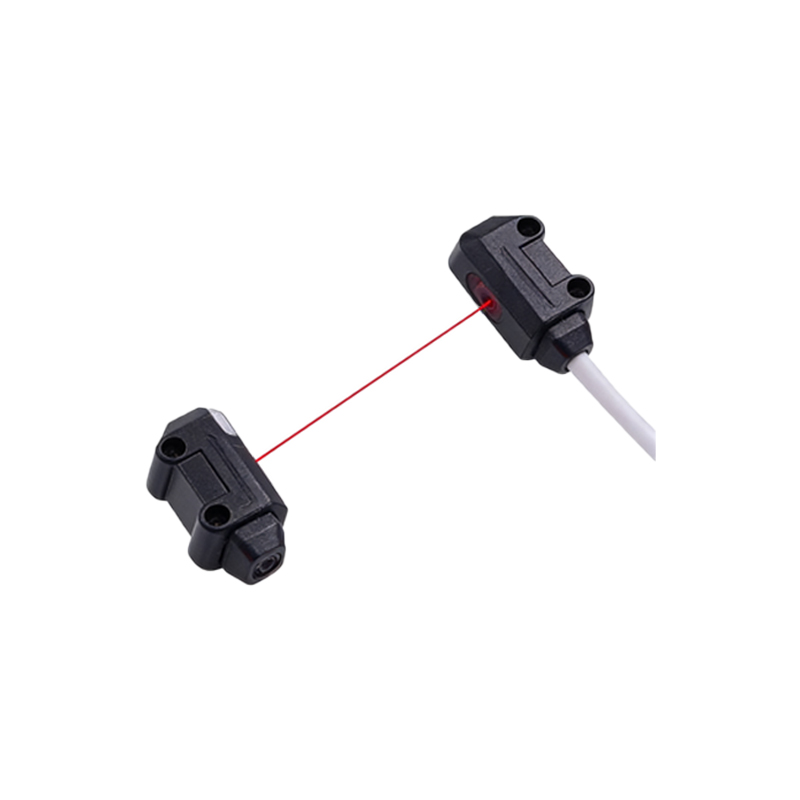
Working Principle and Key Components
The sensor emits a modulated light beam - typically infrared or visible red laser - toward a specially designed reflector. The reflector, often a prismatic or corner-cube type, returns the light to the sensors receiver. An object is detected when it interrupts this light path. The key advantage over through-beam sensors is that both the emitter and receiver are housed in a single unit, simplifying installation and wiring. The reflector can be placed up to 20 meters away, depending on the model and environmental conditions.
Selection Criteria for Industrial Use
When selecting a photoelectric sensor with reflector, consider the following parameters: sensing range, response time, and ambient light immunity. For example, in a high-speed bottling line, a sensor with a 10-meter range and a 0.5 millisecond response time would be ideal. Additionally, check the IP rating (e.g., IP67 for harsh environments) and the output type (PNP or NPN). Reflector material also matters - glass reflectors offer better durability, while plastic reflectors are lighter and cost-effective.
Common Wiring and Installation Practices
Proper wiring ensures reliable performance. Most sensors use a 3-wire configuration: brown for Vcc (10-30 VDC), blue for ground, and black for the output signal. In noisy environments, use shielded cables and connect the shield to ground. Mount the sensor and reflector on stable surfaces, ensuring optical alignment. A misalignment of just 1-2 degrees can reduce the sensing range by 50%. For vibrating machinery, use anti-vibration brackets.
Troubleshooting and Maintenance Tips
Common issues include false triggering due to reflector contamination or misalignment. Clean the reflector and sensor lens weekly with a lint-free cloth and isopropyl alcohol. If the sensor fails to detect, check the wiring polarity and supply voltage. In high-temperature areas (above 50°C), ensure the sensor has adequate cooling or select a model with a higher temperature rating. If problems persist, verify that the reflector type matches the sensors specifications.
Advanced Applications in Automation
Photoelectric sensors with reflectors excel in applications requiring long-range detection with a compact form factor. For instance, in automated guided vehicles (AGVs), they detect obstacles at distances up to 15 meters. In conveyor systems, they count products or detect jams. Some models offer background suppression, allowing them to ignore reflective objects behind the target. This makes them suitable for transparent or shiny object detection, such as glass bottles or metal cans.
Conclusion and Future Trends
As industrial automation advances, photoelectric sensors with reflectors are evolving with smarter features like IO-Link communication for real-time diagnostics and parameter adjustment. Engineers should stay updated on new reflector materials, such as microprismatic films, which improve efficiency. By understanding the technical nuances, you can optimize system performance and reduce downtime. Always consult the datasheet for specific application guidelines.