Introduction to Photoelectric Sensor Lens Design
Photoelectric sensors are critical components in industrial automation, relying on precise lens design to ensure accurate detection, range, and reliability. The lens system focuses or collimates light beams, typically from an LED or laser diode, onto a target, with the reflected or interrupted light detected by a photodiode. Key design parameters include focal length, aperture size, material selection, and anti-reflective coatings. Engineers must balance optical efficiency with environmental robustness, as these sensors often operate in dusty, humid, or high-vibration settings. A well-designed lens minimizes aberrations, such as spherical or chromatic distortion, which can degrade signal-to-noise ratio and lead to false triggers in critical applications like conveyor sorting or robotic guidance.
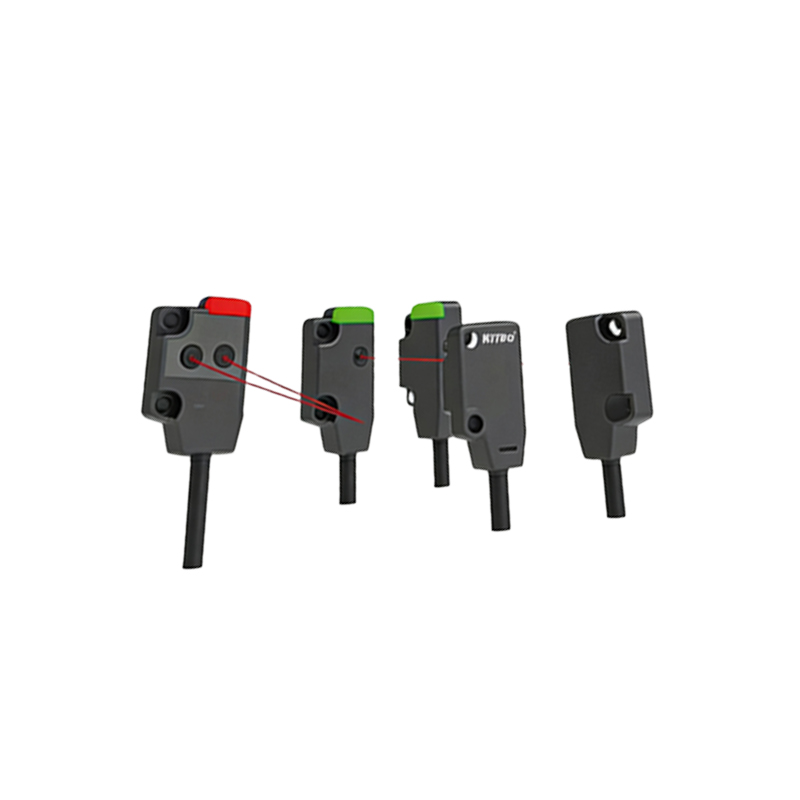
Material Selection and Optical Properties
Choosing the right lens material is paramount for performance and cost. Common materials include polycarbonate, acrylic, and glass. Polycarbonate offers high impact resistance and lightweight properties, suitable for rugged environments, but may suffer from lower transmission rates in the near-infrared spectrum. Acrylic provides clarity and UV stability at a lower cost, though it can scratch easily. Glass lenses, such as BK7 or fused silica, deliver superior thermal stability and minimal refractive index variation across wavelengths, ideal for high-precision sensors in manufacturing lines. Engineers must also consider the lens' refractive index and Abbe number to control dispersion, ensuring consistent focal points across temperature ranges. For sensors using modulated infrared light, materials with low absorption at 850 nm or 940 nm are preferred to maximize signal strength and range.
Lens Geometry and Focusing Mechanisms
The geometric shape of the lens—whether convex, concave, or aspheric—directly impacts the sensor's beam pattern. Convex lenses are standard for collimating divergent LED light into a parallel beam, increasing detection distance. Aspheric lenses, though more complex to manufacture, eliminate spherical aberration, providing sharper focus for small targets. Focal length determines the sensor's working range: shorter focal lengths yield wider angles but reduced reach, while longer focal lengths narrow the beam for distance. Engineers often incorporate Fresnel lenses or multi-element arrays to reduce weight and improve efficiency in compact sensor housings. For through-beam sensors, a lens pair optimizes transmission alignment, while retroreflective sensors use polarized lenses to differentiate reflected light from ambient interference.
Anti-Reflective Coatings and Environmental Durability
Anti-reflective (AR) coatings are essential to minimize light loss at the lens surface, which can be up to 4% per air-glass interface. Single-layer magnesium fluoride coatings reduce reflection to under 1.5%, while multi-layer broadband AR coatings achieve less than 0.5% across visible and NIR wavelengths. For outdoor or washdown applications, hydrophobic and oleophobic coatings protect against water, oil, and chemical spills, maintaining optical clarity. UV-cured hard coatings enhance scratch resistance, extending sensor life in abrasive environments like woodworking or mining. Engineers must also consider temperature-induced stress: lens holders should accommodate thermal expansion without distorting the optical path, using materials like aluminum or stainless steel with matched coefficients.
Simulation and Testing for Optimal Performance
Modern lens design relies on optical simulation software, such as Zemax or Code V, to model ray tracing, spot diagrams, and modulation transfer function (MTF) curves. Simulations predict how lens tolerances, like surface irregularity or centration errors, affect sensor sensitivity. Prototyping with 3D-printed molds or diamond-turned components allows rapid iteration. Testing involves measuring beam divergence, intensity distribution, and detection distance under varying ambient light, from 0 to 100,000 lux. Environmental chambers simulate temperature extremes from -40°C to 85°C, ensuring the lens maintains focus and transmission. Field trials in factory settings validate performance against vibration, dust, and electromagnetic interference, finalizing the design for mass production.