The GL6N4212 is a high-performance photoelectric sensor designed for precision detection in industrial automation environments. Manufactured by SICK AG, this sensor operates on the principle of through-beam technology, ensuring reliable object presence detection across various applications. Its compact housing, IP67 rating, and robust construction make it suitable for harsh factory floor conditions. The sensor emits an infrared light beam from the emitter to the receiver, with a sensing range of up to 15 meters, providing consistent performance in dusty, wet, or vibration-prone settings. Engineers often select the GL6N4212 for conveyor systems, material handling, and packaging lines due to its fast response time and immunity to ambient light interference.
Key Technical Specifications
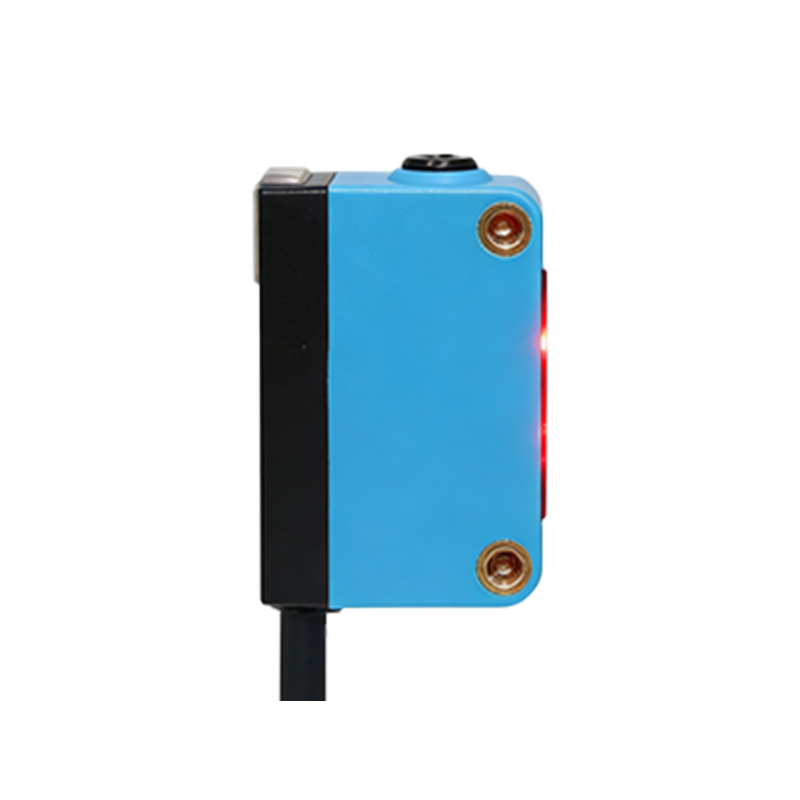
Operating on a 10-30 V DC supply voltage, the GL6N4212 features a PNP/NPN switching output with a maximum load current of 100 mA. Its red LED indicator provides visual status feedback for alignment and switching states. The sensor uses a cylindrical M18 threaded housing with a 4-pin M12 connector, simplifying installation and replacement. The sensing range of 0-15 meters ensures long-distance detection without requiring reflectors, reducing maintenance needs. The response time is less than 0.5 ms, enabling high-speed detection for fast-moving objects. The ambient light immunity includes protection against artificial and natural light sources up to 100,000 lux. The operating temperature range spans -25°C to +55°C, making it versatile for both cold storage and heated industrial zones.
Installation and Calibration Best Practices
Proper installation of the GL6N4212 requires precise alignment between the emitter and receiver. Use the laser alignment tool (available separately) to ensure the optical axis is unobstructed. Mount the sensor on a rigid bracket to avoid vibration-induced misalignment. The recommended mounting distance from the object path is at least 50 mm to prevent false triggers from dust or splashes. For calibration, connect the sensor to a 24 V DC power source and observe the LED indicator. Adjust the sensitivity potentiometer (if available on the model) to match the target object’s reflectivity. In through-beam mode, no object between emitter and receiver triggers a “on” state; ensure the background is non-reflective to avoid false signals. Always test the system with the actual production objects to verify repeatability.
Common Applications in Industry
The GL6N4212 excels in automotive assembly lines for detecting car body panels during welding and painting processes. In logistics, it monitors box presence on conveyor belts, initiating sortation or barcode scanning. Packaging industries use it for counting bottles or cartons at high speeds. The sensor’s infrared beam penetrates transparent films and glass, making it ideal for food packaging where clear plastic wraps are common. Additionally, in warehouse automation, it detects pallet positions in automated storage and retrieval systems (AS/RS). The sensor’s long range reduces the need for multiple units, cutting system costs while maintaining reliability.
Troubleshooting and Maintenance
Common issues include misalignment due to mechanical shock or thermal expansion. Check the mounting brackets first if the sensor triggers false signals. Clean the lens regularly with a lint-free cloth and isopropyl alcohol to remove oil, dust, or condensation. If the sensor fails to detect objects, verify power supply voltage and wiring polarity. Use a multimeter to check output voltage at the M12 connector. For intermittent failures, ensure the cable is not damaged or exposed to electromagnetic interference from nearby motors or VFDs. SICK offers a diagnostic tool that reads the sensor’s internal parameters via IO-Link (if supported). Replace the sensor if the LED remains off despite proper alignment and power, as this indicates internal component failure.
Selection Considerations for Engineers
When choosing between the GL6N4212 and alternatives, evaluate the object’s size, color, and material. For extremely small objects (<1 mm), consider a fiber optic attachment. For colored or shiny surfaces, the sensor’s infrared wavelength may be absorbed; test with a sample. The sensor’s response time of 0.5 ms suits most conveyor speeds up to 2 m/s. For higher speeds, select a sensor with a faster response like the GL6N4212 variant with 0.2 ms. The IP67 rating allows washdown environments, but avoid direct water jets at seals. The sensor’s 15-meter range is excessive for short-range applications; use a shorter-range model to reduce cost and alignment complexity. Always consult the datasheet for exact specifications and certification (CE, UL, etc.) for your region.
Introduction to the GL6N4212 Photoelectric Sensor
The GL6N4212 is a high-performance photoelectric sensor designed for precision detection in industrial automation environments. Manufactured by SICK AG, this sensor operates on the principle of through-beam technology, ensuring reliable object presence detection across various applications. Its compact housing, IP67 rating, and robust construction make it suitable for harsh factory floor conditions. The sensor emits an infrared light beam from the emitter to the receiver, with a sensing range of up to 15 meters, providing consistent performance in dusty, wet, or vibration-prone settings. Engineers often select the GL6N4212 for conveyor systems, material handling, and packaging lines due to its fast response time and immunity to ambient light interference.
Key Technical Specifications
Operating on a 10-30 V DC supply voltage, the GL6N4212 features a PNP/NPN switching output with a maximum load current of 100 mA. Its red LED indicator provides visual status feedback for alignment and switching states. The sensor uses a cylindrical M18 threaded housing with a 4-pin M12 connector, simplifying installation and replacement. The sensing range of 0-15 meters ensures long-distance detection without requiring reflectors, reducing maintenance needs. The response time is less than 0.5 ms, enabling high-speed detection for fast-moving objects. The ambient light immunity includes protection against artificial and natural light sources up to 100,000 lux. The operating temperature range spans -25°C to +55°C, making it versatile for both cold storage and heated industrial zones.
Installation and Calibration Best Practices
Proper installation of the GL6N4212 requires precise alignment between the emitter and receiver. Use the laser alignment tool (available separately) to ensure the optical axis is unobstructed. Mount the sensor on a rigid bracket to avoid vibration-induced misalignment. The recommended mounting distance from the object path is at least 50 mm to prevent false triggers from dust or splashes. For calibration, connect the sensor to a 24 V DC power source and observe the LED indicator. Adjust the sensitivity potentiometer (if available on the model) to match the target object's reflectivity. In through-beam mode, no object between emitter and receiver triggers a "on" state