Introduction to Photoelectric Sensors in Industrial Automation
Photoelectric sensors are fundamental components in modern industrial automation, used for detecting objects, measuring distances, and ensuring process reliability. As a electrical engineer with over a decade of field experience, I’ve worked with numerous brands across various applications—from packaging lines to automotive assembly. The choice of brand often dictates system performance, maintenance costs, and long-term reliability. Below, I analyze the most common and trusted photoelectric sensor brands, focusing on their technical strengths, typical applications, and why they dominate the market.
1. SICK (Germany) – Precision and Versatility
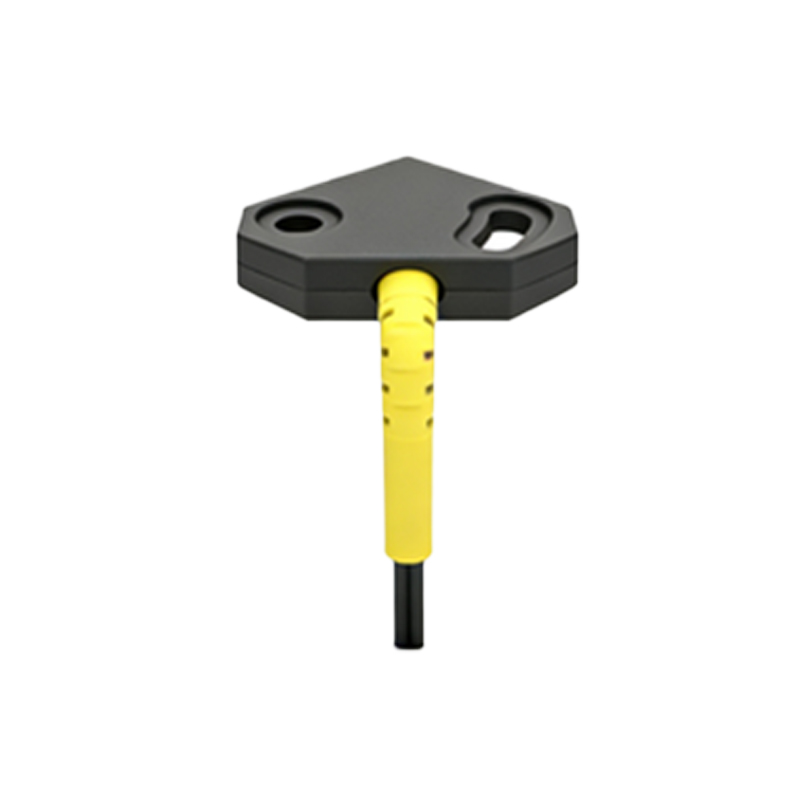
SICK is a global leader in sensor technology, particularly known for its photoelectric sensors used in harsh industrial environments. Their WL series (e.g., WL12-3) offers excellent background suppression and long sensing ranges up to 40 meters. I’ve deployed SICK sensors in conveyor systems where dust and vibration are constant; their robust IP67 housings and advanced optics reduce false triggers. Key advantage: Wide variety of sensing modes (through-beam, retro-reflective, diffuse) with integrated IO-Link for smart factories.
2. Omron (Japan) – Reliability and Cost-Effectiveness
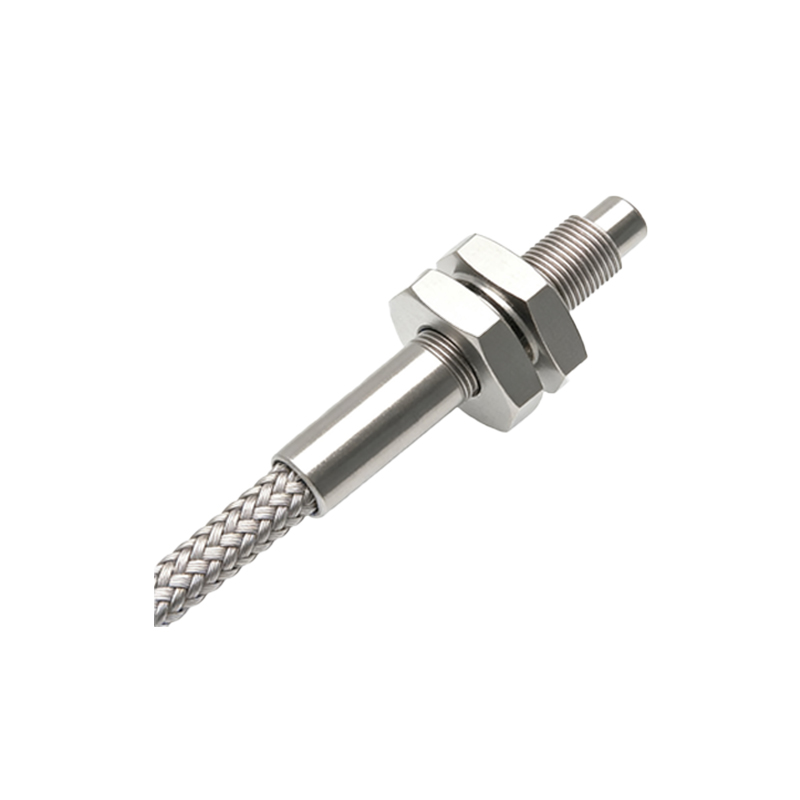
Omron’s E3Z and E3FA series are workhorses in automated manufacturing. They are particularly favored for their compact design and easy setup. In a recent packaging project, we used Omron E3Z-D61 diffuse sensors for detecting clear plastic bottles—a challenging task due to transparency. The sensors’ self-diagnostic functions and stable detection even with tilted surfaces saved downtime. Their price point is competitive without sacrificing quality, making them ideal for medium-scale operations.
3. Banner Engineering (USA) – Rugged and Application-Specific
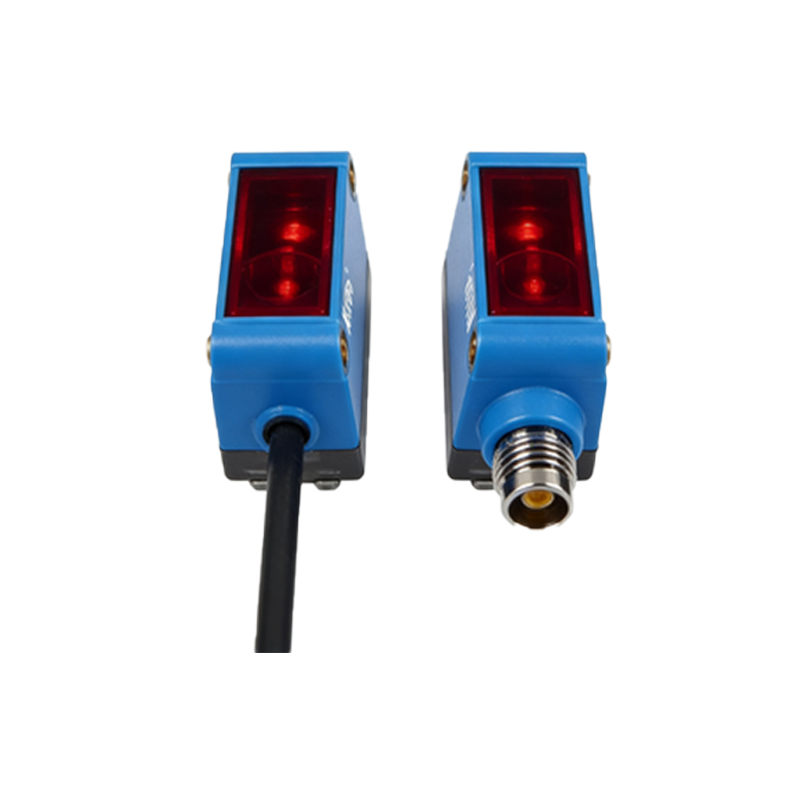
Banner excels in solving unique industrial challenges. Their QS18 and S18 series offer high-performance photoelectric sensing with options for extreme temperatures (up to 70°C) and washdown environments. I recall using Banner’s R58 expert series for detecting small parts on a high-speed assembly line; the adjustable response time (down to 0.5 ms) prevented missed detections. Banner’s emphasis on customer support and custom wiring configurations is a plus for complex retrofits.
4. Keyence (Japan) – High-Tech and Precision Measurement
Keyence’s photoelectric sensors, such as the LR-Z series, are known for their high-precision laser-based detection, capable of resolving sub-millimeter differences. In a semiconductor wafer handling system, we used Keyence’s PZ-G series for reliable detection of reflective wafers. The built-in digital display for setting sensitivity and the ability to handle glossy surfaces make them stand out. However, their premium cost limits use to high-value applications.
5. Pepperl+Fuchs (Germany) – Explosion-Proof and Safety
For hazardous environments (e.g., oil & gas, chemical plants), Pepperl+Fuchs offers intrinsically safe photoelectric sensors like the ML100 series. These sensors meet ATEX and IECEx certifications. In a refinery, we installed their RL31-8-H-700-RT/49/105 for flameproof through-beam detection. Their robust metal housings and long-range sensing (up to 50 meters) ensure reliability in volatile zones. They are the go-to brand for compliance-driven projects.
6. Balluff (Germany) – Durable and IO-Link Ready
Balluff’s BOS series photoelectric sensors are engineered for heavy-duty use, particularly in metalworking and automotive welding. Their BOS 23K series withstands weld splatter and electromagnetic interference. During a robotic welding cell upgrade, Balluff’s sensors with IO-Link connectivity allowed real-time monitoring of sensing reliability. The stainless steel housing and M12 connectors simplify maintenance. They are more expensive than standard brands but offer lower total cost of ownership.
7. Schneider Electric (France) – Integrated with Automation Systems
Schneider’s Telemecanique sensors (e.g., XU series) are widely used in conjunction with their PLCs and HMIs. They offer modular designs with interchangeable optics and cables. In a water treatment plant, we deployed XU2M30MA230 with retro-reflective mode for level detection in tanks. The ease of integration with Modbus and Ethernet/IP saved wiring time. Their performance is consistent but not exceptional for extreme ranges.
8. Turck (Germany) – Compact and Flexible
Turck’s photoelectric sensors, such as the Q25 series, are prized for their miniature size and flexible mounting options. In a PCB assembly line, space was tight, so we used Turck’s BI5U-M18-AP6X-H1141 (though primarily inductive, their photoelectric counterparts like the RU40U series work similarly). Their sensing range (up to 20 meters in retro-reflective mode) and quick-disconnect cables reduce installation complexity. Turck is a strong choice for OEMs requiring high-density placement.
9. IFM Electronic (Germany) – Sensor Hubs and Cost-Efficiency
IFM is known for their O5 series photoelectric sensors that offer excellent price-to-performance ratio. They feature a unique “teach-in” button for quick calibration without tools. In a food processing plant, we used O5D100 for detecting transparent wrappers; the sensors’ background suppression and IP69K rating for washdowns were critical. IFM’s sensors also provide diagnostic data via IO-Link, making them suitable for Industry 4.0 implementations.
10. Baumer (Switzerland) – High-End and Customizable
Baumer’s photoelectric sensors, like the O200 series, are premium products with exceptional stability. They are often used in medical device manufacturing and pharmaceutical packaging. For a sterile filling line, we chose Baumer’s O200.EL-GW1Y with a 15-meter range and contamination-resistant optics. Their customization options—like different lens materials and cable lengths—are unmatched. The trade-off is higher upfront cost and longer lead times.
Conclusion: Choosing the Right Brand for Your Application
Selecting a photoelectric sensor brand depends on your specific needs: environmental conditions, sensing range, budget, and integration complexity. For general automation, Omron and Banner offer reliable, cost-effective solutions. For precision and high-tech applications, Keyence and Baumer excel. For hazardous environments, Pepperl+Fuchs is essential. Always consider factors like IP rating, response time, and connectivity (e.g., IO-Link) to ensure long-term performance. As an engineer, I recommend testing at least two brands per application to validate performance under real-world conditions.