Introduction to Dynamic Balancing Machines and Photoelectric Sensors
Dynamic balancing machines are essential tools for measuring and correcting unbalance in rotating components such as rotors, fans, and turbines. At the heart of these systems lies the photoelectric sensor, a critical component that triggers precise measurements. Photoelectric sensors detect the rotational position of the rotor, enabling the machine to correlate vibration data with angular position. This synchronization is vital for identifying the magnitude and phase of unbalance. In industrial applications, these sensors offer high accuracy, non-contact operation, and resistance to harsh environments, making them ideal for high-speed balancing processes.
Operating Principle of Photoelectric Sensors in Balancing Systems
A photoelectric sensor in a dynamic balancing machine typically operates on the principle of light emission and detection. It consists of an emitter, usually an infrared LED or laser diode, and a receiver, such as a phototransistor or photodiode. When the rotor rotates, a reflective mark or a slotted disc interrupts or reflects the light beam. For example, a piece of reflective tape on the rotor surface triggers the sensor once per revolution. As the rotor spins, the sensor outputs a pulse or square wave signal at each rotation. This signal acts as a reference marker, often called a "trigger pulse," which the balancing system uses to sample vibration data from accelerometers. The timing of this pulse relative to vibration signals allows the system to calculate the unbalance angle.
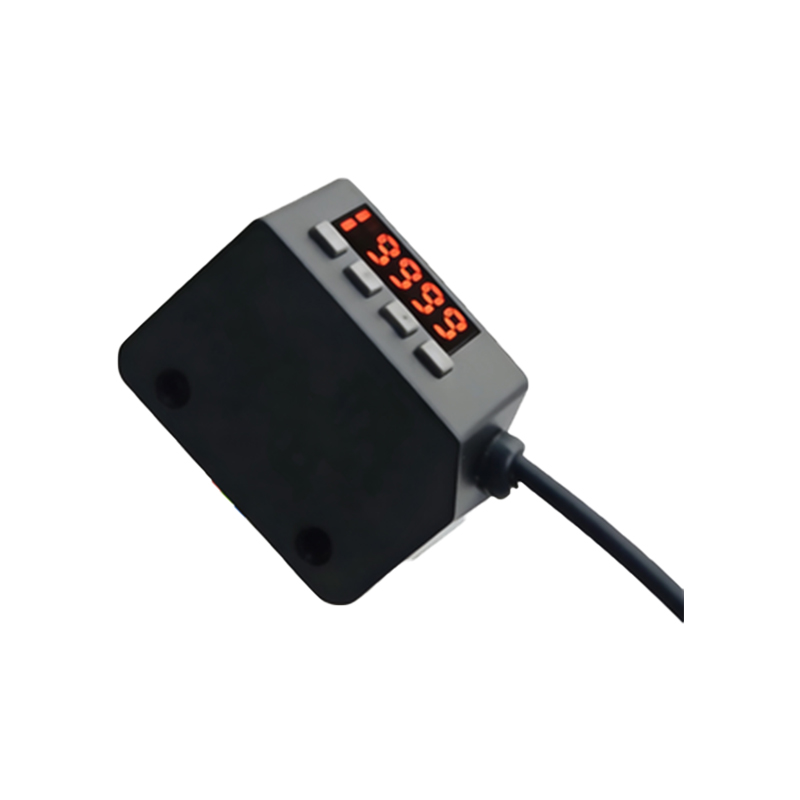
Key Components and Signal Processing
The photoelectric sensor assembly includes an electronics module that amplifies and filters the detected light signal. The emitter produces a modulated light beam to minimize interference from ambient lighting. The receiver detects changes in light intensity when the rotor's marker passes. The output is a digital signal with sharp rising and falling edges, which is crucial for precise angular measurement. Signal processing circuits include a comparator to convert analog light signals into clean digital pulses. In advanced systems, a microcontroller may analyze the pulse width to confirm proper rotor speed and marker consistency. This processed signal is then fed into the balancing machine's control unit, which synchronizes data acquisition with the rotor's rotation.
Types of Photoelectric Sensors Used in Balancing
Common types of photoelectric sensors in balancing machines include through-beam, retro-reflective, and diffuse reflective sensors. Through-beam sensors have separate emitter and receiver units, offering long detection ranges and high stability. Retro-reflective sensors use a reflector to bounce the beam back to the receiver, simplifying alignment. Diffuse reflective sensors detect light reflected directly from the rotor's surface, which is suitable for minimal space installations. For balancing applications, the choice depends on rotor geometry, speed, and environmental factors like dust or oil. Retro-reflective sensors are often preferred for their ease of installation and reliable triggering on metallic rotors.
Advantages and Challenges in Industrial Applications
Photoelectric sensors provide several benefits in dynamic balancing: they are non-contact, reducing wear; they offer high-speed response up to tens of thousands of RPM; and they tolerate vibration and temperature variations typical in industrial settings. However, challenges include sensitivity to dirt or oil on the rotor surface, which can degrade the reflective marker. To mitigate this, engineers may use sealed sensor housings or clean the rotor regularly. Another challenge is ensuring consistent marker alignment, especially for long rotors. Advanced systems use redundant sensors or self-diagnostic routines to maintain accuracy. Overall, proper sensor selection and maintenance are key to reliable balancing results.
Conclusion: The Role of Photoelectric Sensors in Modern Balancing
Understanding the principles of photoelectric sensors is fundamental for engineers working with dynamic balancing machines. These sensors provide the essential trigger signal that links rotational position to unbalance data, enabling precise correction. As balancing technology evolves, sensors with higher resolution and faster response times are being developed. For instance, fiber optic photoelectric sensors now offer even greater immunity to electromagnetic interference. By mastering these principles, industry professionals can optimize balancing processes, reduce downtime, and improve the longevity of rotating machinery.