Introduction to Photoelectric Sensors
Photoelectric sensors are critical components in modern industrial automation, enabling non-contact detection of objects, distances, and positions through the use of light-emitting and receiving elements. These sensors are widely deployed in manufacturing, logistics, and robotics, offering high precision, fast response times, and reliability in harsh environments. The global market for photoelectric sensors continues to grow, driven by the need for efficiency and accuracy in automation processes. This article explores the current state of photoelectric sensor technology, contrasting developments in domestic (e.g., Chinese) and international markets, with a focus on key performance indicators such as detection range, environmental resilience, and integration with smart systems.
International Technology Leaders
International manufacturers, such as SICK, Banner Engineering, and Keyence, have long dominated the photoelectric sensor market with advanced features like background suppression, laser-based precision, and adaptive sensitivity. For instance, SICK’s WL9 series offers high-speed detection up to 2 ms and a range of 50 m for through-beam setups, using robust housing rated to IP69K for washdown environments. Keyence’s LR-T series employs a time-of-flight (ToF) method, achieving sub-millimeter accuracy in distances up to 30 m, while maintaining stable performance under ambient light variations. These technologies leverage proprietary algorithms and high-quality optical components, ensuring minimal false triggers and long operational life. Furthermore, international brands often integrate IoT capabilities, such as IO-Link communication, allowing real-time data exchange with PLCs and cloud platforms for predictive maintenance.
Domestic Innovations and Progress
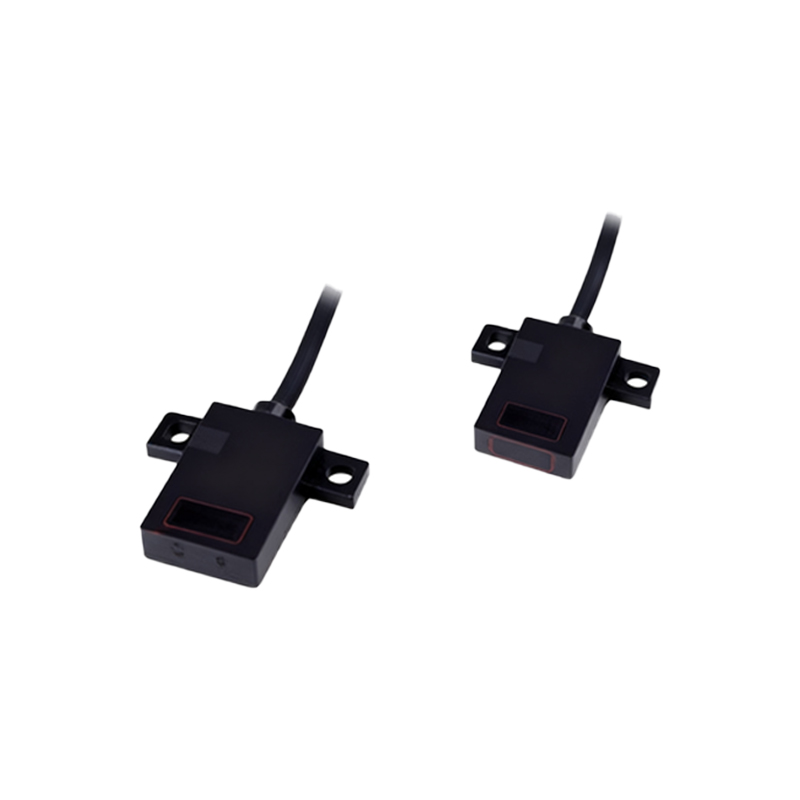
Domestic manufacturers, particularly in China, have made significant strides in recent years, addressing cost-sensitive applications while improving technical specifications. Companies like Autonics and Omron’s Chinese subsidiaries, as well as local firms such as Shenzhen Huaxing and Shanghai Lanbao, now offer sensors with competitive features. For example, the GT2 series from a leading domestic supplier achieves a detection range of 10 m with a response time of 1 ms, using infrared LED technology and compact M18 threaded barrels. Domestic sensors have also improved in environmental robustness, with many models now supporting IP67 and extended temperature ranges from -25°C to 55°C. However, challenges remain in achieving the same level of precision and stability as international counterparts, particularly in high-speed or high-vibration applications. Cost advantages (typically 20-30% lower than international equivalents) make them attractive for budget-conscious automation projects.
Comparative Analysis of Key Parameters
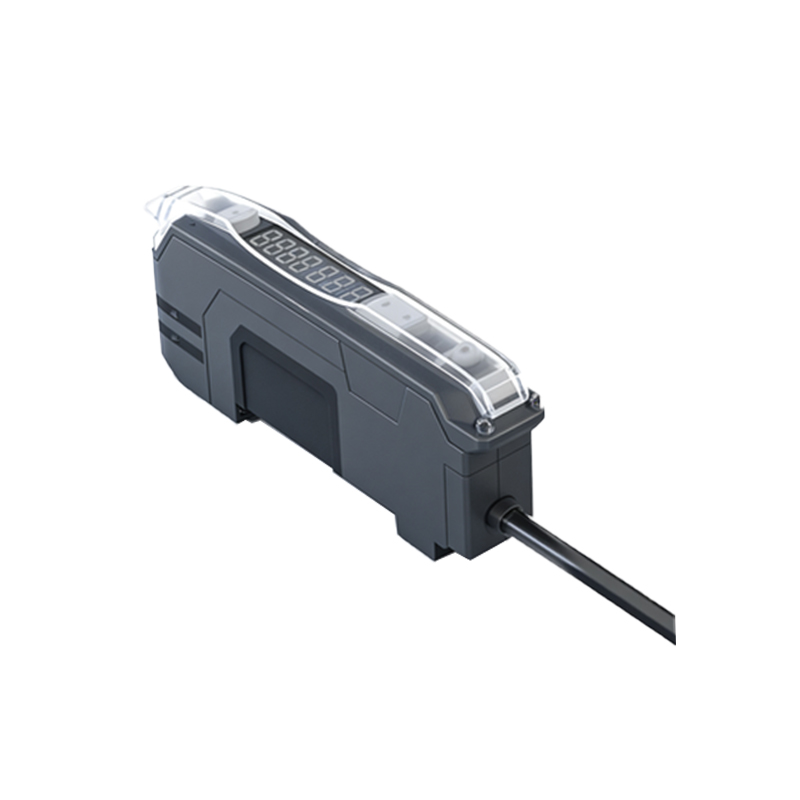
A direct comparison reveals notable differences. International sensors often boast longer detection ranges (e.g., 50 m vs. 15 m for domestic models in through-beam configurations) and better resistance to interference from dust, fog, or stray light. For example, international units use advanced modulation techniques and optical filters, reducing false readings in outdoor environments. On the other hand, domestic sensors excel in standard industrial settings, with adequate performance for conveyor belts, packaging lines, and warehouse automation. The gap in laser-based sensors is narrowing: some domestic models now offer class 1 laser diodes with accuracy within 0.5 mm, though international lasers still dominate in dynamic applications with moving targets. Additionally, international sensors typically have longer MTBF (mean time between failures) ratings, often exceeding 100,000 hours, while domestic units average around 70,000 hours.
Emerging Trends and Future Directions
Both domestic and international markets are converging on smart sensor technologies. The integration of machine learning algorithms for adaptive thresholding, self-calibration, and predictive maintenance is a key trend. International leaders are pioneering sensors with built-in edge computing, enabling real-time anomaly detection without cloud latency. Domestic players are catching up by offering low-cost variants with basic connectivity via RS-485 or Bluetooth, which are sufficient for small-scale automation. Another emerging area is the use of ambient light rejection techniques, such as pulsed LED modulation, which enhances reliability in solar- or bright LED-lit environments. The push for Industry 4.0 compatibility is driving both sides to develop sensors with standardized communication protocols like EtherCAT and PROFINET. Ultimately, the choice between domestic and international photoelectric sensors depends on application-specific requirements: international options are preferable for high-precision, harsh-environment tasks, while domestic alternatives offer a balanced trade-off for general industrial use.