Introduction to Photoelectric Sensor 3D Models
Photoelectric sensors are critical components in modern industrial automation, converting light signals into electrical outputs for object detection, distance measurement, and process control. A 3D model of a photoelectric sensor provides engineers with a detailed representation of its physical structure, including the housing, lens, emitter, and receiver modules. This digital representation enhances design accuracy, enables virtual assembly testing, and facilitates troubleshooting in complex systems. Unlike 2D schematics, 3D models offer depth perception, allowing engineers to analyze spatial interference and optimize sensor placement in confined spaces.
Key Components in a Photoelectric Sensor 3D Model
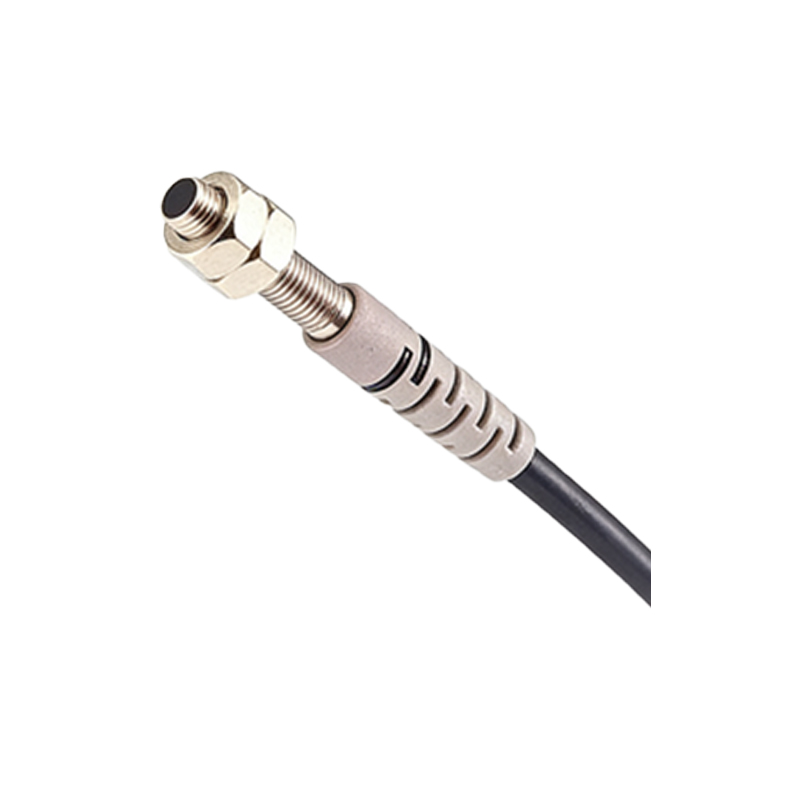
A typical photoelectric sensor 3D model consists of several key elements: the emitter (usually an LED or laser diode), the receiver (a photodiode or phototransistor), the lens system for focusing or collimating light, and a robust housing that often includes mounting brackets or threaded connections. The 3D model also incorporates the electronic circuit board layout, which is crucial for understanding signal processing and interference. Advanced models may include the beam path simulation, highlighting the active sensing zone. Engineers should verify that the model accurately represents the sensor’s IP rating, material properties, and connector types, such as M12 or M8 connectors.
Applications of 3D Models in Sensor Design and Integration
In industrial settings, 3D models are used to simulate sensor performance in automated lines, such as conveyor belt monitoring or robotic arm guidance. For example, a through-beam sensor’s 3D model can be placed in a virtual factory layout to check alignment with reflectors or targets. This reduces physical prototyping costs and accelerates design cycles. Additionally, thermal and vibration analysis can be performed on the 3D model to ensure reliability in harsh environments like high-temperature manufacturing plants. Engineers often export these models into CAD software like SolidWorks or AutoCAD for further refinement.
Creating a Photoelectric Sensor 3D Model: Technical Steps
To build a photoelectric sensor 3D model, start by gathering datasheet specifications, including dimensions, optical parameters, and mechanical tolerances. Use precision modeling tools to construct the outer shell, ensuring compliance with industry standards like IEC 60947-5-2. Next, add internal components such as the PCB, lens curvature, and sealing gaskets. Pay attention to the beam divergence angle and receiver sensitivity, which can be represented by transparent or semi-transparent elements. After modeling, perform a collision detection test to validate clearance in assembly. Finally, apply materials and textures to approximate real-world appearance, such as brushed aluminum or plastic casings.
Benefits of Using 3D Models for Electrical Engineers
For electrical engineers, 3D models offer tangible advantages: they enable cross-disciplinary collaboration with mechanical and software teams, provide a clear visualization of sensor placement relative to other equipment, and support documentation for maintenance manuals. Moreover, these models can be integrated into simulation software like MATLAB or Simulink for dynamic performance testing. By leveraging 3D models, engineers reduce the risk of installation errors, improve system reliability, and shorten time-to-market for automation projects. The ability to share these models via cloud platforms also enhances remote team communication.
Future Trends in Photoelectric Sensor 3D Modeling
The future of photoelectric sensor 3D modeling lies in augmented reality (AR) integration and AI-assisted design. Engineers will use AR overlays to visualize sensor beam patterns in real-time factory environments, while AI tools automatically optimize sensor positions based on production data. Additionally, advanced 3D models will incorporate material fatigue analysis and predictive maintenance triggers. As Industry 4.0 evolves, these models will become standard in digital twin implementations, offering a complete lifecycle view from design to decommissioning.