2026-06-10
Tech Hub
By 创始人
How Photoelectric Sensors Improve Dynamic Balancing Machine Accuracy
Introduction to Photoelectric Sensors in Balancing Machines
Photoelectric sensors play a critical role in modern dynamic balancing machines, particularly in the automotive, aerospace, and heavy machinery industries. These sensors detect the angular position of a rotating workpiece, enabling precise measurement of unbalance and initiating corrective actions. Unlike mechanical switches or inductive sensors, photoelectric sensors offer non-contact operation, high response speed, and immunity to electromagnetic interference. This makes them ideal for high-speed balancing applications where even microsecond delays can compromise accuracy.
Working Principle of Photoelectric Sensors
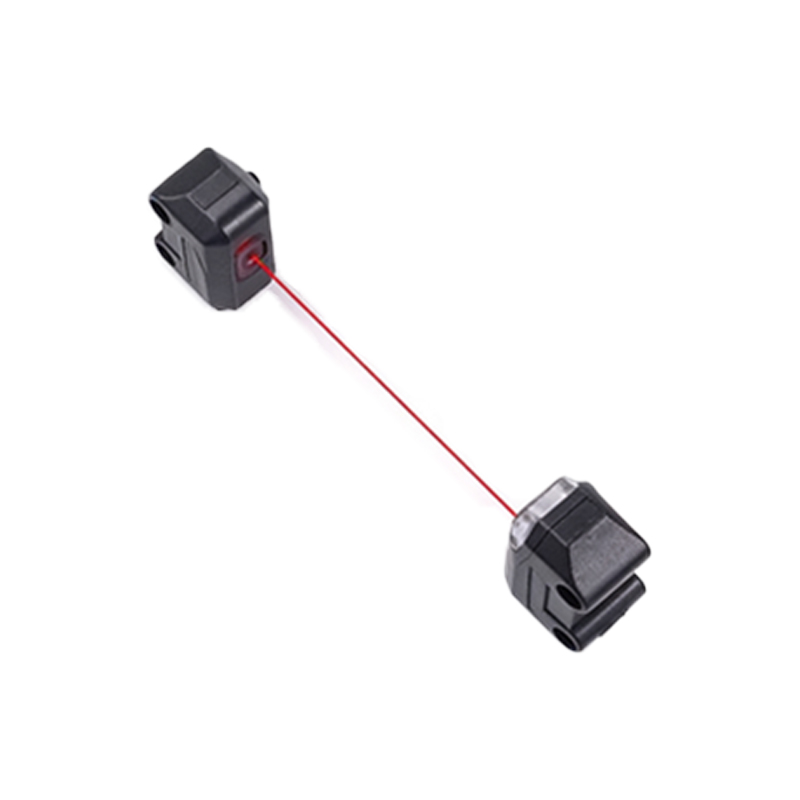
A typical photoelectric sensor consists of a light emitter (usually an infrared LED or laser diode) and a receiver (phototransistor or photodiode). In a balancing machine, a reflective strip or a notch on the rotating shaft interrupts the light beam once per revolution. The sensor generates a pulse signal that triggers the measuring system to capture vibration data at specific rotational angles. This synchronization between the sensor and the data acquisition module is essential for identifying the magnitude and phase of unbalance. Common configurations include through-beam, retro-reflective, and diffuse reflective types, with retro-reflective sensors often preferred for their ease of alignment and robustness in dusty environments.
Key Performance Parameters for Industrial Applications
For balancing machines, three parameters define sensor suitability: response time, sensing distance, and ambient light immunity. Response times below 50 microseconds are required for machines operating above 10,000 RPM. Sensing distances typically range from 10 mm to 200 mm, depending on the sensor housing and lens design. Additionally, sensors must reject false triggering from ambient light, welding sparks, or vibration-induced misalignment. Many industrial-grade sensors now feature built-in pulse stretching or noise filtering circuits to maintain signal integrity.
Installation and Alignment Best Practices
Proper installation is vital for reliable operation. The sensor should be mounted on a rigid bracket with vibration dampeners to avoid displacement at high rotational speeds. The reflective target must be clean, non-glare, and securely attached to the rotating part. A common practice is to use a 50 mm wide reflective tape applied to a flat surface on the rotor. The sensor’s optical axis should be perpendicular to the target surface within ±2 degrees. For retrofit applications, adjustable mounting plates allow fine-tuning of the gap between sensor and target. Electrical connections should use shielded cables with twisted pairs to prevent crosstalk from motor drives.
Common Failure Modes and Troubleshooting
Field data indicates that 70% of photoelectric sensor failures in balancing machines are due to contamination of the optical window by oil mist, metal dust, or coolant. Regular cleaning with isopropyl alcohol and a lint-free cloth is recommended. Other issues include misalignment from thermal expansion and degradation of the LED output over time. When the sensor output becomes erratic, technicians should first verify the power supply voltage within 10-30 VDC, then check the target reflectivity with a reflectometer. For machines with variable speed drives, adding a ferrite core on the sensor cable can suppress high-frequency noise.
Future Trends: Smart Sensors and IoT Integration
The next generation of balancing machines increasingly uses smart photoelectric sensors with IO-Link communication. These sensors provide diagnostic data such as signal strength, temperature, and warning flags for preventative maintenance. Integration with industrial IoT platforms allows remote monitoring of sensor health and automatic adjustment of threshold levels. Some advanced models even incorporate laser triangulation for sub-micron angular detection, pushing the limit of balancing accuracy to ISO Grade 0.4. As Industry 4.0 advances, the role of photoelectric sensors will expand from simple position detection to intelligent process control.