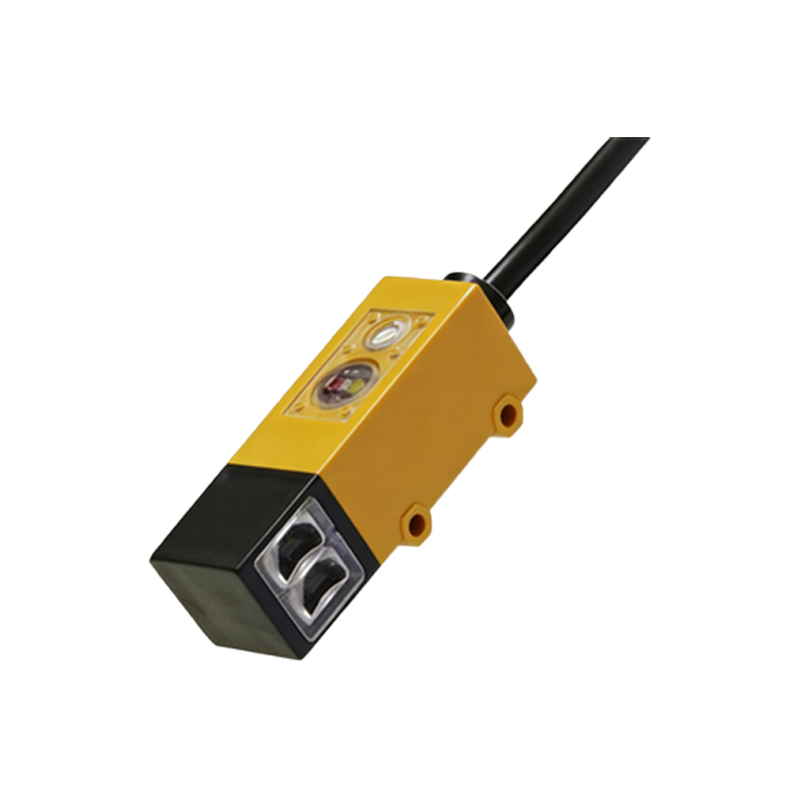
Introduction to Two-Wire Through-Beam Photoelectric Sensors
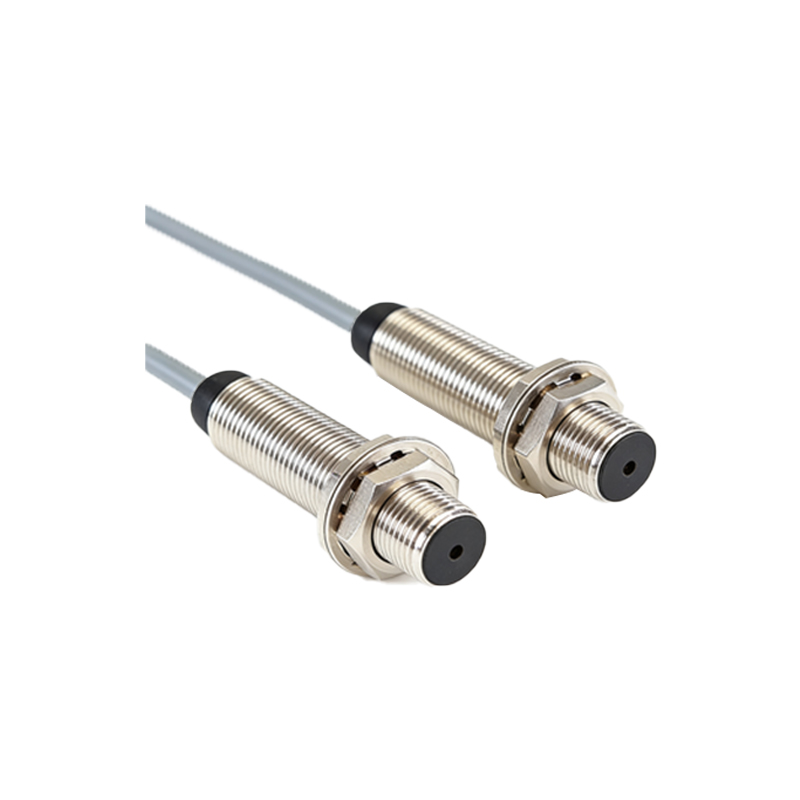
The two-wire through-beam photoelectric sensor is a fundamental component in industrial automation, particularly in material handling, packaging, and safety systems. Unlike standard three-wire or four-wire sensors, the two-wire design simplifies wiring by integrating the power supply and signal output into a single pair of wires. This reduces installation complexity and cost, making it ideal for retrofitting or space-constrained environments. The sensor operates by emitting a continuous light beam from a transmitter to a separate receiver; any interruption in the beam triggers a switch output, typically via a transistor or relay. Engineers must consider the sensor’s sensing range, typically up to 30 meters, and its immunity to ambient light or dust, which are critical for reliable operation in harsh industrial settings.
Working Principle and Electrical Characteristics
In a two-wire configuration, the sensor behaves like a variable resistor or a current sink. When the beam is uninterrupted (dark condition), the sensor draws minimal current, often below 1 mA, to signal a “no object” state. When an object breaks the beam (light condition), the current increases to a defined load current, typically 10-50 mA, activating the connected PLC input or relay. This current-mode signaling requires careful selection of the load resistor or input module to ensure proper voltage drop across the sensor. For example, using a 24 VDC supply, the sensor must maintain a voltage drop of less than 3 V at the load to comply with industry standards. Additionally, the sensor features short-circuit and reverse polarity protection, which are essential for mitigating wiring errors during installation.
Installation and Wiring Guidelines
Proper installation is crucial for maximizing the sensor’s performance. The two-wire sensor must be connected in series with the load (e.g., a PLC input or relay coil) between the positive supply and the sensor’s output terminal. The other wire connects to the negative supply. Engineers should verify that the load impedance matches the sensor’s specified minimum load current, typically 10 mA at 24 VDC. For long cable runs, consider voltage drop due to wire resistance; use twisted-pair shielded cables to reduce electromagnetic interference. The sensor’s alignment is equally important: the transmitter and receiver must be precisely aligned within a tolerance of ±2 degrees to avoid false triggers. Use mounting brackets with vibration dampeners in high-vibration environments.
Advantages and Limitations in Industrial Contexts

The primary advantage of the two-wire through-beam sensor is its simplicity, enabling direct replacement of mechanical limit switches with a solid-state solution. It offers high immunity to dust, steam, and light interference, making it suitable for conveyor belts, door controls, and safety interlocks. However, the two-wire design has limitations: it typically has slower response times (e.g., 1-5 ms) compared to three-wire sensors, and it cannot simultaneously provide both NPN and PNP outputs. Engineers must also account for leakage current, which may cause false triggering in sensitive PLC inputs. In such cases, adding a bleeder resistor or selecting a sensor with lower leakage current is recommended.
Maintenance and Troubleshooting Tips
Regular maintenance involves cleaning the optical lenses with a soft cloth and non-abrasive cleaner to prevent dust accumulation. For troubleshooting, check the power supply voltage at the sensor terminals; a drop below 10 VDC may cause erratic operation. Use a multimeter to measure the current in the dark and light conditions. If the current does not change when the beam is interrupted, inspect for misalignment or damaged optics. In wet environments, verify the ingress protection rating (e.g., IP67) to ensure moisture does not short-circuit the sensor. Always replace sensors with identical model numbers to maintain system compatibility.