In the realm of industrial automation and robotics, side laser sensors have emerged as critical components for achieving high-precision measurements and enhancing operational safety. These sensors utilize laser technology to detect objects, measure distances, and monitor positions from a lateral perspective, making them indispensable in applications where traditional front-facing sensors fall short. Unlike conventional sensors that may struggle with complex geometries or limited access points, side laser sensors offer a versatile solution by emitting a focused beam perpendicular to their mounting axis, allowing for accurate detection along the edges or sides of targets. This capability is particularly valuable in manufacturing lines, where they are used for tasks such as alignment verification, width monitoring, and edge detection in materials like metals, plastics, and textiles. For instance, in automotive assembly, side laser sensors ensure that components like door panels or chassis parts are correctly positioned before welding or fastening, reducing errors and minimizing waste. Similarly, in packaging industries, these sensors help maintain consistent product placement on conveyor belts, preventing jams and optimizing throughput.
The working principle of side laser sensors revolves around time-of-flight or triangulation methods, where a laser diode emits a beam that reflects off an object and returns to a receiver. By calculating the time or angle of reflection, the sensor determines the distance or presence of the object with micron-level accuracy. Advanced models incorporate features like background suppression, which filters out irrelevant signals from distant surfaces, and adjustable sensitivity settings to adapt to varying environmental conditions such as ambient light or surface reflectivity. This robustness makes them suitable for harsh environments, including those with dust, vibrations, or temperature fluctuations, common in sectors like logistics and heavy machinery. Moreover, the integration of side laser sensors with IoT systems enables real-time data collection and analysis, facilitating predictive maintenance and process optimization. For example, in smart warehouses, these sensors monitor inventory levels on shelves by detecting item displacements, triggering alerts for restocking or preventing collisions in automated guided vehicles (AGVs).
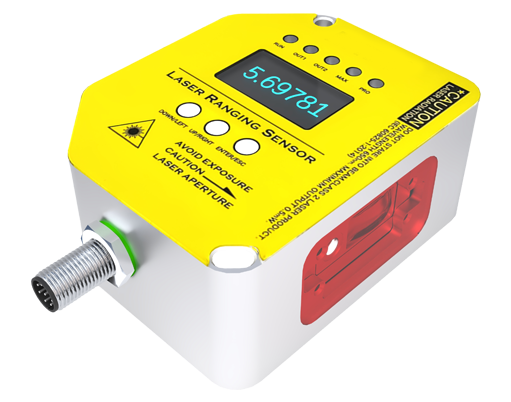
Safety is another paramount aspect where side laser sensors excel. In collaborative robotics, they create invisible safety zones around machinery, instantly halting operations if a human or obstacle encroaches, thereby preventing accidents. This aligns with global standards like ISO 13849, which mandate risk reduction in automated systems. Additionally, their non-contact nature eliminates wear and tear, ensuring longevity and reducing maintenance costs compared to mechanical switches. As industries embrace Industry 4.0, the demand for side laser sensors is growing, driven by trends like miniaturization and enhanced connectivity. Future developments may include AI-enhanced sensors that learn from operational data to improve accuracy autonomously. In summary, side laser sensors represent a fusion of precision engineering and smart technology, playing a pivotal role in advancing automation while safeguarding both efficiency and human well-being. Their adoption continues to expand across diverse fields, from aerospace to healthcare, underscoring their versatility and transformative impact.