Introduction to Ultra-Compact Photoelectric Sensors
In the evolving landscape of industrial automation, the demand for miniaturized components is accelerating. Ultra-compact photoelectric sensors, often measuring less than 10 mm in width and height, are engineered to deliver high-performance detection in extremely tight spaces. These sensors leverage advanced optical technologies, such as background suppression or retro-reflective modes, to ensure reliable object presence, positioning, and counting tasks. Their small footprint does not compromise accuracy, making them ideal for modern assembly lines, robotics, and packaging systems where every millimeter counts.
Key Design Features and Optical Principles
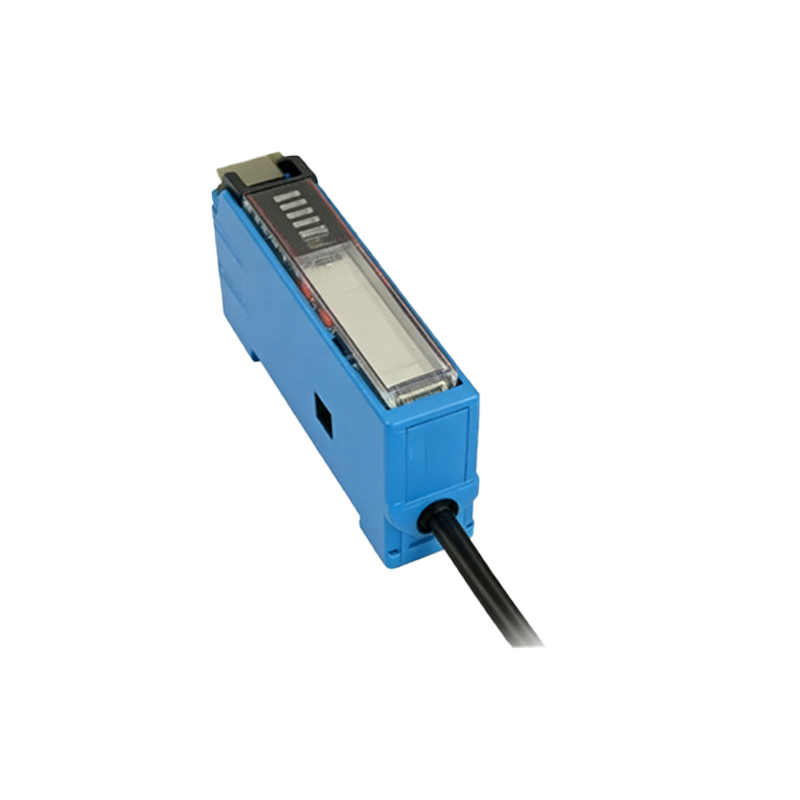
The core of these sensors lies in their optical design. Common configurations include through-beam, diffuse, and retro-reflective types, each optimized for specific distances and surface properties. For instance, a laser-based ultra-compact sensor can achieve a sensing range up to 5 meters even with a housing thickness of only 4 mm. Integrated optics, such as collimating lenses and high-sensitivity photodiodes, minimize beam divergence and enhance noise immunity. Additionally, many models offer adjustable sensitivity via a small potentiometer or IO-Link communication, enabling precise setup despite limited physical access.
Installation Flexibility in Tight Spaces
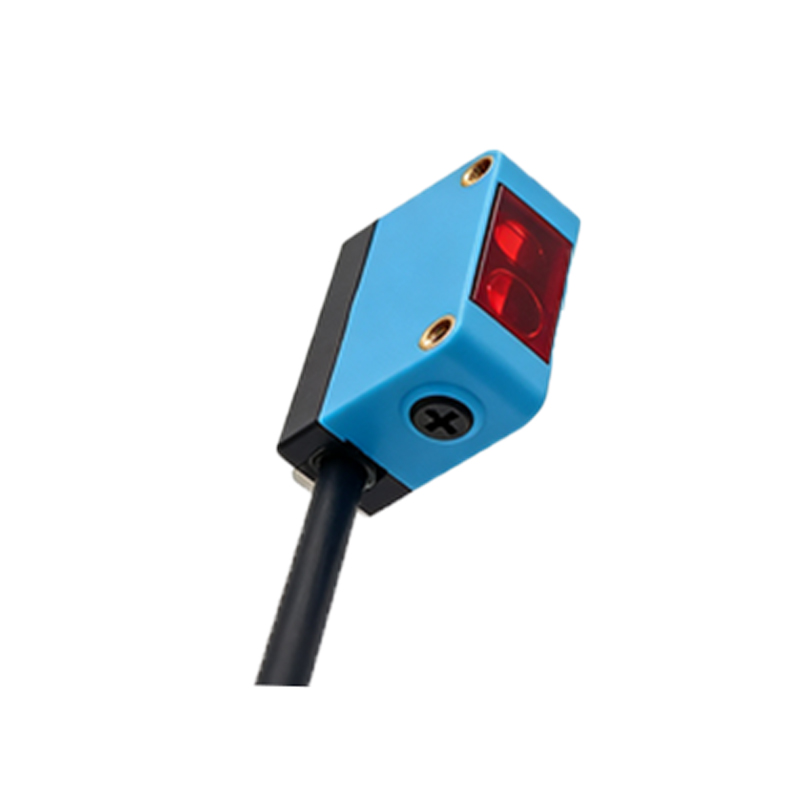
One of the primary advantages of these sensors is their ease of installation. They often feature M2 or M3 mounting holes, side-mounting brackets, or snap-in clips for direct integration into conveyor rails or robot end-effectors. The cylindrical or rectangular housings are made from stainless steel or reinforced plastic, providing IP67 or IP69K protection against dust and washdown environments. Their cable or M8 connector options further simplify wiring in cramped control cabinets. For example, in a pick-and-place machine, an ultra-compact sensor can be embedded flush into a gripper to detect component presence without interfering with motion.
Performance Metrics and Typical Applications
Despite their size, these sensors deliver impressive specifications. Response times are commonly below 0.5 ms, suitable for high-speed object detection at rates exceeding 1000 parts per minute. They operate reliably on 10-30 VDC with low power consumption (typically< 20 mA). Typical applications include detecting small parts in electronic assembly, verifying label presence in packaging, and monitoring tool positions in CNC machines. The ability to sense transparent objects, such as glass vials or clear film, is also achieved through specialized polarized retro-reflective models.
Integration with Modern Industrial Networks
To align with Industry 4.0 initiatives, many ultra-compact photoelectric sensors now support digital protocols. IO-Link enables real-time parameter configuration, diagnostic data retrieval (e.g., signal strength, contamination warning), and remote monitoring. This connectivity reduces downtime by allowing predictive maintenance. For instance, a sensor on a robotic arm can report its detection stability over time, alerting operators to potential misalignment before a failure occurs. Such smart features are critical for maintaining high overall equipment effectiveness in automated factories.
Selection Criteria for Engineers
When specifying an ultra-compact sensor, engineers must evaluate several factors: sensing distance, target material, ambient light conditions, and mounting constraints. A diffuse sensor with background suppression is preferable for detecting dark targets against shiny backgrounds, while a through-beam pair offers the longest range but requires alignment. Additionally, the choice between red LED and laser light sources depends on spot size requirements—laser provides a pinpoint beam (0.5 mm diameter) for micro-objects. Thermal stability is also crucial, as these sensors must operate in temperatures from -25°C to 60°C without drift.
Conclusion and Future Trends
Ultra-compact photoelectric sensors represent a critical advancement in industrial sensing, offering unmatched density and precision. As manufacturing moves toward more agile and miniaturized processes, these sensors will continue to evolve. Future trends include higher resolution 3D time-of-flight technologies integrated into similar form factors, enabling distance measurement without moving parts. For engineers, staying updated on these developments is essential to leverage the full potential of space-constrained automation.