Introduction to Photoelectric Sensors
Photoelectric sensors are non-contact devices that detect the presence, absence, or distance of an object using light. They are widely used in industrial automation, packaging, and material handling systems. The fundamental principle involves emitting a beam of light (typically infrared, visible red, or laser) from an emitter and analyzing the changes in the received light at a receiver. This article outlines the three primary forms: through-beam, retro-reflective, and diffuse sensors, along with their key characteristics, applications, and selection criteria.
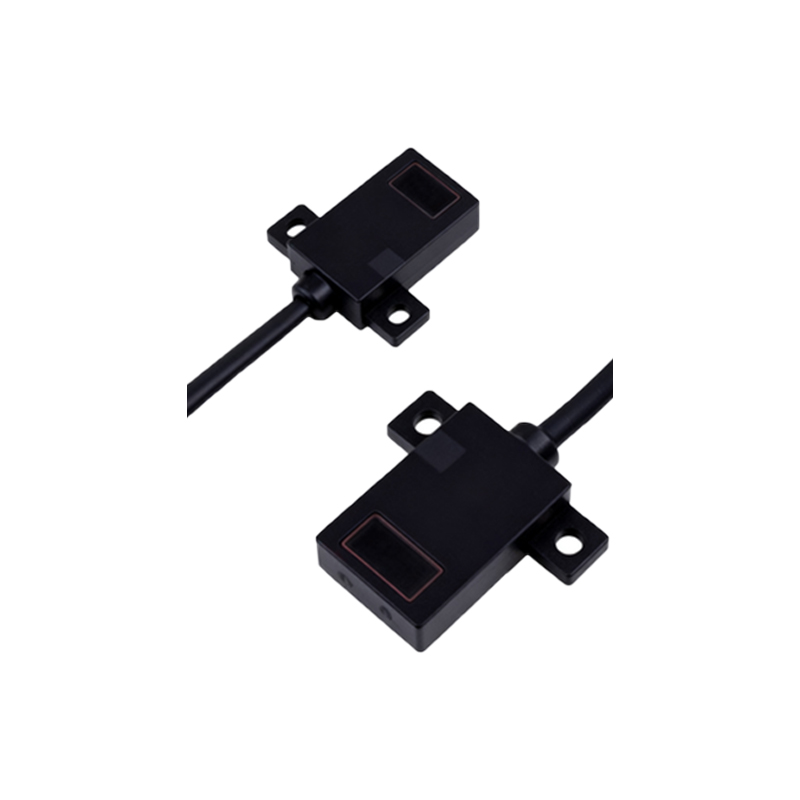
Through-Beam Sensors (Opposed Mode)
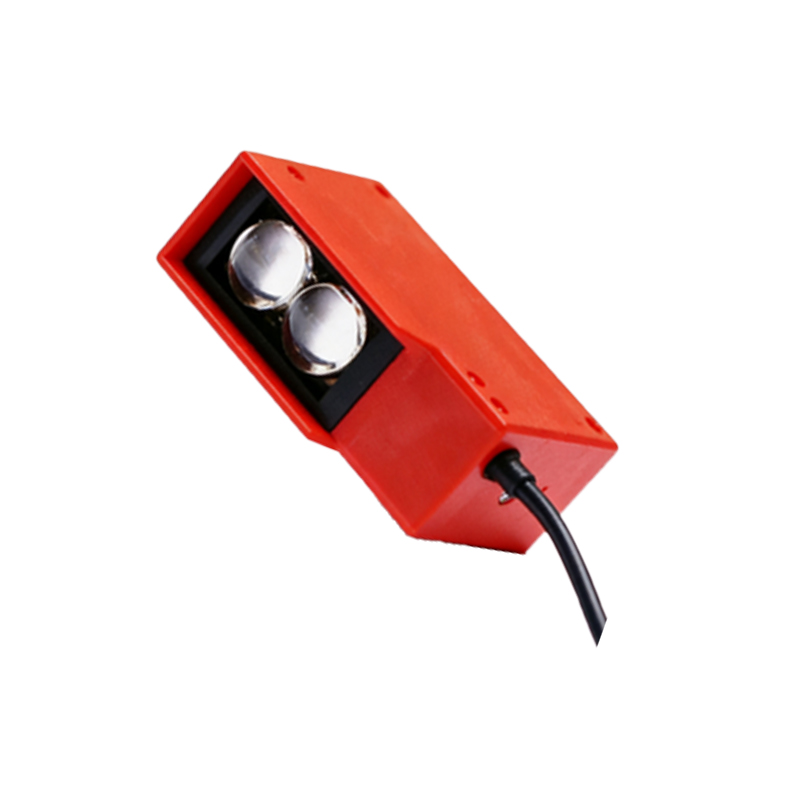
In the through-beam configuration, the emitter and receiver are housed in separate units, positioned directly opposite each other. The light beam travels from the emitter to the receiver. An object is detected when it interrupts this beam, causing a loss of signal. This design offers the longest sensing range, typically up to 30 meters or more, and is highly reliable for opaque objects. However, it requires alignment of two separate units and may be affected by dust or fog. Common applications include conveyor belt presence detection, door safety systems, and long-range counting.
Retro-Reflective Sensors
Retro-reflective sensors combine the emitter and receiver in a single housing. A reflector is placed opposite the sensor, which returns the emitted light back to the receiver. Detection occurs when an object blocks the light path between the sensor and the reflector. These sensors are easier to install than through-beam types, as only one unit needs wiring. The sensing range is moderate, often up to 10 meters. They are ideal for detecting transparent or shiny objects when using polarized filters. However, performance can degrade in highly reflective environments. Typical uses include pallet detection in warehouses and product arrival confirmation.
Diffuse Sensors (Proximity Mode)
Diffuse sensors have both emitter and receiver in one housing, but they rely on light reflected directly from the target object. The sensor emits a beam, and the receiver detects the light scattered back from the object’s surface. This mode does not require a separate reflector. The sensing range is shorter, usually less than 2 meters, and depends on the object’s color, material, and surface finish. Light-colored objects reflect more light, increasing range, while dark objects absorb light, reducing it. These sensors are cost-effective and easy to mount, making them suitable for detecting close-range objects, such as parts in a vibratory feeder or labels on packaging.
Specialized Variants: Background Suppression and Foreground Suppression
To overcome limitations of standard diffuse sensors, advanced variants like background suppression (BGS) and foreground suppression (FGS) are available. BGS sensors use a triangulation method to detect objects within a defined sensing window while ignoring the background. FGS sensors detect objects only in a specific foreground region. These are ideal for applications with variable backgrounds, such as detecting dark objects on a conveyor belt or ensuring precise registration in printing machinery.
Selection Criteria for Industrial Use
When choosing a photoelectric sensor, consider the following: sensing range (through-beam for long distances, retro-reflective for medium, diffuse for short), object characteristics (transparency, color, reflectivity), environmental conditions (dust, moisture, ambient light), and mounting space. Additionally, output type (PNP, NPN, analog) and response time should match the control system. For harsh environments, sensors with IP67 or higher ratings are recommended.
Conclusion
Understanding the basic forms of photoelectric sensors—through-beam, retro-reflective, and diffuse—enables engineers to select the optimal solution for specific industrial tasks. Each form has distinct advantages and limitations, and specialized variants further extend their capabilities. Proper selection ensures reliable detection, improved productivity, and reduced downtime in automated systems.