Laser sensors have become indispensable tools across a vast spectrum of industries, offering unparalleled precision, speed, and reliability for measurement and detection tasks. Unlike conventional sensors, they utilize a focused beam of light to perform non-contact operations, making them ideal for delicate materials, high-speed production lines, and harsh environments. This guide explores the top ten types of laser sensors, detailing their core principles and primary applications to help you select the optimal technology for your specific needs.
1. Laser Distance Sensors: These sensors measure the interval between the sensor and a target object. They operate primarily on two principles: time-of-flight (ToF) and triangulation. ToF sensors calculate distance by measuring the time it takes for a laser pulse to reflect back, suitable for longer ranges. Triangulation sensors use a precise geometric method for extremely accurate short to medium-range measurements. Common applications include level monitoring in silos, robotics positioning, and vehicle guidance systems.

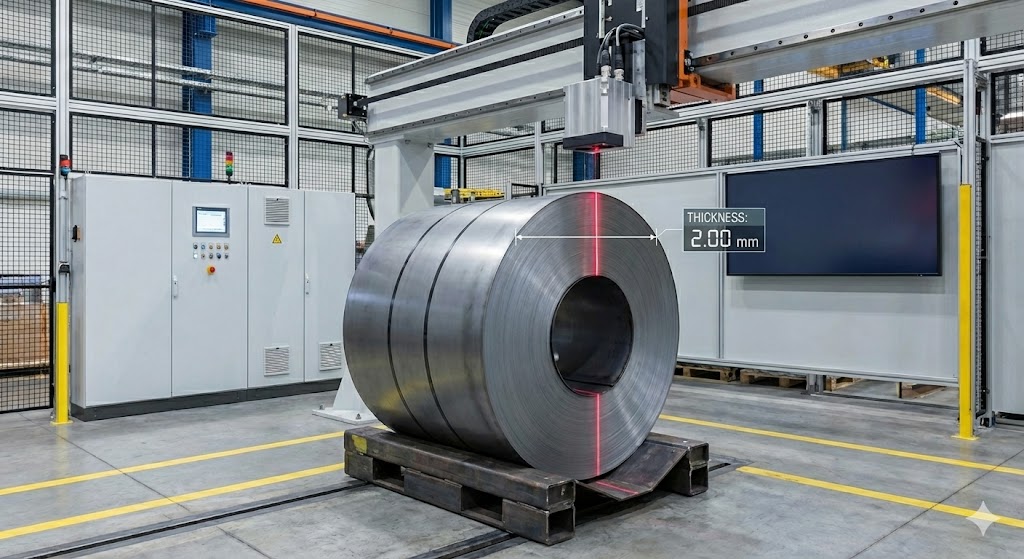
2. Laser Displacement Sensors: A specialized subset of distance sensors, displacement sensors are engineered for high-precision measurement of an object's position, thickness, or vibration. They excel in detecting minute changes, often at the micron level. You will find them performing critical quality checks in automotive manufacturing (e.g., brake disk thickness), electronic component inspection, and monitoring runout on rotating shafts.
3. Laser Photoelectric Sensors: These are the workhorses of detection. They use a laser beam to sense the presence or absence of an object. Compared to standard LED photoelectric sensors, the laser's focused beam allows for the detection of very small objects and provides a precise, visible beam for easy alignment. They are ubiquitous in packaging, material handling, and assembly line automation for precise object counting and positioning.

4. Laser Confocal Sensors: Employing advanced optical technology, these sensors use a spatial pinhole to eliminate out-of-focus light. This enables them to perform ultra-high-resolution measurements of surface profiles, thickness of transparent materials (like glass or film), and minute height differences. They are essential in semiconductor wafer inspection, precision coating measurements, and biomedical engineering.
5. Laser Micrometer Sensors: Designed specifically for non-contact diameter measurement, laser micrometers project a parallel laser beam across a target. A high-resolution receiver on the opposite side detects the shadow cast by the object, calculating its diameter with exceptional accuracy. They are crucial for quality control in wire, cable, fiber optic, and tubing production.
6. Laser Marking Sensors: These sensors are integrated into laser marking systems to precisely locate the position of a part before the marking process begins. They ensure that barcodes, serial numbers, or logos are applied to the exact correct location on products, which is vital in electronics, medical device manufacturing, and automotive part traceability.
7. Laser Edge Detection Sensors: Used to identify the precise edge or center of a material, such as web, film, or sheet metal. They guide cutting tools, slitters, and printers to ensure consistent product width and alignment. The focused laser beam provides a sharp contrast for detecting material edges, even on transparent or glossy surfaces, in printing and converting industries.
8. Laser Area Sensors: Instead of a single point, these sensors project a laser line or a pattern over an area. A camera or receiver then analyzes the deformation of this pattern to measure an object's 3D shape, volume, or surface contours. This technology is key in bin picking for robotics, log scanning, and automated inspection of assembled parts.
9. Laser Radar (LiDAR) Sensors: While commonly associated with autonomous vehicles, LiDAR (Light Detection and Ranging) is a powerful surveying and mapping tool. It rapidly fires laser pulses and measures their return time to create detailed 3D point cloud maps of environments. Applications extend to topographic surveying, forestry management, archaeology, and infrastructure inspection.
10. Laser Interferometer Sensors: Representing the pinnacle of precision measurement, interferometers use the interference pattern created by combining laser light waves. They measure distances, vibrations, and surface flatness with nanometer-level accuracy. Their use is predominantly in scientific research, calibration of precision machinery, and manufacturing of optical components and semiconductor lithography equipment.
Selecting the right laser sensor depends heavily on your specific parameters: required measurement range, accuracy, target material, surface characteristics, and environmental conditions like dust or ambient light. Understanding the strengths of each type is the first step toward implementing a solution that enhances automation, ensures quality, and boosts operational efficiency. As technology advances, these sensors continue to evolve, offering even greater capabilities for the smart factories and complex systems of tomorrow.