Introduction to Photoelectric Sensor Communication Modules
In modern industrial automation, photoelectric sensors are essential for detecting objects, distances, and material presence. However, their true potential is unlocked when integrated with communication modules. These modules enable sensors to transmit data to control systems, such as PLCs or SCADA, via industrial networks like Profibus, Modbus, or Ethernet/IP. The core principle revolves around converting analog or digital sensor signals into standardized communication protocols, ensuring real-time data exchange and system interoperability.
Basic Working Principle of a Photoelectric Sensor
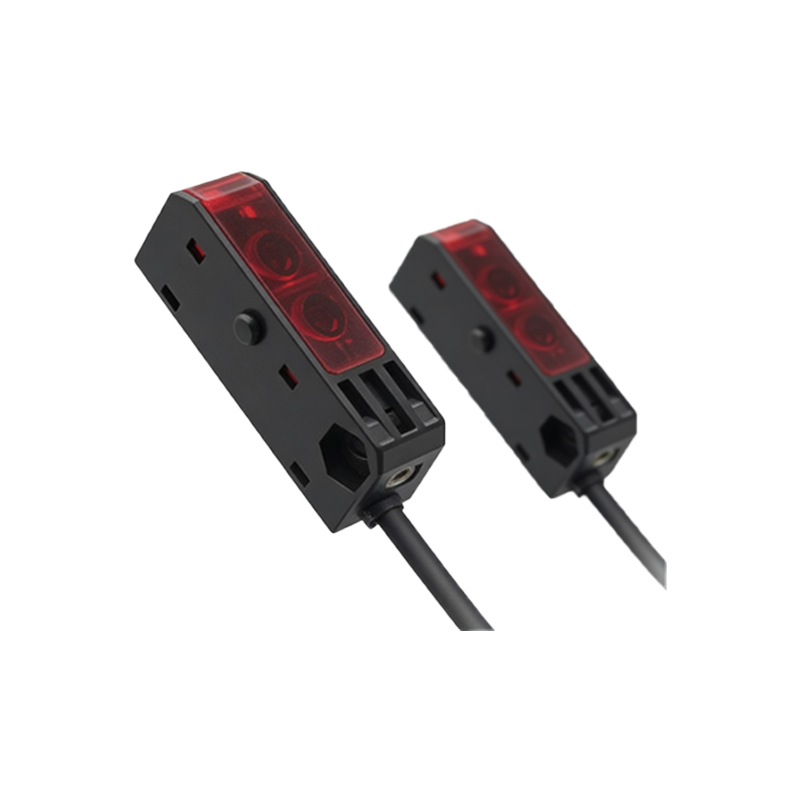
A photoelectric sensor operates by emitting a light beam (often infrared, visible red, or laser) and detecting changes in the received light. When an object interrupts or reflects the beam, the sensor triggers an electrical signal. This signal can be a simple on/off digital output or an analog value representing distance or intensity. For instance, in diffuse mode sensors, the emitted light reflects off the target, and the receiver measures the reflected intensity to determine object presence. The communication module then processes this raw signal into a digital data packet.
Role of the Communication Module in Signal Conversion
The communication module acts as a bridge between the sensor’s output and the network. It typically includes a microcontroller that reads the sensor’s electrical signal via an ADC (analog-to-digital converter) for analog sensors or a digital input port for discrete signals. The microcontroller then encapsulates the data into a protocol-specific frame, adding headers, checksums, and addressing information. For example, in a Modbus RTU network, the module would convert a 4-20 mA signal from a distance sensor into a 16-bit register value, along with a device ID and CRC error check.
Key Protocols and Their Implementation
Different industrial environments require specific protocols. Common examples include IO-Link for simple point-to-point communication, Profinet for high-speed Ethernet-based systems, and CANopen for rugged machinery. The communication module must be designed to support the physical layer (e.g., RS-485, Ethernet, or fiber optic) and the data link layer of the chosen protocol. For instance, an IO-Link module would handle the 3-wire interface, providing both power and data, while a Modbus module would manage master-slave request-response cycles. The module’s firmware is critical for timing, error handling, and ensuring data integrity under electromagnetic interference.
Synchronization and Real-Time Data Handling
In high-speed automation, such as conveyor belt sorting or packaging lines, the communication module must minimize latency. This is achieved through deterministic scheduling, where the sensor’s reading is timestamped and transmitted within a fixed cycle time. Some advanced modules use preemptive interrupts to prioritize urgent signals, such as alarm conditions. Additionally, the module may implement data buffering to handle burst readings, ensuring no data loss during network congestion. For example, in an EtherCAT network, the module can synchronize with the master clock to achieve jitter below 1 microsecond.
Power Management and Environmental Considerations
Industrial environments often expose sensors to dust, moisture, and temperature extremes. The communication module must be designed with robust power management, including transient voltage suppression and low-power sleep modes for energy efficiency. Many modules integrate isolated power supplies to prevent ground loops and noise coupling. Furthermore, the module’s enclosure must meet IP67 or higher ratings, with sealed connectors and conformal coating on PCBs. For example, a sensor in a washdown area would require a module with M12 connectors and corrosion-resistant materials.
Troubleshooting and Diagnostics via Communication
Modern communication modules offer built-in diagnostics, such as signal quality monitoring, cable break detection, and device temperature logging. This is enabled by the communication protocol’s ability to read diagnostic registers or send heartbeat signals. For instance, a module using IO-Link can report the sensor’s ambient light level and contamination status, allowing predictive maintenance. Engineers can access this data via a handheld tool or software like Siemens TIA Portal, reducing downtime in critical lines.
Conclusion and Future Trends
Understanding the principle of photoelectric sensor communication modules is vital for designing efficient automation systems. As Industry 4.0 evolves, these modules are incorporating edge computing capabilities, enabling local data processing and AI-based anomaly detection. The trend toward wireless protocols like WirelessHART and 5G is also emerging, offering flexibility in hard-to-reach installations. By mastering these principles, electrical engineers can optimize sensor integration, improve network reliability, and drive smarter factory operations.