In the realm of precision measurement and industrial automation, communication laser sensors have emerged as a cornerstone technology. These sophisticated devices utilize the coherent properties of laser light to detect, measure, and communicate information about an object's presence, distance, position, or profile with exceptional accuracy and speed. Unlike simple photoelectric sensors, communication laser sensors often integrate advanced signal processing and data communication protocols, enabling them to function as intelligent nodes within larger networked systems.
The fundamental operating principle revolves around the emission of a focused laser beam towards a target. The interaction of this beam with the target—whether through reflection, interruption, or modulation—is then captured by a receiver. The key differentiator lies in how the sensor interprets this interaction. Time-of-flight (ToF) sensors, for instance, calculate distance by measuring the time delay between the emission of a laser pulse and the reception of its reflection. Triangulation sensors, on the other hand, use a geometric approach where a laser dot is projected onto the target, and its position on a receiving sensor array changes with the target's distance, allowing for highly precise displacement measurements. The "communication" aspect is multifaceted. It can refer to the sensor's internal communication between its optical, electronic, and processing components, or more critically, its external communication capabilities. Modern laser sensors are equipped with standard industrial communication interfaces such as IO-Link, PROFINET, EtherCAT, or Ethernet/IP. This allows them to transmit not just a simple on/off signal, but rich digital data—exact measured values, device status, diagnostic information, and configuration parameters—directly to programmable logic controllers (PLCs) or supervisory control and data acquisition (SCADA) systems.
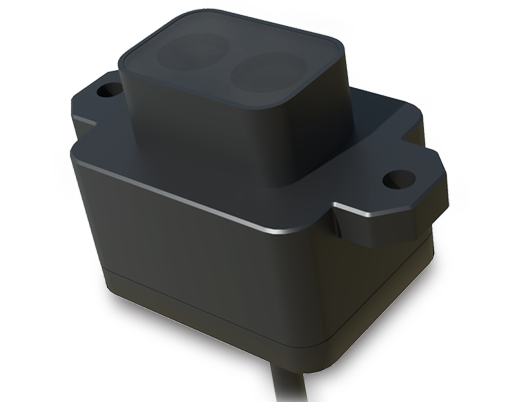
The applications of communication laser sensors are vast and transformative. In manufacturing, they are indispensable for precise contour and dimension checking, ensuring parts meet stringent quality control standards. They guide robotic arms for accurate pick-and-place operations and perform non-contact thickness measurement of materials like glass or metal sheets. In logistics and warehousing, they facilitate automated parcel dimensioning, palletizing, and inventory management by swiftly scanning object sizes and positions. The automotive industry relies on them for alignment checks, gap and flush measurement between body panels, and guidance of autonomous guided vehicles (AGVs) within factories. Furthermore, their role in emerging fields like autonomous vehicles for LiDAR (Light Detection and Ranging) systems underscores their importance in long-range, high-resolution environmental mapping and obstacle detection.
Several key advantages drive their adoption. The primary benefit is unparalleled precision, capable of micron-level resolution. Their non-contact nature eliminates wear and tear and allows measurement of delicate, hot, or moving objects without interference. The high response speed enables real-time process control in high-speed production lines. Integrated communication protocols facilitate predictive maintenance, as sensors can report impending failures or calibration drifts, minimizing unplanned downtime. They also simplify installation and reduce wiring complexity through networked digital communication compared to traditional analog sensors.
Looking ahead, the evolution of communication laser sensors is geared towards greater intelligence, miniaturization, and integration. The convergence with artificial intelligence and edge computing will allow sensors to perform preliminary data analysis locally, sending only actionable insights to central systems, thereby reducing network load and latency. Advancements in laser diode and CMOS sensor technology will continue to improve performance while reducing size and cost. Furthermore, enhanced cybersecurity features for industrial communication protocols will become paramount as these sensors become critical nodes in the Industrial Internet of Things (IIoT). The future will likely see laser sensors that are not just data providers but autonomous decision-making units within smart factories and intelligent infrastructure systems.

In conclusion, communication laser sensors represent a significant leap from basic detection to intelligent, data-rich perception. By combining the physical principles of laser measurement with robust digital communication, they provide the essential eyes and voice for modern automated systems. Their continued development is pivotal to advancing industrial productivity, enabling new levels of quality control, and paving the way for more autonomous and interconnected technological ecosystems.