Introduction to Directional Photoelectric Sensors
Directional photoelectric sensors are critical components in industrial automation, designed to detect objects by emitting a light beam and analyzing its reflection or interruption. Unlike standard photoelectric sensors, directional variants are engineered to detect targets from a specific angle or direction, enhancing accuracy in complex environments. These sensors are widely used in packaging, material handling, and robotics due to their ability to reject background interference and ensure reliable detection even with shiny or irregular surfaces.
Through-Beam Directional Sensors
Through-beam sensors consist of a separate emitter and receiver, aligned to create a continuous light path. When an object breaks this beam, the sensor triggers. This type offers the longest sensing range (up to 30 meters or more) and highest immunity to ambient light, dust, or dirt. They are ideal for applications like conveyor belt monitoring, warehouse door safety, and counting transparent objects. However, installation requires precise alignment, and the emitter and receiver must be wired separately.
Retro-Reflective Directional Sensors
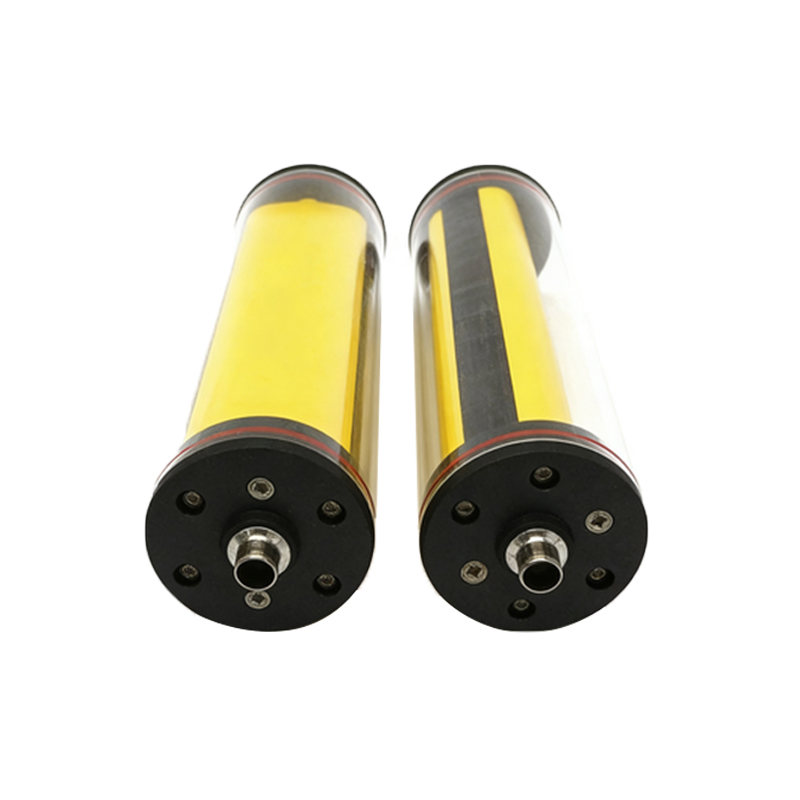
Retro-reflective sensors combine the emitter and receiver in a single housing, using a reflector to bounce the beam back. When an object interrupts the light path, detection occurs. These sensors simplify wiring and mounting compared to through-beam types, with ranges typically up to 10 meters. They are suitable for detecting opaque objects in automated sortation systems or elevator door control. A common variant is the polarized retro-reflective sensor, which reduces false triggers from shiny surfaces by using polarized filters.
Diffuse Reflection Directional Sensors
Diffuse reflection sensors, also known as proximity photoelectric sensors, have the emitter and receiver in one unit. They rely on light reflected directly from the target object. Directional control is achieved through lens design or adjustable sensitivity, allowing detection at specific distances or angles. These sensors are effective for close-range applications (up to 2 meters) like part presence verification in assembly lines or object positioning. However, they are more susceptible to background interference and require careful calibration for different surface colors or textures.
Background Suppression Directional Sensors
Background suppression sensors are a specialized diffuse reflection type that uses triangulation to detect objects only within a defined range, ignoring background surfaces. They are ideal for applications where objects pass near walls, floors, or other machinery. By setting a fixed cutoff distance, these sensors prevent false triggers from distant targets, making them perfect for robotic gripper feedback or automated guided vehicle (AGV) docking.
Fiber Optic Directional Sensors
Fiber optic sensors use optical fibers to separate the emitter and receiver from the main electronics, allowing placement in tight spaces or hazardous areas. Directional sensing is achieved by customizing the fiber tip (e.g., right-angle or coaxial designs). These sensors excel in high-temperature or explosive environments, such as foundries or chemical plants, with ranges up to several meters depending on the fiber type.
Laser-Based Directional Sensors
Laser photoelectric sensors emit a focused, coherent beam for high-precision directional detection. They offer extremely long ranges (up to 60 meters) and small spot sizes, enabling detection of tiny objects like electronic components or threads. Laser sensors are often used in quality control, such as verifying label placement or measuring distances in automated storage systems. However, they require careful handling to comply with eye safety standards.
Selection Considerations for Directional Sensors
When choosing a directional photoelectric sensor, consider factors like sensing range, object material, ambient light conditions, and mounting constraints. Through-beam sensors suit long-range, dirty environments; retro-reflective balances cost and simplicity; diffuse is best for close applications; background suppression avoids false triggers; fiber optics handle extreme conditions; and laser sensors offer pinpoint accuracy. Always verify electrical compatibility (e.g., PNP/NPN output, voltage range) and environmental ratings like IP67 or IP69K for washdown areas.
Conclusion and Best Practices
Directional photoelectric sensors enhance automation efficiency by providing precise, angle-specific detection. For optimal performance, align sensors correctly during installation, clean lenses regularly, and test with actual target materials. Integrating these sensors with PLCs or safety controllers can further improve system reliability. As industry trends move toward Industry 4.0, smart directional sensors with IO-Link capabilities enable remote diagnostics and adaptive sensing, revolutionizing factory floor operations.