What Is Photoelectric Sensor Resolution?
Photoelectric sensor resolution refers to the smallest detectable change in the target position or size that the sensor can reliably distinguish. In industrial automation, this parameter directly impacts measurement accuracy, object detection reliability, and system repeatability. For example, a sensor with 0.1 mm resolution can detect a 0.1 mm shift in a target's edge, while a sensor with 1 mm resolution would miss such a subtle change. Resolution is often confused with repeatability, but they are distinct: resolution defines the minimum discernible difference, while repeatability measures the consistency of the sensor's output under identical conditions. Understanding this distinction is critical when selecting sensors for precision applications like PCB alignment or pharmaceutical packaging.
Key Factors Affecting Resolution
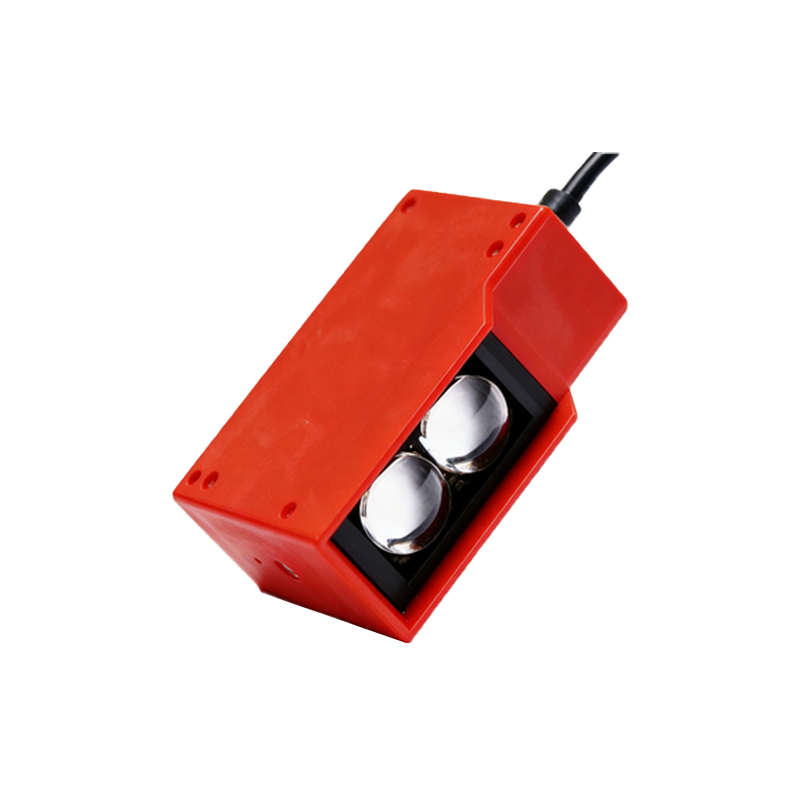
Several factors influence photoelectric sensor resolution, including the type of sensor technology, optical design, and environmental conditions. For through-beam sensors, resolution is primarily determined by the beam diameter and the receiver's sensitivity; a narrower beam yields higher resolution. Diffuse reflective sensors rely on the target's reflectivity and background suppression capabilities, where advanced models use background suppression to enhance resolution in challenging surfaces. Additionally, ambient light interference, temperature drift, and target speed can degrade resolution. Engineers must consider these variables when integrating sensors into high-speed production lines or harsh environments. For instance, using a laser-based sensor with a focused spot size of 0.05 mm can achieve sub-millimeter resolution but requires precise alignment to maintain performance.
Types of Photoelectric Sensors and Their Resolution Capabilities
Different sensor types offer varying resolution ranges suitable for specific applications. Through-beam sensors typically provide the highest resolution because the emitter and receiver are separate, allowing a clean, uninterrupted beam; they can achieve resolutions down to 0.01 mm with laser sources. Retro-reflective sensors, which use a reflector to bounce the beam back, offer moderate resolution around 0.1 to 0.5 mm, depending on the reflector's consistency. Diffuse reflective sensors have the lowest resolution, often 1 mm or more, due to beam spread and target surface variability. However, advanced diffuse sensors with background suppression can narrow this gap, achieving 0.2 mm resolution for dark or glossy targets. For high-precision tasks like semiconductor wafer handling, engineers often prefer through-beam or convergent beam sensors.
How to Calculate and Validate Sensor Resolution
To determine if a sensor meets your application's resolution needs, calculate the required resolution based on the smallest target feature or positional change. For example, if detecting a 0.5 mm gap in a moving belt, the sensor must have a resolution better than 0.5 mm. Validation involves testing the sensor with a calibrated target under actual operating conditions. Use a micrometer stage to incrementally move the target and record the sensor's output switching point. The standard deviation of these measurements indicates resolution, while the hysteresis (difference between on and off thresholds) should be minimal. Many datasheets specify resolution as a percentage of the sensing range, such as 0.5% at 100 mm range, equating to 0.5 mm resolution. Always confirm with real-world tests, as theoretical values may not account for vibration or ambient light.
Practical Considerations for Industrial Applications
When specifying photoelectric sensors for industrial lines, balance resolution with other performance metrics like sensing distance, response time, and cost. High resolution often requires shorter sensing distances or more expensive laser optics. For fast-moving objects, ensure the sensor's response time (e.g., 500 μs) aligns with the required sampling rate; otherwise, blurring can reduce effective resolution. Environmental factors such as dust, oil, or fog can scatter light, lowering resolution; use shielded or self-cleaning sensor housings in dirty environments. Additionally, consider alignment stability: a slight misalignment in a high-resolution through-beam system can cause false triggers. For example, in automotive part inspection, using a sensor with 0.05 mm resolution may require rigid mounting and periodic calibration to maintain accuracy.
Selecting the Right Sensor for Your Application
Start by defining the minimum detectable object size or positional tolerance. For applications like label detection or edge control, a diffuse sensor with 0.5 mm resolution may suffice. For high-speed counting of tiny components, a laser through-beam sensor with 0.02 mm resolution is ideal. Review datasheets for resolution specifications under standard conditions, and note that resolution often degrades at maximum sensing distance. Compare sensors from manufacturers like Keyence, SICK, or Banner, focusing on their optical design and signal processing algorithms. Finally, prototype with a sample sensor in your actual environment to confirm performance before full-scale deployment. This approach minimizes risk and ensures the sensor meets your precision requirements without overspending on unnecessary capabilities.