1. Presence and Position Detection in Manufacturing Lines
Photoelectric sensors are widely deployed in manufacturing lines for precise presence and position detection. These sensors utilize a light beam to detect the presence of an object, regardless of its material, color, or surface finish. In automotive assembly, they monitor the placement of components like doors and engines, ensuring proper alignment before welding or fastening. Their non-contact nature minimizes wear and tear, making them ideal for high-speed operations where mechanical switches would fail. For example, in conveyor systems, sensors trigger stops or diverters when items reach specific points, reducing errors and boosting throughput.
3. Packaging and Labeling Systems
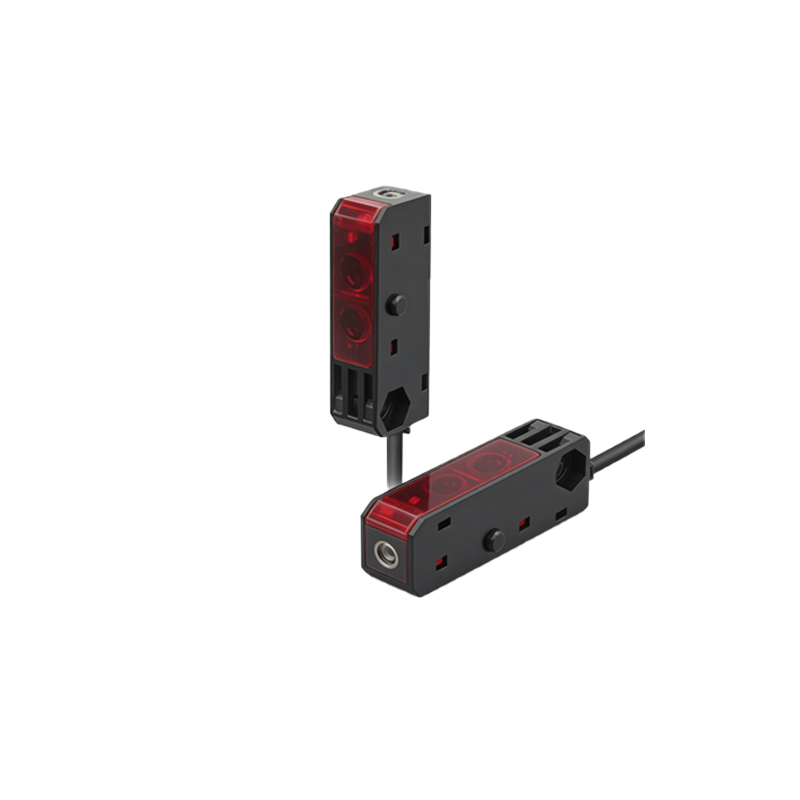
In packaging applications, photoelectric sensors ensure accurate label placement, seal integrity, and product counting. Diffuse-reflective sensors detect transparent or shiny objects like plastic bottles or foil wrappers, which are challenging for other sensors. Through-beam sensors, with separate emitters and receivers, provide long-range detection for tall stacks of boxes. In pharmaceutical packaging, these sensors verify that blister packs are correctly filled and sealed, preventing contamination and compliance issues. Their rapid response times allow for real-time adjustment of packaging machinery, minimizing waste.
4. Logistics and Warehousing Automation
Warehouses and distribution centers rely on photoelectric sensors for automated guided vehicles (AGVs), sortation systems, and inventory management. Retro-reflective sensors, which bounce light off a reflector, are commonly used to detect pallet locations on racks or guide AGVs along predefined paths. They can operate reliably in dusty or low-light environments typical of warehouses. By integrating with warehouse management software, these sensors enable real-time tracking of goods, reducing manual checks and improving order accuracy. In cross-docking facilities, they activate conveyor merges and diverters to streamline flow.
6. Safety and Machine Guarding
Safety-rated photoelectric sensors, such as light curtains, are critical for protecting operators from hazardous machinery. These sensors create an invisible barrier around robotic arms, presses, or cutting tools. If the beam is interrupted by any object, including a human hand, the machine instantly stops, preventing injuries. Unlike mechanical guards, light curtains allow easy access for maintenance and reduce downtime. Compliance with standards like ISO 13849 ensures these sensors meet rigorous safety requirements in industries such as metalworking and woodworking.
8. Quality Control in Food and Beverage Industries
In food processing, photoelectric sensors detect foreign objects, verify fill levels, and ensure proper container alignment. For instance, through-beam sensors can spot missing caps on beverage bottles or detect contaminants like metal fragments in packaged goods. Their hygienic design, often with IP69K ratings, withstands high-pressure washdowns and harsh cleaning chemicals. In bakeries, sensors monitor dough thickness or cookie alignment on cooling conveyor belts, ensuring uniform product quality. The ability to operate across diverse temperatures and moisture levels makes them indispensable for food safety.