In the world of industrial automation and precision measurement, the ability to detect the presence or absence of an object without physical contact is paramount. Among the various technologies available, strain gauge proximity sensors represent a sophisticated and highly reliable solution for demanding applications. Unlike common inductive or capacitive sensors, these devices offer unique advantages in environments where minute force or displacement detection is critical.
At its core, a strain gauge proximity sensor operates on the fundamental principle of the piezoresistive effect. A strain gauge, which is a thin, flexible substrate with a metallic foil pattern, is bonded to a sensing element or diaphragm. When this sensing element is subjected to a force or minute deflection caused by an approaching target, it deforms. This deformation, or strain, is transferred to the strain gauge. The metallic foil within the gauge experiences a change in its electrical resistance proportional to the applied strain. This resistance change is typically extremely small. Therefore, the sensor incorporates a Wheatstone bridge circuit—a precise arrangement of resistors including the strain gauge itself. The bridge converts the tiny resistance variation into a measurable voltage output signal. This analog signal can then be conditioned, amplified, and interpreted by a controller to determine the proximity or touch of an object.
The defining characteristic of this technology is its exceptional sensitivity. It can detect forces and displacements on a microscopic scale, far beyond the capability of standard proximity switches. This makes it ideal for applications like delicate part positioning, micro-assembly robots, or monitoring tension in fine wires and filaments. Furthermore, the output is analog and continuous, providing not just a simple on/off signal but data proportional to the degree of force or proximity. This allows for nuanced control and measurement, such as gauging the gentle pressure of a robotic gripper on a fragile component.
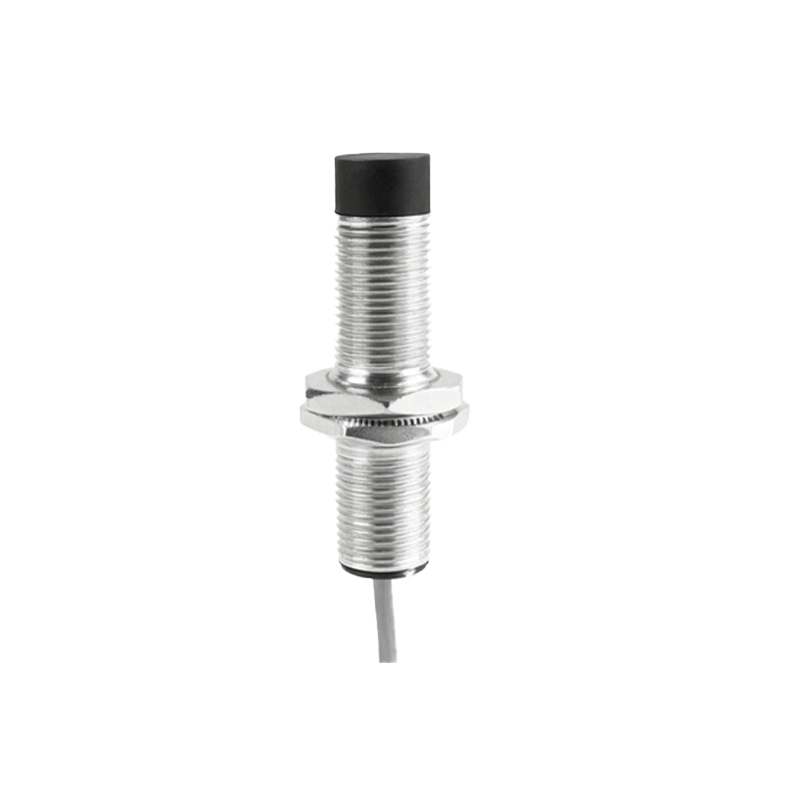
Another significant advantage is material independence. Since the detection relies on mechanical deflection of the sensor's own structure, the technology is largely unaffected by the color, transparency, or material composition (metallic or non-metallic) of the target object. Whether detecting a plastic gear, a glass vial, or a rubber seal, the sensor responds consistently to physical contact or extremely close proximity that induces strain. This universality simplifies application engineering.
However, strain gauge proximity sensors are typically contact or near-contact devices. The target must come very close to, or lightly touch, the sensing diaphragm to cause the necessary deflection. They are not designed for long-range detection measured in centimeters like ultrasonic or some optical sensors. Their primary role is in ultra-precise, short-range presence detection and micro-force measurement. The sensing diaphragm must also be appropriately sized and designed for the expected force range to avoid damage from overload.
In practical terms, these sensors find their niche in high-precision industries. In semiconductor manufacturing, they are used to detect the delicate placement of wafers. In pharmaceutical packaging, they can verify the subtle presence of a pill in a blister pocket by sensing the deflection of the foil. In advanced robotics, they provide tactile feedback for grippers, enabling adaptive force control for handling objects of varying weight and fragility. They are also employed in precision weighing systems and as part of complex tactile arrays.
Selecting the right strain gauge proximity sensor requires careful consideration of several parameters. The measurement range, expressed in force (Newtons or grams-force) or deflection (micrometers), is the foremost criterion. The sensor's natural frequency and response time determine how quickly it can react to dynamic events. Environmental factors are crucial; the sensor must be rated for the operating temperature range and be protected from moisture, oils, or chemicals that could degrade the bonding of the strain gauge or the diaphragm. Finally, the output signal type—whether millivolt per volt, amplified voltage, or current loop—must be compatible with the data acquisition system or PLC.
Installation and calibration are critical steps for optimal performance. The sensor must be mounted securely to ensure that the intended force vector acts correctly on the sensing element. Misalignment can cause erroneous readings. Most sensors require a zeroing or tare procedure to null out any signal offset, and span calibration to set the output range corresponding to the expected measurement range. Proper shielding of the signal cables is also essential to prevent electrical noise from interfering with the low-level analog signal.
In conclusion, strain gauge proximity sensors are specialized instruments that bridge the gap between simple object detection and precise metrology. They excel in applications where sensitivity, material independence, and analog feedback are more valuable than long detection ranges. By understanding their operating principle, strengths, and limitations, engineers can effectively deploy these powerful sensors to enhance the precision, reliability, and intelligence of automated systems, particularly in fields where the margin for error is measured in microns.