Understanding Photoelectric Sensor Heads
Photoelectric sensor heads are critical components in industrial automation systems, designed to detect the presence, absence, or distance of objects using light beams. These sensors operate by emitting a light signal—typically infrared, visible red, or laser—and measuring the reflection or interruption of that signal. In manufacturing environments, they replace mechanical switches to offer non-contact detection, reducing wear and tear while boosting reliability. For engineers, selecting the right sensor head depends on factors like sensing range, ambient light conditions, and target material. Their robust construction, often IP67-rated, ensures performance in dusty or wet factory floors. Common applications include conveyor belt monitoring, packaging alignment, and robotic positioning. By integrating photoelectric sensor heads, facilities achieve faster cycle times and lower downtime, directly impacting overall equipment effectiveness OEE.
Key Types and Their Applications
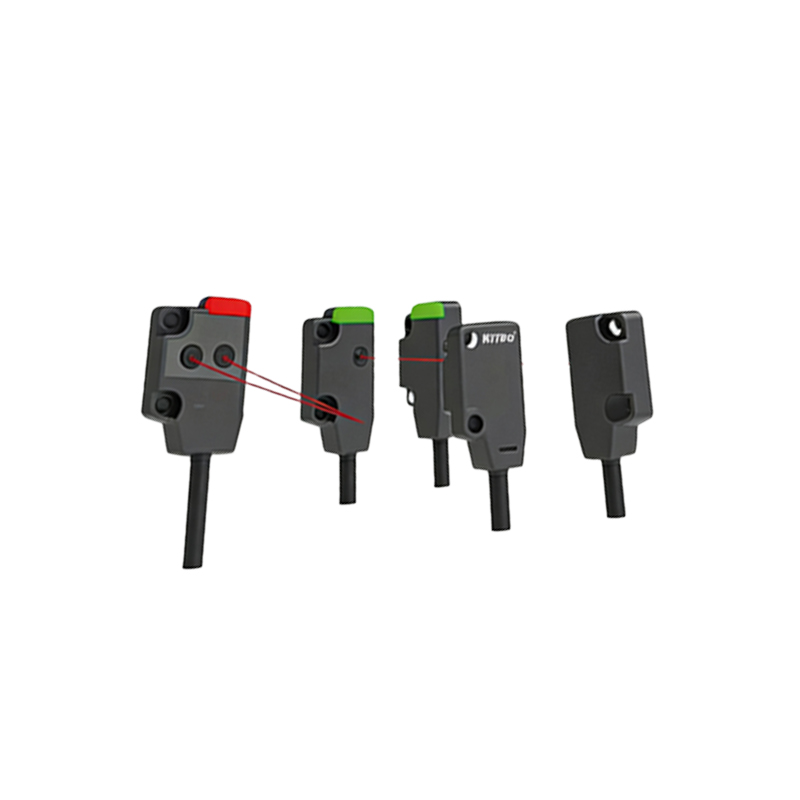
There are three primary types of photoelectric sensor heads: through-beam, retro-reflective, and diffuse. Through-beam sensors consist of separate emitter and receiver units, offering the longest sensing distances up to 30 meters, ideal for counting items on long conveyors. Retro-reflective sensors use a reflector to bounce the light beam back to the receiver, simplifying installation in tight spaces, such as detecting transparent bottles in packaging lines. Diffuse sensor heads detect objects by sensing reflected light from the target itself, best for short-range applications like bin-level monitoring. Each type has unique advantages: through-beam is immune to surface color, retro-reflective handles glossy materials, and diffuse adapts to irregular shapes. Engineers must consider these characteristics to avoid false triggers or missed detections.
Optimizing Performance with Proper Installation
Proper alignment and calibration are essential for photoelectric sensor head performance. Misalignment can cause beam scatter, leading to unreliable readings. In high-vibration environments, use mounting brackets with vibration dampeners. For dusty conditions, incorporate air-purge systems or choose sensors with built-in lens cleaning features. Ambient light interference, especially from welding arcs or sunlight, should be mitigated by selecting modulated light sensors that filter out background noise. Additionally, adjust the sensitivity threshold to match the target's reflectivity. For example, a black rubber part requires higher sensitivity than a white metal one. Regular maintenance, such as cleaning the lens with a lint-free cloth, extends sensor life. These steps prevent false alarms and ensure consistent output signals to PLCs or controllers.
Integration with Modern Control Systems
Modern photoelectric sensor heads often feature IO-Link communication, enabling real-time diagnostics and parameter adjustments. This digital interface allows engineers to monitor signal strength, detect contamination, or switch operating modes remotely via a central control system. For instance, in a smart factory, a sensor head can send alerts when its lens is dirty, prompting automated cleaning cycles. Integration with programmable logic controllers PLCs is straightforward using standard wiring for NPN or PNP outputs. Advanced models support analog output for distance measurement, useful in precision tasks like thickness gauging. By leveraging these capabilities, engineers streamline troubleshooting and reduce manual intervention, aligning with Industry 4.0 principles.
Cost and Reliability Considerations
While photoelectric sensor heads have higher upfront costs than inductive sensors, their long-term benefits often justify the investment. They offer detection ranges beyond 10 meters and can sense transparent or colored materials where other sensors fail. Reliability is enhanced by solid-state electronics, which withstand shock and vibration better than mechanical switches. However, engineers should evaluate total cost of ownership including installation, maintenance, and spare parts. For harsh environments, choose units with stainless steel housings and glass lenses. Compare warranty periods and mean time between failures MTBF ratings. Proper selection reduces replacements and production stoppages, delivering a clear return on investment within months. This makes photoelectric sensor heads a cornerstone of efficient, modern automation systems.