Introduction to Optical Photoelectric Sensors
Optical photoelectric sensors are fundamental components in modern industrial automation, used to detect the presence, absence, or distance of objects without physical contact. These sensors convert light signals into electrical signals, enabling precise control in manufacturing lines, packaging systems, and robotics. Common in harsh environments, they offer high reliability and fast response times. The core principle involves a light source, typically an LED or laser diode, and a photodetector, such as a phototransistor or photodiode. Understanding this technology is crucial for electrical engineers designing efficient control systems.
Basic Operating Principle
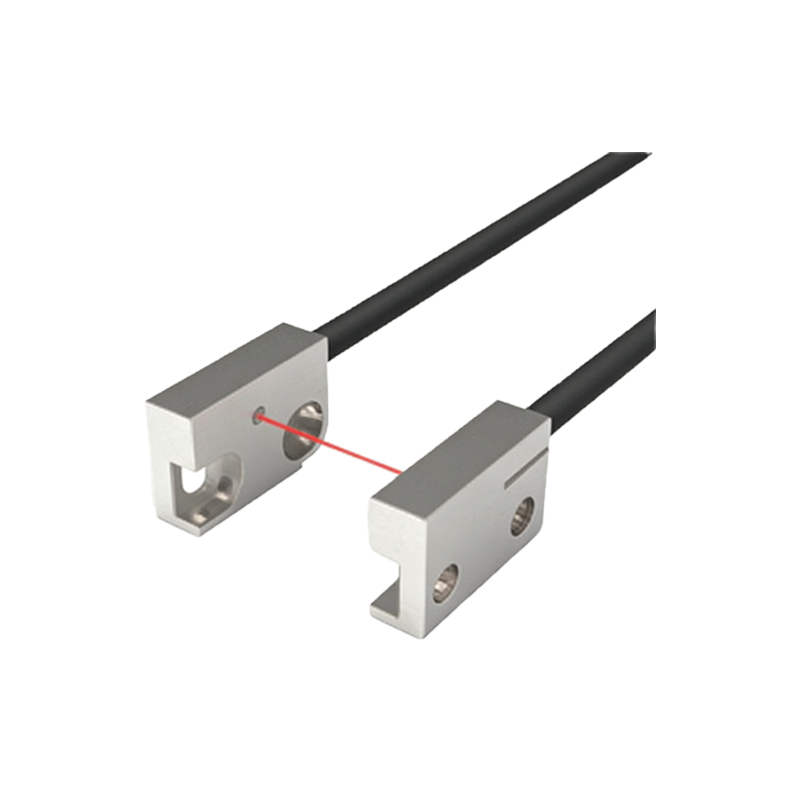
The basic operation of an optical photoelectric sensor relies on the modulation of light. A transmitter emits a beam of light, usually in the infrared, visible, or laser spectrum. This light travels through the air and either reaches a receiver directly or reflects off a target object. The receiver detects changes in light intensity, wavelength, or timing. When an object interrupts, reflects, or absorbs the light, the sensor triggers an output signal, such as a digital high or low state. This principle is analogous to a simple switch, but with no mechanical parts, reducing wear and tear.
Key Components: Light Source and Receiver
The light source is a critical element. Common sources include infrared LEDs for cost-effective short-range detection, visible red LEDs for alignment ease, and laser diodes for high-precision long-range sensing. The receiver, often a photodiode or phototransistor, converts incoming photons into an electrical current. Advanced sensors incorporate photodarlington pairs for higher sensitivity. To improve noise immunity, many sensors use modulated light pulses, where the transmitter and receiver sync frequencies, filtering out ambient light interference. This modulation is essential in factory floor environments with fluorescent lighting or sunlight.
Through-Beam Sensing Mode
In through-beam mode, the transmitter and receiver are housed in separate units, placed opposite each other. The light beam travels directly from the transmitter to the receiver. When an object passes between them, it blocks the beam, causing the receiver to detect a loss of signal. This mode offers the highest detection range and reliability, as the beam is uninterrupted except when an object is present. It is ideal for applications requiring long distances, such as conveyor belt counting or gate detection. However, it requires precise alignment and separate mounting points.
Retro-Reflective Sensing Mode
Retro-reflective sensors combine the transmitter and receiver in a single housing, opposite a reflector. The light beam travels from the sensor to the reflector and bounces back to the receiver. When an object interrupts the beam, the receiver sees a drop in light intensity. A key advantage is simplified wiring and alignment, as only one sensor unit needs mounting. However, reflective objects like shiny metal or mirrors can cause false triggers. To mitigate this, many sensors use polarization filters, which reject reflections from shiny surfaces while detecting opaque objects.
Diffuse Sensing Mode
Diffuse sensors also use a single housing, but rely on light reflected directly from the target object. The transmitter and receiver are oriented to detect light scattered by the object’s surface. This mode is simpler to install, requiring no separate reflector, but has a shorter range and is more dependent on the object’s reflectivity and color. Dark or matte objects absorb more light, reducing detection distance. Engineers must calibrate sensitivity based on the target material. Diffuse sensors are common in packaging lines, where they detect boxes or bottles on a belt.
Advanced Detection Techniques
Modern optical sensors incorporate advanced methods to improve accuracy. Background suppression uses a triangulation principle, where the receiver is positioned at an angle, detecting only objects within a specific focal plane. This eliminates false triggers from background surfaces. Another technique, background evaluation, analyzes the relative intensity of light from the target versus the background. Laser-based sensors offer sub-millimeter precision for positioning tasks. Additionally, some sensors use time-of-flight (ToF) calculation to measure distance, providing 3D data for robotics.
Applications in Industrial Automation
Optical photoelectric sensors are ubiquitous in industry. In conveyor systems, they count items and detect jams. In packaging, they ensure labels are applied correctly. In automotive assembly, they verify component presence. They also serve safety functions, such as door interlocks and light curtains for machinery guarding. Their non-contact nature makes them ideal for fragile or wet objects. Engineers often select sensors based on environmental factors, such as dust, moisture, or temperature, ensuring robust performance.
Installation and Maintenance Considerations
Proper installation is key to reliable operation. Align through-beam sensors carefully, avoiding obstructions. For retro-reflective types, ensure the reflector is clean and undamaged. Diffuse sensors require a clear line of sight to the target. Electrical connections should follow manufacturer specs, with proper shielding to prevent electromagnetic interference. Regular maintenance includes cleaning lenses and checking for misalignment. Modern sensors offer diagnostic LEDs for health monitoring, simplifying troubleshooting. Always review datasheets for response time and output type, such as NPN or PNP.
Conclusion
Optical photoelectric sensors are versatile tools in industrial electronics, offering fast, accurate, and non-contact detection. By understanding through-beam, retro-reflective, and diffuse modes, along with advanced features like background suppression, engineers can optimize automation systems. Their adaptability ensures they remain a cornerstone of factory automation for years to come.