Understanding the Basic Working Principle
Photoelectric sensors are fundamental components in modern industrial automation, used to detect the presence, absence, or distance of objects using light. They typically consist of an emitter (light source) and a receiver (photodetector). The emitter sends out a beam of light, which is either broken or reflected by the target object, and the receiver interprets the change in light intensity to trigger a signal. These sensors are widely applied in packaging, material handling, and assembly lines due to their non-contact sensing capability, long detection range, and high reliability in harsh environments.
Through-Beam Sensors (Opposed Mode)
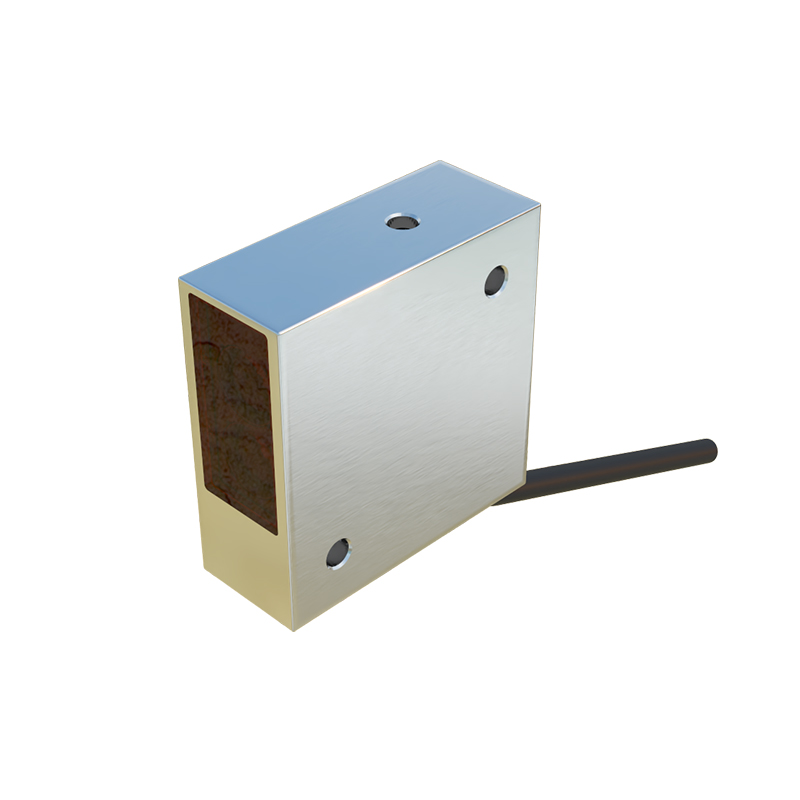
This is the most basic and reliable type of photoelectric sensor. The emitter and receiver are housed in separate units, positioned opposite each other. When an object passes between them, it interrupts the light beam, causing the receiver to detect a change. Through-beam sensors offer the longest sensing range (up to 30 meters or more), high immunity to dust and contamination, and are ideal for detecting opaque objects. However, they require two separate housings and precise alignment, making installation more complex. Common applications include counting bottles on a conveyor belt or detecting vehicle presence in parking gates.
Retroreflective Sensors
In retroreflective sensors, the emitter and receiver are housed in a single unit, and a reflector is placed opposite them. The light beam is sent from the emitter, bounces off the reflector, and returns to the receiver. When an object interrupts the beam, the sensor triggers. These sensors offer a medium detection range (up to 10 meters) and simplify installation compared to through-beam types, as they only require one electrical connection. However, they can be prone to false signals from highly reflective objects, which is why polarized retroreflective sensors are used to filter out unwanted reflections. They are common in packaging lines, door automation, and conveyor systems.
Diffuse Reflection Sensors (Proximity Mode)
Diffuse sensors also have the emitter and receiver in one housing, but they do not require a separate reflector. Instead, they detect the light reflected directly from the target object. When an object enters the sensing field, the receiver picks up the reflected light and activates the output. These sensors are easy to install and can detect a wide variety of materials, including shiny, black, or transparent objects, depending on the model. Their detection range is shorter, typically up to 1 meter, and it can be affected by object color, surface texture, and background interference. Background suppression models use triangulation to improve accuracy. Applications include detecting parts in automated assembly, level sensing, and sorting operations.
Fiber Optic Photoelectric Sensors
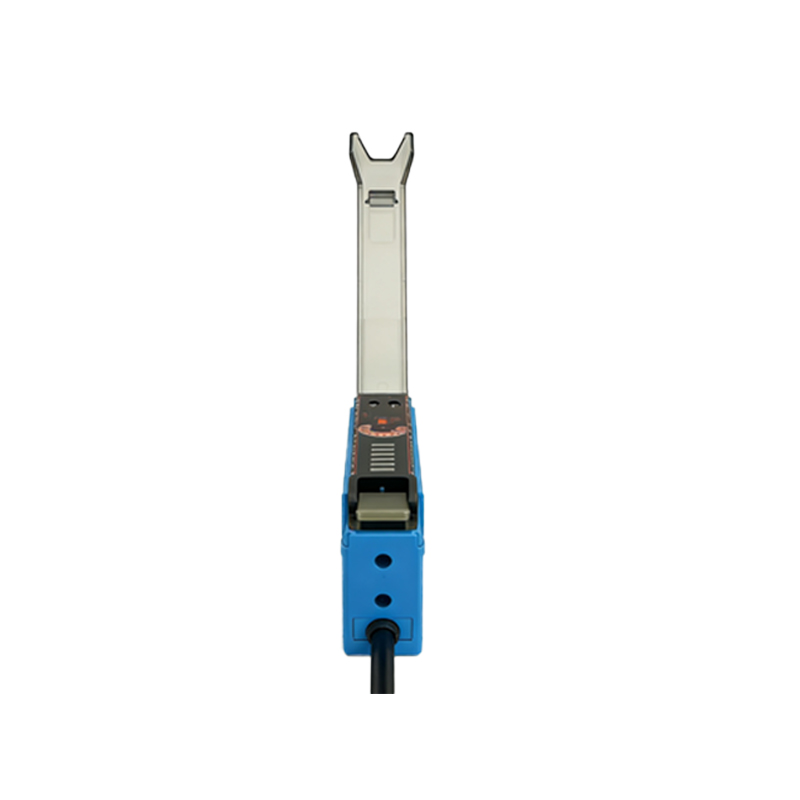
For applications requiring extreme precision, high temperature resistance, or sensing in tight spaces, fiber optic sensors are used. They consist of a separate amplifier unit and fiber optic cables (plastic or glass). The light is transmitted through the fibers to the target area. These sensors can operate in through-beam, retroreflective, or diffuse modes. They offer high flexibility, immunity to electrical noise, and can be used in hazardous environments. Typical uses include detecting small parts in electronics manufacturing, level detection in liquid tanks, and in medical devices.
Specialized Types: Slot Sensors and Laser Sensors
Slot sensors (or fork sensors) integrate the emitter and receiver into a U-shaped housing, creating a fixed gap. They are ideal for detecting small parts, labels, or counting objects with high repetition accuracy. Laser photoelectric sensors use a focused laser beam instead of an LED. They provide precise detection of very small objects, long-range sensing (up to 60 meters), and high-speed response. These are used in high-precision applications like wafer positioning in semiconductor manufacturing, high-speed sorting, and distance measurement.
Selection Considerations for Engineers
Choosing the right photoelectric sensor depends on several factors: the object's material (opaque, transparent, reflective), color, surface condition, required sensing range, environmental conditions (dust, fog, ambient light), and response speed. For extremely dirty environments, through-beam sensors are preferred. For compact installations, diffuse or fiber optic sensors excel. Always consider if background suppression or polarization is needed to avoid false triggering. Proper alignment and mounting also significantly impact performance.
Conclusion: Matching Sensor Type to Application
Understanding the distinct capabilities of through-beam, retroreflective, diffuse, fiber optic, and specialized photoelectric sensors allows engineers to optimize automation systems for reliability, cost, and efficiency. By carefully analyzing the application's physical and environmental constraints, you can select the most effective sensor type, ensuring accurate detection and minimal downtime in industrial processes.