Introduction to Photoelectric Sensor Applications
Photoelectric sensors are fundamental components in modern industrial automation, offering non-contact detection capabilities for various materials. In the context of assembly lines and machinery maintenance, detecting loose screws is critical to prevent equipment failure, production downtime, and safety hazards. These sensors operate by emitting a light beam and analyzing its reflection or interruption, making them ideal for identifying subtle positional changes in fasteners. By integrating photoelectric sensors into quality control systems, engineers can implement real-time monitoring of screw integrity without physical contact, ensuring high reliability in harsh manufacturing environments.
Principle of Operation for Screw Looseness Detection
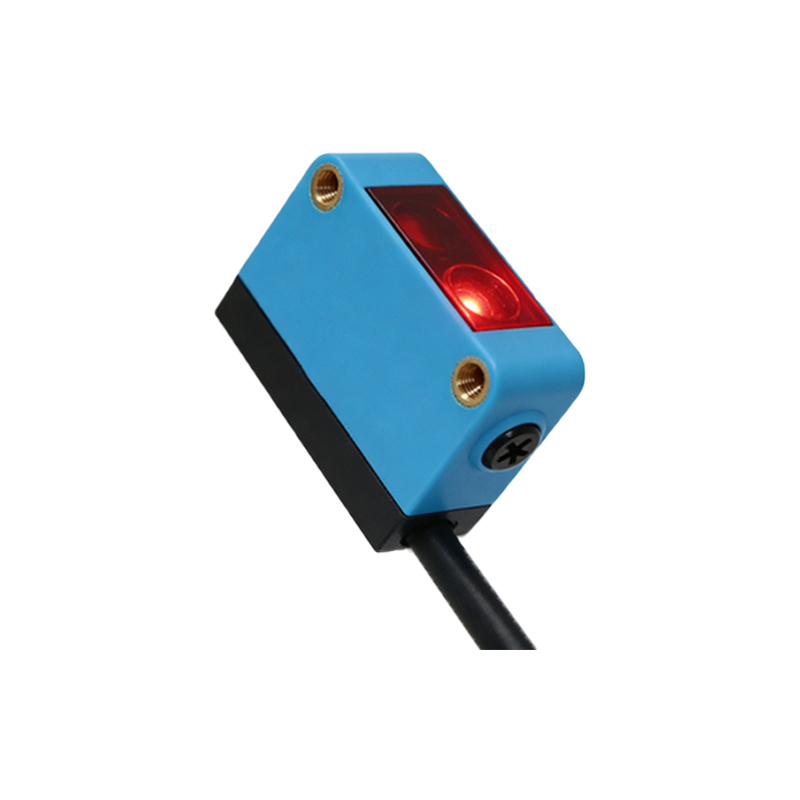
The detection of loose screws relies on the sensor's ability to measure minute displacement or vibration. When a screw is properly tightened, it maintains a consistent position relative to the sensor's sensing range. If the screw begins to loosen, its axial or rotational movement alters the reflective surface angle or distance, causing a change in the received light intensity. For example, a diffuse reflective photoelectric sensor can be calibrated to trigger an alarm when the reflected signal deviates beyond a predefined threshold. This principle works effectively with metallic screws, where surface reflectivity remains stable, but adjustments may be needed for non-metallic or coated fasteners.
Sensor Selection Criteria for Reliable Detection
Choosing the right photoelectric sensor type is essential for accurate screw looseness monitoring. For applications requiring high precision, background suppression sensors are recommended as they can detect small changes in distance while ignoring background interference. Alternatively, through-beam sensors provide robust detection for screws in open areas, but they require alignment with a reflector or receiver. Key parameters include sensing distance, response time, and ambient light immunity. For example, a sensor with a 50mm sensing range and a 1ms response time can reliably detect a 0.1mm screw displacement in a high-speed assembly line. Engineers should also consider environmental factors like dust, oil, and vibration, which may necessitate sensors with IP67 protection or fiber optic extensions.
Integration into Automated Monitoring Systems
To achieve continuous screw looseness detection, photoelectric sensors must be integrated with programmable logic controllers (PLCs) or industrial computers. Each sensor outputs a digital or analog signal that is processed by the control system. In a typical setup, multiple sensors are positioned around critical screw points, such as those on gearboxes, conveyor belts, or robotic arms. The PLC compares sensor readings against baseline values stored during initial assembly. When a deviation exceeds the tolerance, the system can automatically stop the machine, alert operators via Human-Machine Interface (HMI), or log the event for predictive maintenance. This integration reduces manual inspection workload and enhances overall equipment effectiveness (OEE).
Practical Installation and Calibration Tips
Proper installation is crucial for maximizing sensor performance. Position the sensor perpendicular to the screw head or shaft to ensure consistent reflection. Use mounting brackets with vibration dampeners to minimize false triggers from external movement. During calibration, perform a "teach-in" procedure where the sensor learns the correct signal level from a tightened screw. Then, simulate a loose condition by manually loosening the screw by a small angle, such as 5 degrees, and adjust the sensitivity threshold accordingly. It is advisable to test under actual operating conditions, including temperature fluctuations and machine vibrations, to confirm the system's robustness. Regular maintenance includes cleaning sensor lenses and verifying alignment after any component replacement.
Case Study: Successful Implementation in Automotive Assembly
A automotive parts manufacturer implemented photoelectric sensors to monitor screws on a robotic welding arm. Previously, manual checks every 4 hours missed occasional loosening, leading to weld defects. They installed 10 diffuse reflective sensors with 0.2mm sensitivity around critical joints. After integration with their SCADA system, the sensors detected 95% of loose screws within 2 seconds of occurrence. The system reduced downtime by 30% and eliminated rework costs. This case demonstrates how photoelectric sensors provide a cost-effective, real-time solution for screw integrity in high-vibration environments.
Future Trends and Advanced Technologies
Emerging technologies are enhancing photoelectric sensor capabilities for screw detection. Smart sensors with built-in IoT connectivity allow remote monitoring and data analytics, enabling predictive maintenance algorithms. Laser-based sensors offer sub-micron accuracy for ultra-fine screw adjustments. Additionally, combination sensors that integrate vision systems with photoelectric principles can detect not only looseness but also screw orientation and thread integrity. As Industry 4.0 advances, these sensors will become more intelligent, self-calibrating, and adaptable to complex manufacturing scenarios, further minimizing human intervention and maximizing production efficiency.