Introduction to Diffuse Reflective Photoelectric Sensors
Diffuse reflective photoelectric sensors are a cornerstone of modern industrial automation, particularly in applications involving transparent objects. Unlike through-beam or retro-reflective sensors, these devices operate by emitting a light beam and detecting the reflected light from the target itself. For transparent materials such as glass, plastic films, or clear containers, standard sensors often struggle due to low light absorption and high transmission. However, specialized diffuse reflective sensors, equipped with advanced optics and adaptive electronics, can overcome these challenges. They utilize a single housing for both emitter and receiver, making them compact and easy to install in tight spaces. Common wavelengths include infrared, red, or blue light, with blue being particularly effective for transparent targets due to its shorter wavelength and better contrast on glossy surfaces.
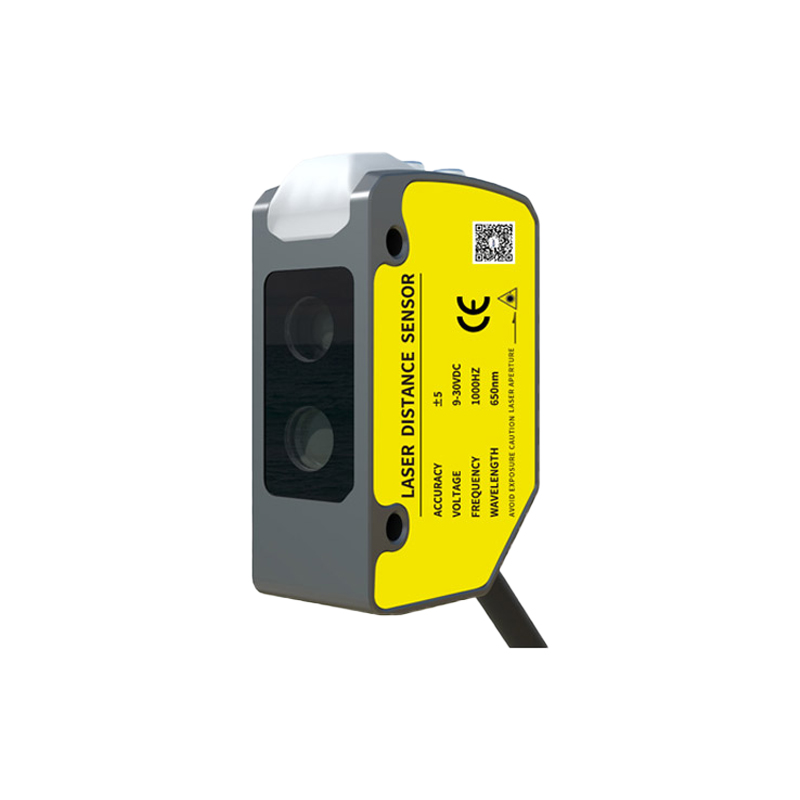
Operating Principle and Technical Challenges
The core principle relies on the sensor measuring the intensity of light reflected from the object’s surface. For transparent objects, the primary challenge is the low reflectivity—most light passes through or refracts, resulting in a weak return signal. To address this, high-gain amplifiers and background suppression techniques are employed. Background suppression allows the sensor to ignore reflections from surfaces behind the target, ensuring accurate detection even on conveyor belts or polished machinery. Additionally, some sensors use polarized light filters to reduce glare and false triggers from shiny backgrounds. The sensor’s response time is critical in high-speed lines, typically ranging from 0.5 to 2 milliseconds. Engineers must also consider the object’s color, thickness, and surface texture, as these factors influence signal stability.
Key Features for Transparent Object Detection
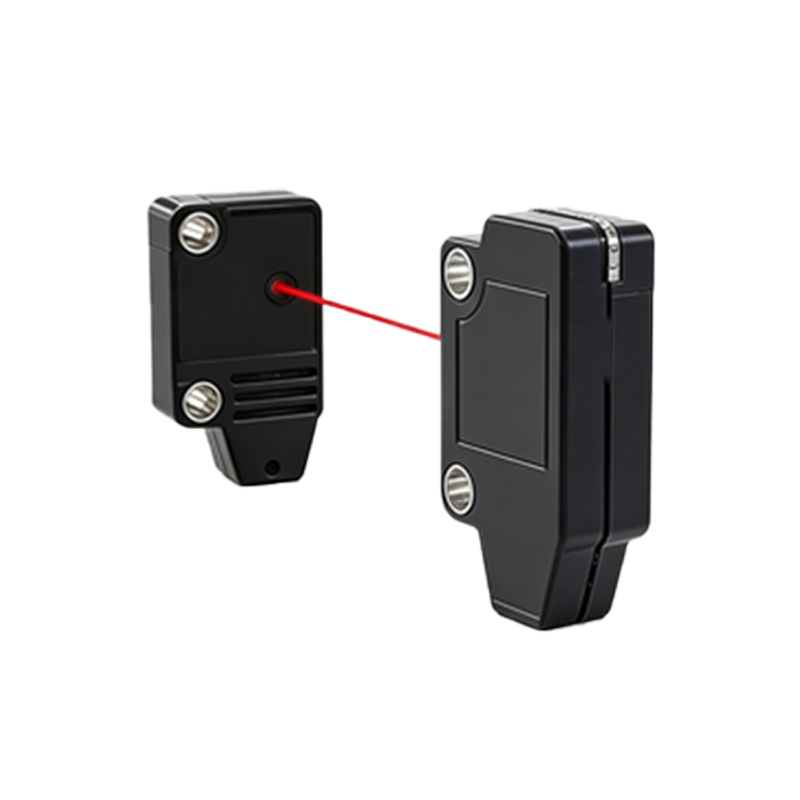
When selecting a diffuse reflective sensor for transparent objects, several features are essential. First, automatic gain control (AGC) dynamically adjusts sensitivity to compensate for varying target distances and surface conditions. Second, a narrow beam angle (e.g., 2 to 5 degrees) minimizes interference from adjacent objects or fixtures. Third, a teach-in function allows easy calibration during setup, often via a button or remote input. Fourth, robust housing with IP67 or higher rating ensures durability in dusty or wet environments. Finally, compatibility with controllers such as PLCs or IO-Link systems enables seamless integration into Industry 4.0 architectures. These features collectively enhance reliability in applications like bottle filling, packaging, or glass panel inspection.
Common Applications in Industry
Diffuse reflective sensors for transparent objects are widely used across sectors. In food and beverage production, they detect clear PET bottles on conveyors for filling and capping stations. In the pharmaceutical industry, they verify the presence of glass vials or blister packs without physical contact. In the electronics sector, they monitor transparent film overlays in display assembly. Another critical application is in solar panel manufacturing, where they detect thin glass substrates during handling. Each scenario demands precise alignment and repeatable performance, often requiring the sensor to work alongside other automation components like actuators or vision systems.
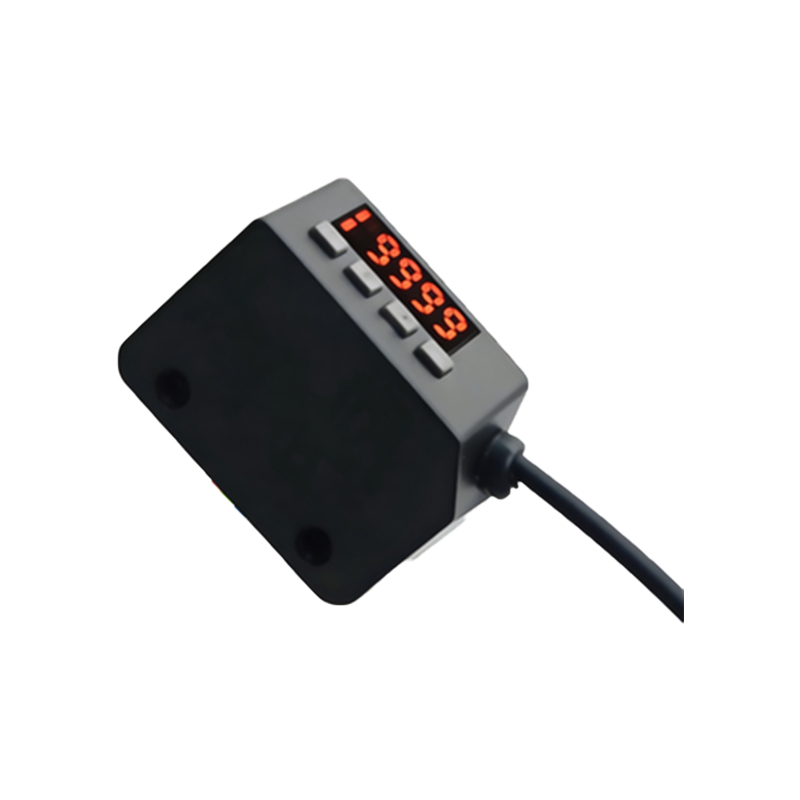
Selection Criteria and Installation Tips
Engineers should evaluate several parameters before deployment: sensing range (typically 10 to 500 mm), output type (NPN/PNP or analog), and light source (LED or laser). For transparent objects, a laser-based sensor offers superior focus and small spot size, ideal for tiny vials or thin films. Installation angle matters—mounting the sensor at a slight tilt (10 to 20 degrees) can reduce direct reflection from the object’s surface and improve detection of scattered light. Avoid placing the sensor near strong ambient light sources, such as sunlight or welding arcs, which can cause false readings. Regular cleaning of the lens with a lint-free cloth is also recommended to maintain signal integrity.
Advantages Over Other Sensor Types
Compared to through-beam sensors, diffuse reflective types eliminate the need for a separate receiver, reducing wiring and mounting complexity. They also perform better with moving or vibrating targets, as the reflected signal is less affected by alignment shifts. However, they are generally less effective for highly transparent materials like clear acrylic compared to retro-reflective sensors with polarization filters. Despite this, modern diffuse reflective designs with blue LED technology have narrowed the gap, offering a cost-effective solution for many transparent object applications. Their compact size and easy integration make them a preferred choice in retrofit or space-limited projects.
Future Trends and Innovations
The evolution of diffuse reflective sensors is driven by smart factory demands. Upcoming trends include the use of time-of-flight (ToF) technology for precise distance measurement, even on transparent surfaces. Multi-wavelength sensors that combine red, blue, and infrared light are being developed to handle a broader range of materials. Additionally, IO-Link communication provides real-time diagnostics and parameter adjustments, reducing downtime. As machine learning algorithms improve, sensors may soon adaptively learn target characteristics without manual teach-in. These innovations will further solidify the role of diffuse reflective sensors in complex automation lines.