In the realm of industrial automation and quality control, the demand for non-contact, high-precision measurement tools has never been greater. Among the most critical advancements meeting this demand is the aluminum alloy laser sensor. This sophisticated device represents a fusion of robust material engineering and cutting-edge optical technology, delivering unparalleled performance in challenging environments.
At its core, a laser sensor operates on the principle of triangulation or time-of-flight measurement. A laser diode projects a focused beam of light onto a target surface—in this context, often an aluminum component or workpiece. The reflected light is captured by a high-resolution receiver, such as a CCD or CMOS array. By analyzing the position or the time delay of the reflected beam, the sensor's internal processor calculates the exact distance to the target with micron-level accuracy. What sets the aluminum alloy laser sensor apart is its construction. The housing and critical structural components are crafted from high-grade aluminum alloys, typically from the 6000 or 7000 series. These alloys are selected for their exceptional strength-to-weight ratio, superior thermal conductivity, and remarkable corrosion resistance. This material choice is not incidental; it is a direct response to the harsh realities of factory floors and outdoor applications.
The use of aluminum alloy provides distinct operational advantages. Firstly, it offers excellent heat dissipation. Laser diodes and electronic components generate heat during operation. An aluminum housing acts as a natural heat sink, drawing thermal energy away from sensitive internal parts. This passive cooling significantly enhances sensor stability, minimizes measurement drift over long periods, and extends the device's operational lifespan, even in high-ambient-temperature settings. Secondly, the inherent durability of aluminum alloys provides superior protection against physical impacts, vibrations, and exposure to coolants, oils, and dust—commonplace in machining, automotive assembly, and aerospace manufacturing. This ruggedness ensures consistent performance where lesser sensors would fail.
Furthermore, the lightweight nature of aluminum contributes to easier integration and mounting on robotic arms, coordinate measuring machines (CMMs), or automated guided vehicles (AGVs), without adding excessive mass or inertia to the system. The material also allows for precise machining, enabling the creation of complex, sealed housings that meet high Ingress Protection (IP) ratings for dust and water resistance.

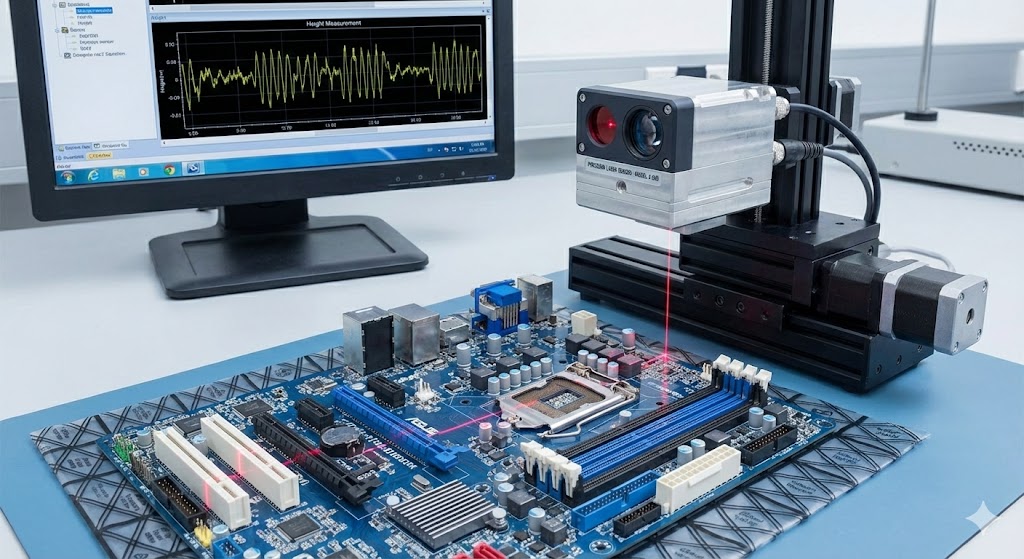
The applications for aluminum alloy laser sensors are vast and transformative. In the automotive industry, they are indispensable for inline inspection of aluminum body panels, ensuring precise gap and flush measurements between doors and frames. In aerospace, they measure the thickness and contour of lightweight aluminum alloy fuselage sections and turbine blades with extreme precision. Within electronics manufacturing, these sensors verify the coplanarity of components on aluminum substrates or heat sinks. They also play a crucial role in logistics, accurately measuring the dimensions of aluminum pallets or rolled aluminum sheets for inventory management and automated storage systems.
When selecting an aluminum alloy laser sensor, several technical specifications are paramount. Resolution, often down to micrometers, defines the smallest detectable change in distance. Repeatability indicates the sensor's consistency in returning the same measurement for a static target. The measuring range defines the minimum and maximum distances over which the sensor operates accurately. The laser spot size is critical for measuring small features or uneven surfaces. Additionally, output interfaces (analog, digital, Ethernet) and data processing speeds must align with the broader control system's requirements.
Modern iterations of these sensors incorporate smart features like integrated temperature compensation to correct for ambient thermal effects on both the sensor and the aluminum workpiece, which has a relatively high coefficient of thermal expansion. Advanced models also offer programmable logic, allowing for in-sensor decision-making, such as pass/fail grading, which streamlines production lines.
In conclusion, the aluminum alloy laser sensor is far more than just a measuring device. It is a cornerstone of modern precision engineering. Its robust aluminum construction ensures it can survive and thrive on the front lines of industry, while its laser-based measurement core delivers the exact data required for quality assurance, process control, and automation. As industries continue to push toward tighter tolerances, greater efficiency, and the integration of Industry 4.0 principles, the role of the reliable, high-performance aluminum alloy laser sensor will only become more central, driving innovation and quality in manufacturing worldwide.