In the realm of industrial automation and precision measurement, the demand for reliable, non-contact sensing solutions is ever-growing. Among the various technologies available, high frequency oscillation proximity sensors stand out for their unique operational principles and robust performance in challenging environments. Unlike standard inductive or capacitive sensors, these devices utilize a high-frequency electromagnetic field to detect the presence of metallic or, in some variants, non-metallic objects without any physical contact.
The core principle of a high frequency oscillation proximity sensor revolves around an oscillator circuit that generates a high-frequency electromagnetic field from its sensing face. This frequency is typically in the range of several hundred kilohertz to a few megahertz. When a target object enters this active field, it induces eddy currents within the material. For metallic targets, these eddy currents cause a measurable energy loss in the oscillator circuit. The sensor's detection circuit continuously monitors the amplitude of the oscillation. A significant damping or change in this amplitude, caused by the energy absorption from the eddy currents, triggers the sensor's output switch. This change occurs regardless of the target's color, transparency, or surface finish, relying solely on its electrical conductivity and distance from the sensor.
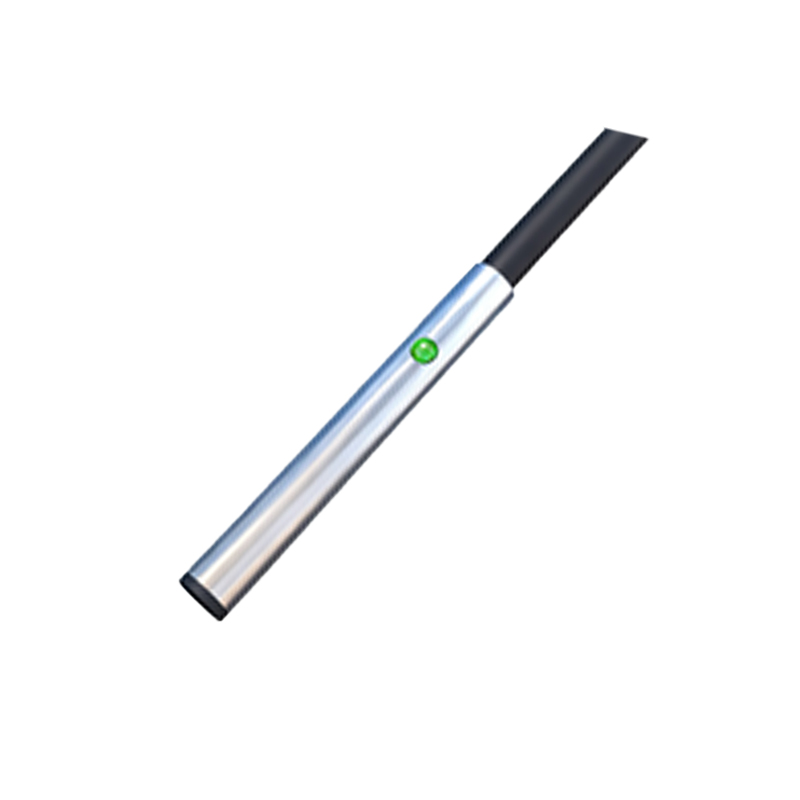
This technology offers several distinct advantages. First and foremost is its exceptional sensitivity and stability. The high-frequency field allows for the detection of very small objects, including thin foils, fine wires, or small metal components that might be missed by lower-frequency sensors. Furthermore, these sensors exhibit remarkable resistance to environmental interference. Common industrial nuisances such as dust, oil, water vapor, or ambient light have minimal effect on the high-frequency electromagnetic field, ensuring consistent operation in dirty or humid conditions. Another key benefit is the ability to achieve very fast response times. Because the detection is based on an immediate change in oscillation state, these sensors can operate at high switching frequencies, making them ideal for high-speed counting, sorting, or positioning applications on production lines.
The applications for high frequency oscillation proximity sensors are vast and varied across multiple industries. In automotive manufacturing, they are indispensable for precise parts positioning, robotic guidance, and end-of-arm tooling detection. The packaging industry relies on them for detecting metallic seals, foil lids, or the presence of products in blister packs. Within electronics assembly, their ability to sense tiny components and lead frames is crucial for quality control. They are also extensively used in metalworking for tool breakage detection, monitoring spindle positions, and controlling automated storage and retrieval systems. Specialized versions, sometimes incorporating capacitive principles for non-metallic detection, find use in woodworking, plastics processing, and liquid level control.
When selecting a high frequency oscillation proximity sensor for a specific task, several factors must be considered. The sensing distance, which is typically short-range (a few millimeters to tens of millimeters), must be appropriate for the application. The nature of the target material—whether it is ferrous (like iron or steel) or non-ferrous (like aluminum, copper, or brass)—affects the sensing characteristics and may require a sensor specifically tuned for the material type. Environmental factors such as extreme temperatures, potential for chemical exposure, or the presence of strong adjacent electromagnetic fields should also guide the selection process, ensuring the chosen housing material (often stainless steel or nickel-plated brass) and ingress protection (IP) rating are adequate.
Installation and setup are generally straightforward, but best practices must be followed to ensure optimal performance. Maintaining the recommended clearance around the sensor head is critical to prevent false triggers from surrounding metal structures, a phenomenon known as "side-metal" or "flush-mounting" interference. Proper shielding and grounding of the sensor and its cabling can mitigate electrical noise in sensitive environments. Regular maintenance primarily involves keeping the sensing face clean from heavy buildup of conductive debris, which could otherwise affect the field and sensing distance.
In conclusion, high frequency oscillation proximity sensors represent a sophisticated and highly effective solution for non-contact object detection. Their principle of operation, leveraging a damped high-frequency field, provides a blend of high sensitivity, environmental robustness, and speed that is unmatched for many industrial sensing tasks. As automation continues to advance, the role of these reliable and precise sensors in enabling smarter, faster, and more efficient manufacturing and process control will only become more pronounced. Engineers and system integrators continue to leverage their capabilities to solve complex detection challenges, ensuring product quality and operational reliability.