Introduction to Photoelectric Sensors
Photoelectric sensors are fundamental components in modern industrial automation, utilizing light to detect the presence, absence, or distance of objects. These sensors operate by emitting a beam of light, typically infrared or visible, and measuring changes in the received light intensity. Their non-contact nature makes them ideal for harsh environments, handling delicate items, and high-speed applications. As an electrical engineer, understanding their working principles, types, and selection criteria is crucial for optimizing system reliability and efficiency.
Working Principles and Key Components
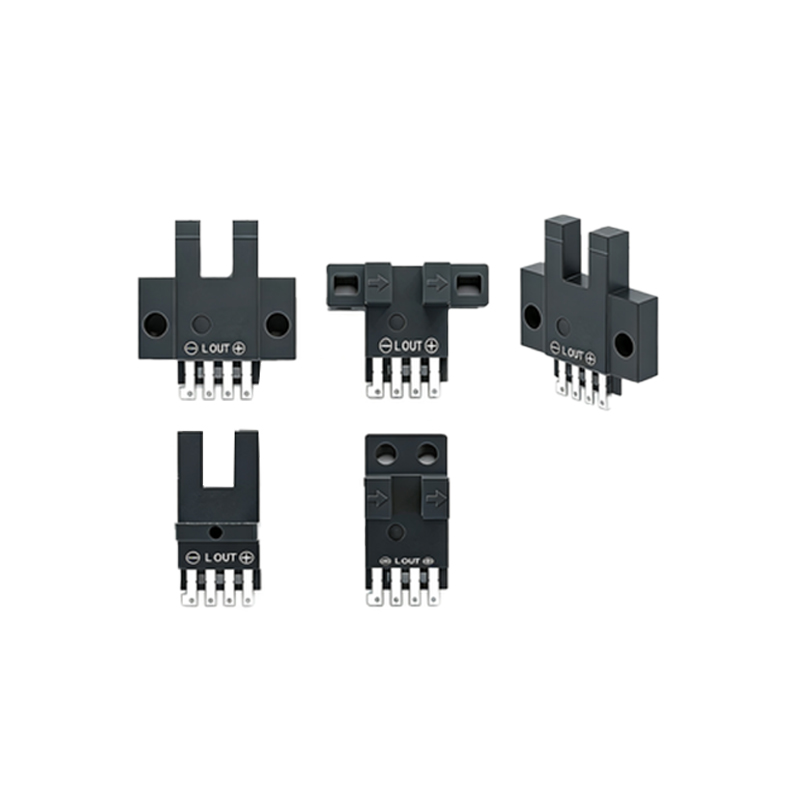
The core operation of a photoelectric sensor involves three primary components: an emitter (light source), a receiver (photodetector), and an amplifier. The emitter projects light toward the target; the receiver captures the reflected or transmitted light; the amplifier processes the signal to generate an output. Common emission methods include LED (light-emitting diode) or laser diodes. The sensor’s response time, detection range, and immunity to ambient light are influenced by the modulation frequency and optical filter design. Engineers must consider these parameters to avoid false triggers in environments with high electromagnetic interference (EMI) or stray light.
Main Types of Photoelectric Sensors
Three dominant configurations exist: through-beam, retro-reflective, and diffuse reflective sensors. Through-beam sensors feature separate emitter and receiver units, offering the longest detection range (up to 100 meters) and highest reliability, as any object breaking the beam triggers detection. Retro-reflective sensors integrate the emitter and receiver in one housing, using a reflector to bounce the beam back; they suit medium ranges (up to 20 meters) but may struggle with highly reflective objects. Diffuse reflective sensors rely on light reflected directly from the object, making them compact and easy to install, though range is limited (typically under 2 meters) and depends on target color and texture.
Selection Criteria for Industrial Applications
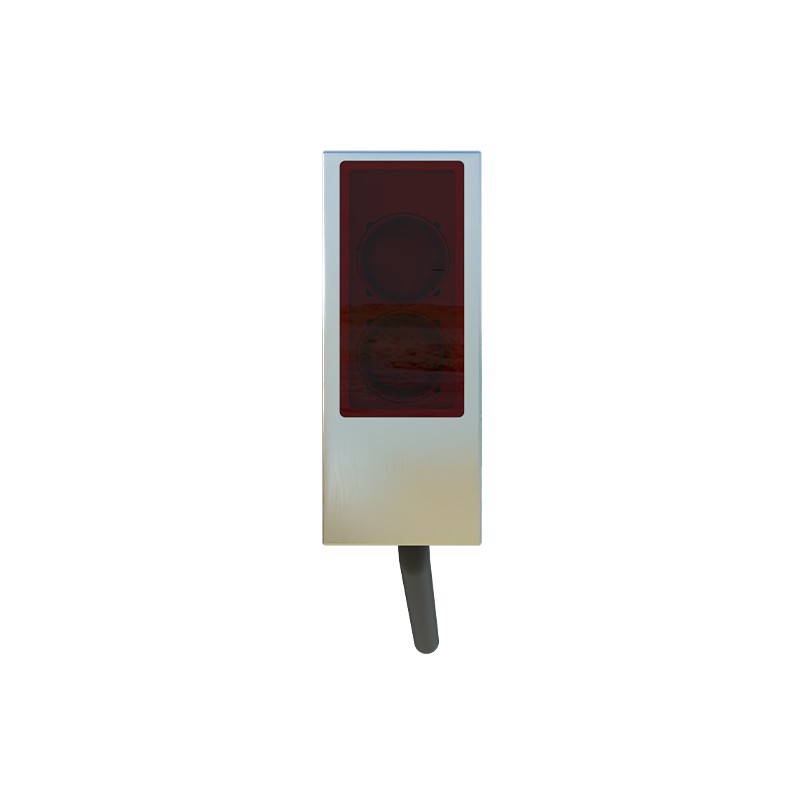
When selecting a photoelectric sensor, engineers must evaluate detection distance, object properties (color, surface, size), environmental conditions (dust, moisture, temperature), and response speed. For example, in conveyor belt systems detecting transparent bottles, a retro-reflective sensor with a polarized filter avoids false readings from shiny surfaces. In dusty environments, through-beam sensors maintain performance better than diffuse types. Additionally, output type (PNP, NPN, analog, or IO-Link) must match the PLC or controller interface. IO-Link sensors enable advanced diagnostics and parameter adjustments, enhancing predictive maintenance capabilities.
Installation and Maintenance Best Practices
Proper alignment and mounting are critical for sensor reliability. For through-beam sensors, ensure the emitter and receiver are precisely coaxial. Retro-reflective sensors require the reflector to be perpendicular to the beam. Diffuse sensors need a clear line-of-sight and minimal background interference. Regular cleaning of lenses and reflectors prevents signal degradation. Engineers should also verify that the sensor’s ambient light rejection is adequate, especially near welding arcs or sunlight. Using shielded cables and proper grounding minimizes EMI issues.
Emerging Trends and Future Directions
Recent advancements include miniaturized sensors with higher resolution, such as those using time-of-flight (ToF) technology for precise distance measurement. Smart sensors with integrated processing and wireless connectivity (e.g., Bluetooth or Wi-Fi) enable real-time data logging and remote monitoring. Additionally, photoelectric sensors are increasingly combined with AI algorithms for adaptive thresholding and object recognition. As Industry 4.0 evolves, these sensors will play a vital role in creating self-optimizing production lines, reducing downtime, and improving quality control.
Conclusion
Mastering photoelectric sensor selection and integration is essential for any electrical engineer working in industrial automation. By understanding the principles, types, and application-specific requirements, engineers can design robust systems that enhance productivity and reliability. Staying updated with emerging technologies like smart sensors and AI integration will further empower engineers to tackle future challenges in smart manufacturing.