Introduction to Sensor Technologies
In modern industrial automation, sensors play a critical role in detecting objects, measuring distances, and ensuring system reliability. Two of the most common types are proximity sensors and photoelectric sensors. While both serve the purpose of non-contact detection, their operating principles, performance characteristics, and application scenarios differ significantly. Understanding these differences is essential for selecting the right sensor for a specific industrial environment.
Operating Principle: How They Work
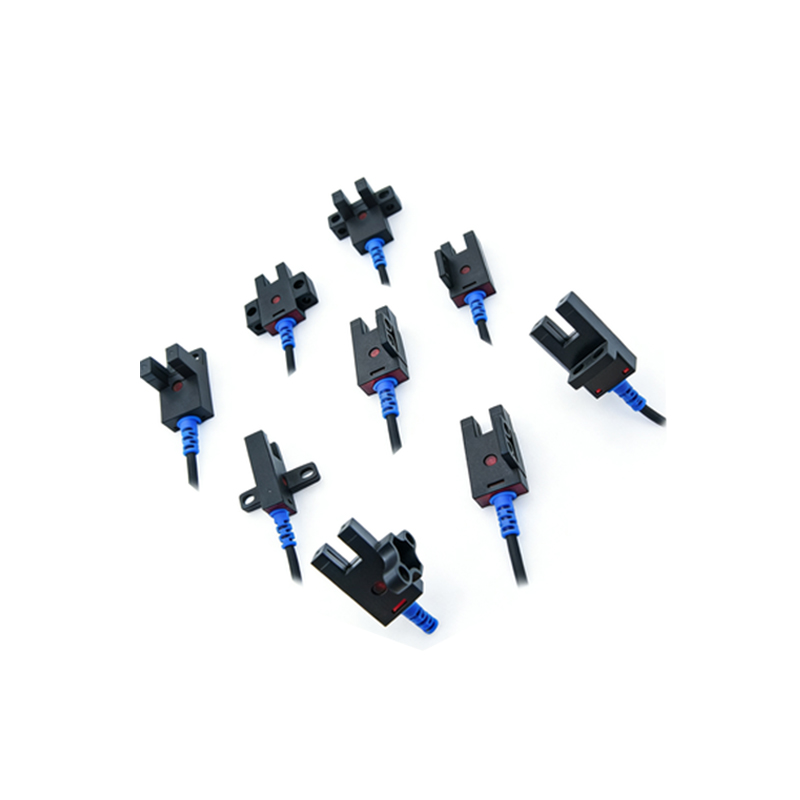
Proximity sensors, typically inductive or capacitive, generate an electromagnetic field or electrostatic field. When a metallic or dielectric object enters this field, it alters the sensor’s internal oscillation, triggering an output signal. In contrast, photoelectric sensors use a light beam, often infrared or visible light, emitted from a transmitter to a receiver. The presence of an object interrupts or reflects this beam, causing the sensor to detect it. This fundamental difference in sensing mechanisms dictates their strengths and limitations.
Detection Range and Accuracy
Photoelectric sensors generally offer a much longer detection range, often up to tens of meters, depending on the model and environmental conditions. They can detect transparent, opaque, or reflective objects with high accuracy. Proximity sensors, however, are limited to shorter ranges, typically from a few millimeters to several centimeters. They excel in precise detection of metallic objects at close distances but struggle with non-metallic materials unless using capacitive technology.

Environmental Suitability
Proximity sensors are highly robust in harsh industrial environments. They are resistant to dust, dirt, moisture, and vibration because their sensing field is unaffected by most contaminants. Photoelectric sensors, being optical devices, are more susceptible to interference from ambient light, dust, fog, or oil mist. In clean or controlled environments, photoelectric sensors perform reliably, but in dirty or outdoor settings, proximity sensors often offer greater stability.
Object Material and Surface Characteristics
Proximity sensors, especially inductive types, are designed primarily for metal objects. They can detect ferrous and non-ferrous metals with consistent accuracy. Capacitive proximity sensors can also detect non-metallic materials like plastic, wood, or liquid. Photoelectric sensors are more versatile regarding material type, as they detect any object that blocks or reflects light. However, highly transparent or glossy surfaces may pose challenges for some models, requiring special retro-reflective or polarized types.
Response Time and Speed
In high-speed automation lines, response time is crucial. Proximity sensors typically have very fast response times, often in the microsecond range, making them ideal for high-speed counting or positioning. Photoelectric sensors also offer fast response but may be slightly slower due to the need for light modulation and signal processing. For extremely fast applications, proximity sensors often have an edge.
Cost and Installation Considerations
Proximity sensors are generally lower in cost and simpler to install, especially for fixed-position detection of metal parts. They require no alignment or lens cleaning. Photoelectric sensors, while more expensive, provide greater flexibility in mounting and can sense objects at a distance without physical contact. They may require careful alignment of emitter and receiver, and periodic maintenance of optical surfaces.
Conclusion: Choosing the Right Sensor
The choice between a proximity sensor and a photoelectric sensor depends on your specific application requirements. For short-range, rugged, metal-target detection in dirty environments, proximity sensors are the reliable choice. For long-range, versatile material detection in cleaner settings, photoelectric sensors offer superior flexibility. By evaluating factors like range, material, environment, and speed, engineers can optimize system performance and cost.