Understanding the Problem of Excessive Sensing Distance
In industrial automation, photoelectric sensors are critical for precise object detection. However, when the sensing distance exceeds the required parameters, it can lead to false triggers, interference from background objects, and system instability. This issue often arises due to incorrect sensor selection, improper mounting, or environmental factors like reflective surfaces. As an electrical engineer, it is essential to diagnose and mitigate excessive range to ensure reliable operations in manufacturing lines, conveyor systems, and packaging equipment.
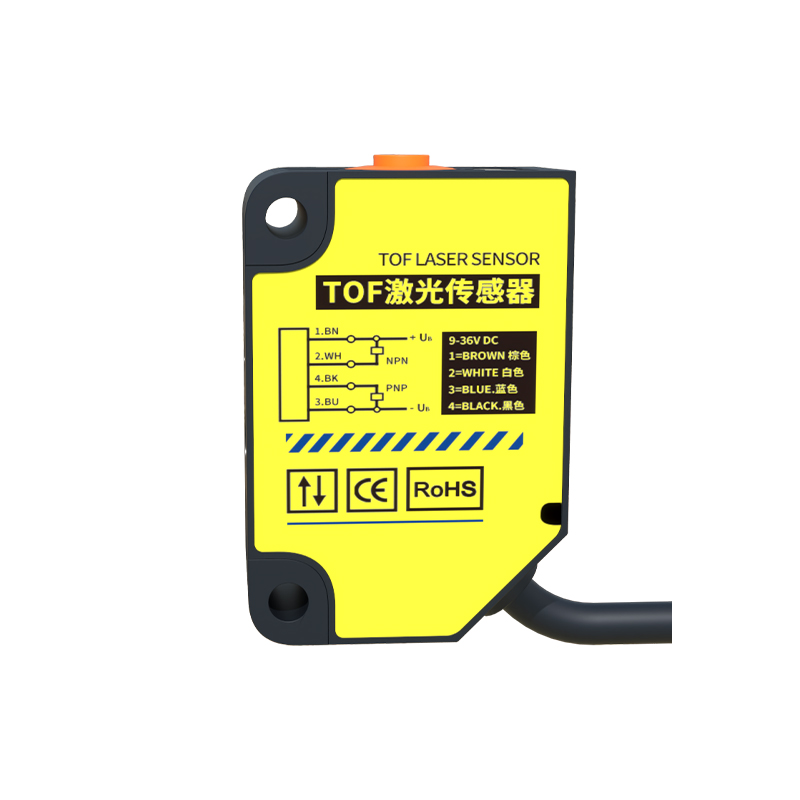
Common Causes of Overly Long Sensing Distances
Several factors contribute to excessively long sensing distances. High-gain sensors, such as through-beam or retro-reflective types, may be overpowered for short-range applications. Additionally, reflective backgrounds, like shiny metal or glass, can trick sensors into detecting objects beyond the intended zone. Improper alignment or use of incorrect lenses can also amplify the detection range. Environmental conditions, including dust, fog, or ambient light, might further distort sensor performance, leading to unintended triggers.
Technical Solutions to Adjust Sensor Range
To address this, engineers can implement several adjustments. First, replace high-sensitivity sensors with models offering adjustable sensing distances, such as diffuse sensors with potentiometers or teach-in functionality. Second, introduce physical barriers like shields or absorptive materials to block unwanted reflections. Third, use background suppression sensors or polarizing filters to distinguish between target objects and background. Calibration tools and software can also fine-tune the threshold levels, reducing the effective detection zone.
Practical Implementation in Industrial Settings
In a typical factory scenario, consider a conveyor belt system where a photoelectric sensor detects product presence. If the sensor’s range is too far, it may trigger on adjacent machinery or humans. To resolve this, mount the sensor with a narrower beam angle, lower the power output via a built-in trimmer, or switch to a convergent beam sensor. Regular maintenance, including cleaning lenses and checking alignment, ensures consistent performance. For critical applications, use redundant sensors with overlapping zones to cross-validate detections.
Benefits of Optimized Sensing Distance
Correctly managing sensor distance improves operational efficiency by reducing false alarms and minimizing downtime. It enhances safety by preventing unintended machine responses and lowers maintenance costs. Additionally, it prolongs sensor lifespan by avoiding overexposure to environmental stressors. In high-speed production lines, precise detection ensures accurate counting, sorting, and quality control, directly impacting throughput and product consistency.
Conclusion and Best Practices
For electrical engineers, addressing excessive photoelectric sensor distance requires a systematic approach: assess the application’s range requirements, select appropriate sensor types, and apply calibration or hardware modifications. Regular audits of sensor performance and environmental conditions are vital. By following these guidelines, you can achieve robust and reliable detection systems, optimizing both safety and productivity in industrial environments.