In the evolving landscape of photonics and precision measurement, thin-disc laser sensors represent a significant technological advancement. Unlike conventional rod or fiber lasers, the thin-disc architecture utilizes a gain medium that is only a few hundred micrometers thick, allowing for efficient cooling and exceptional beam quality. This unique design is not merely a miniaturization but a fundamental re-engineering of laser dynamics, enabling sensors with unparalleled stability, power scalability, and precision.
The core operational principle hinges on the disc's geometry. A thin crystal disc, typically doped with ytterbium (Yb:YAG) or other rare-earth ions, is mounted on a heat sink. When pumped by diode lasers, the large surface-area-to-volume ratio facilitates rapid heat extraction directly through the disc's face. This efficient thermal management is the cornerstone of its performance. It minimizes thermal lensing effects—a common source of beam distortion and instability in high-power solid-state lasers. Consequently, thin-disc lasers can produce a near-diffraction-limited beam even at high output powers, a critical attribute for sensing applications where measurement accuracy is paramount.
This superior beam quality translates directly into enhanced sensor capabilities. In laser interferometry, for instance, used for nanometer-scale displacement measurement in semiconductor manufacturing or gravitational wave detection, the stability and coherence length of the laser source are vital. The low-noise, high-brightness output of a thin-disc laser reduces measurement uncertainty and extends the effective range of such interferometric sensors. Similarly, in Light Detection and Ranging (LiDAR) systems for autonomous vehicles or topographic mapping, the ability to generate high-energy, short pulses with excellent beam profile improves spatial resolution and maximum operational range. The sensor can distinguish between objects with greater clarity and at longer distances.
Another burgeoning application is in gas sensing and spectroscopic analysis. Many industrial and environmental monitoring scenarios require detecting trace gases with high sensitivity. Tunable thin-disc lasers, particularly those operating in the mid-infrared spectrum where many gases have strong absorption fingerprints, are ideal sources for Tunable Diode Laser Absorption Spectroscopy (TDLAS). Their narrow linewidth and power scalability allow for long-path measurements or the probing of low-concentration species in harsh environments, such as monitoring methane leaks or exhaust emissions.
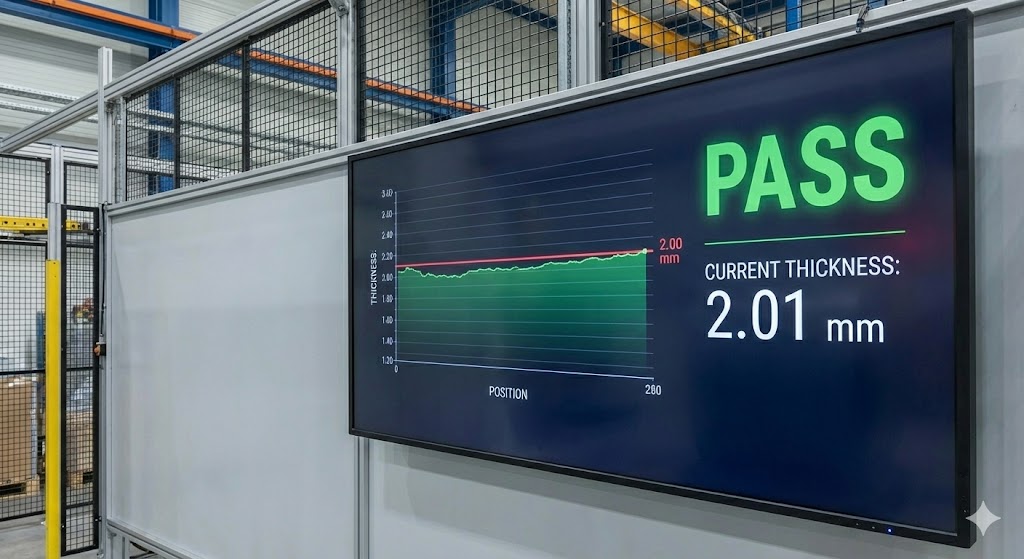
The advantages extend beyond performance to operational robustness. The solid-state design, devoid of delicate fibers or complex fluid cooling systems, lends itself to more compact and reliable sensor packages. This durability is essential for deployment in field conditions, industrial floors, or aerospace applications where maintenance opportunities are limited. Furthermore, the technology's power scalability—from watts to kilowatts from a single disc—means a single architectural platform can serve diverse sensing needs, from delicate biomedical imaging to heavy-duty material processing inspection.

Looking ahead, the trajectory for thin-disc laser sensors points toward further integration and wavelength diversification. Research is actively pursuing monolithic thin-disc designs and combining them with nonlinear frequency conversion crystals in compact modules to access spectral ranges from visible to terahertz. This will unlock new sensing modalities in medical diagnostics, security screening, and fundamental science. Integration with silicon photonics for on-chip sensing systems is another promising frontier, potentially leading to mass-producible, highly functional sensor nodes for the Internet of Things (IoT).
In conclusion, thin-disc laser sensors are more than just another type of laser; they are a paradigm shift enabled by innovative thermal management. By providing a combination of high power, exceptional beam quality, and remarkable stability in a robust format, they are solving critical challenges in precision metrology, environmental monitoring, and advanced imaging. As the technology matures and finds its way into more integrated systems, its role as a key enabling component for next-generation smart sensors is firmly established, promising to enhance our ability to measure, understand, and interact with the physical world with ever-greater fidelity.
