Introduction to Photoelectric Sensing for Dimensional Measurement
In modern industrial automation, precision measurement of object dimensions is critical for quality control and process optimization. Photoelectric sensors offer a non-contact, fast, and reliable method for measuring length, width, height, and even thickness. Unlike mechanical gauges, these sensors use light beams to detect edges or surfaces, making them ideal for fragile, moving, or high-temperature objects. Key principles include through-beam, retro-reflective, and diffuse sensing modes, each suited for different measurement scenarios.
Through-Beam Sensors for High-Accuracy Length Measurement
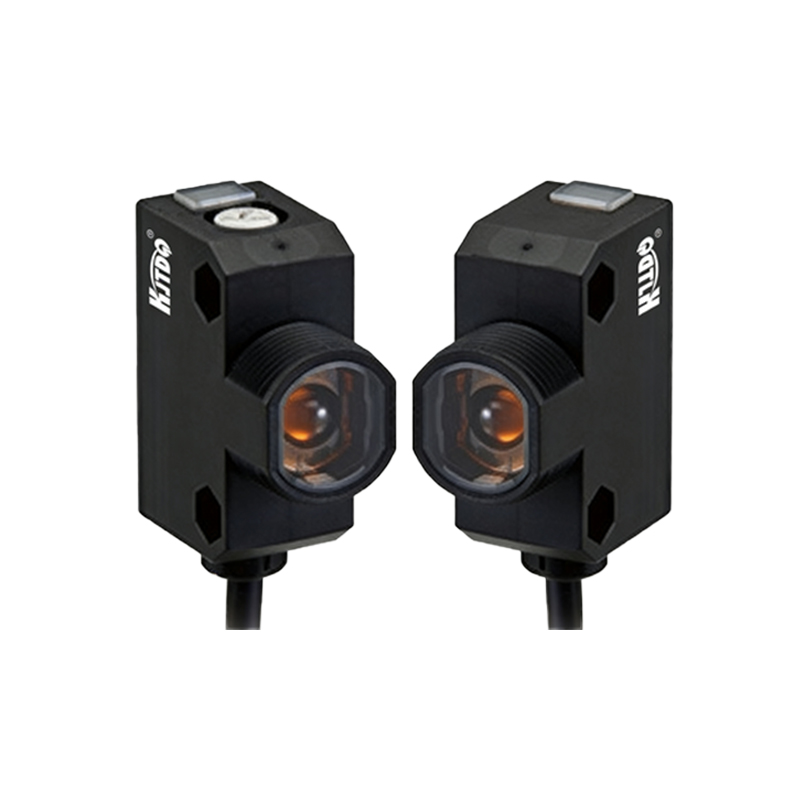
Through-beam photoelectric sensors consist of a separate emitter and receiver. When an object passes between them, the light beam is interrupted, triggering a signal. For dimensional measurement, multiple sensor pairs are arrayed along a conveyor. By detecting the start and end of the object, the system calculates length based on conveyor speed and timing. This method achieves sub-millimeter accuracy, ideal for measuring long products like pipes or profiles. However, alignment and environmental factors like dust must be managed to maintain precision.
Retro-Reflective Sensors for Width and Height Gauging
Retro-reflective sensors combine emitter and receiver in one unit, using a reflector to bounce the light beam. When an object breaks the beam, the sensor detects its presence. For width measurement, two retro-reflective sensors are positioned at known distances. As the object moves, the system records the time when both beams are blocked, calculating width via differential timing. Similarly, height can be measured by mounting sensors at different vertical positions. This approach is cost-effective for moderate accuracy applications.
Diffuse Sensors for Thickness and Profile Detection
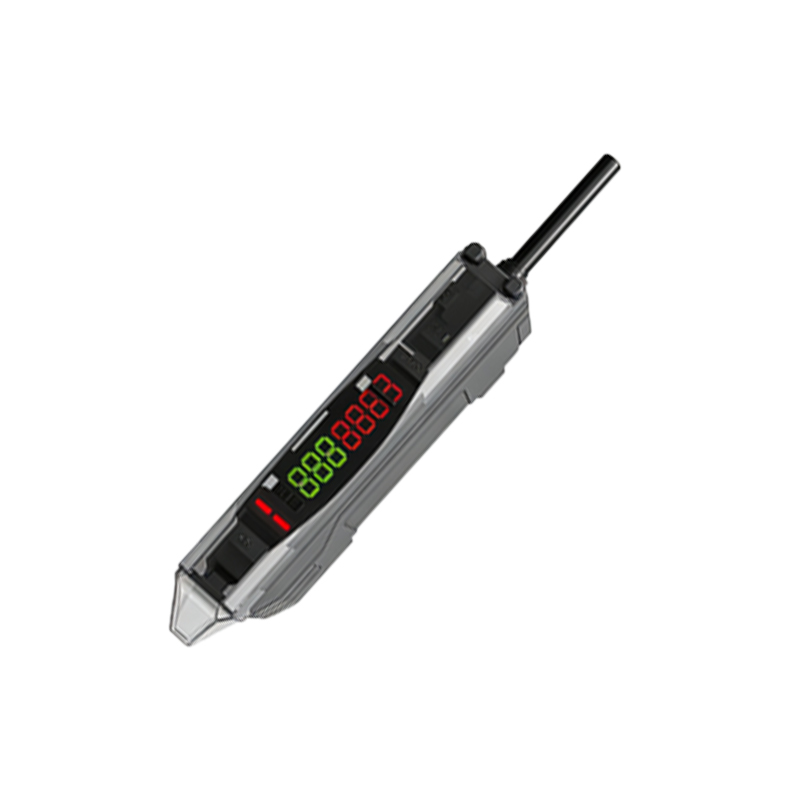
Diffuse photoelectric sensors rely on light reflected directly from the object's surface. For thickness measurement, two sensors are placed opposite each other. The object passes between them, and each sensor measures the distance to the surface using triangulation or time-of-flight principles. The difference in distances yields thickness. This method is non-contact and works well for materials like paper, plastic, or metal foils. Calibration is essential due to variations in surface reflectivity.
Array Sensors for Complex Shape Analysis
For complex profiles or irregular shapes, photoelectric sensor arrays are employed. These consist of multiple sensor elements arranged in a linear pattern. As the object moves past the array, each sensor detects the presence or absence of material, generating a digital profile. Advanced algorithms reconstruct the object's contour, enabling measurement of not just dimensions but also features like holes or notches. Array sensors offer high resolution (down to 0.1 mm) and are used in automotive and electronics industries.
Integration and Calibration Best Practices
Successful dimensional measurement with photoelectric sensors requires careful system design. Factors include sensor response time, beam divergence, and ambient light interference. Calibration involves placing a reference object of known dimensions and adjusting sensor thresholds. Data acquisition systems must synchronize with conveyor motion for accurate timing. Regular maintenance, such as lens cleaning and alignment checks, ensures long-term reliability. For optimal performance, engineers should select sensors with appropriate sensing range and output type (e.g., analog or digital).
Conclusion and Future Trends
Photoelectric sensors provide a versatile and efficient solution for measuring object dimensions in industrial environments. From simple length checks to complex profile analysis, these sensors enhance productivity and quality. Emerging trends include integration with AI for adaptive measurement, increased use of laser-based photoelectric sensors for higher precision, and connectivity to Industry 4.0 systems for real-time data analytics. As technology advances, photoelectric measurement will continue to evolve, offering even greater accuracy and flexibility.