Introduction to Optical Sensors in Servo Systems
Optical sensors play a critical role in modern servo motor systems, providing precise position, speed, and direction feedback for closed-loop control. In industrial automation, these sensors leverage light-based detection to ensure high accuracy and reliability, especially in demanding environments where mechanical wear or magnetic interference may degrade performance. By converting optical signals into electrical outputs, they enable real-time adjustments, enhancing servo motor efficiency in robotics, CNC machinery, and packaging equipment. Key optical sensor types include transmissive, reflective, and encoder-based designs, each tailored to specific servo application requirements.
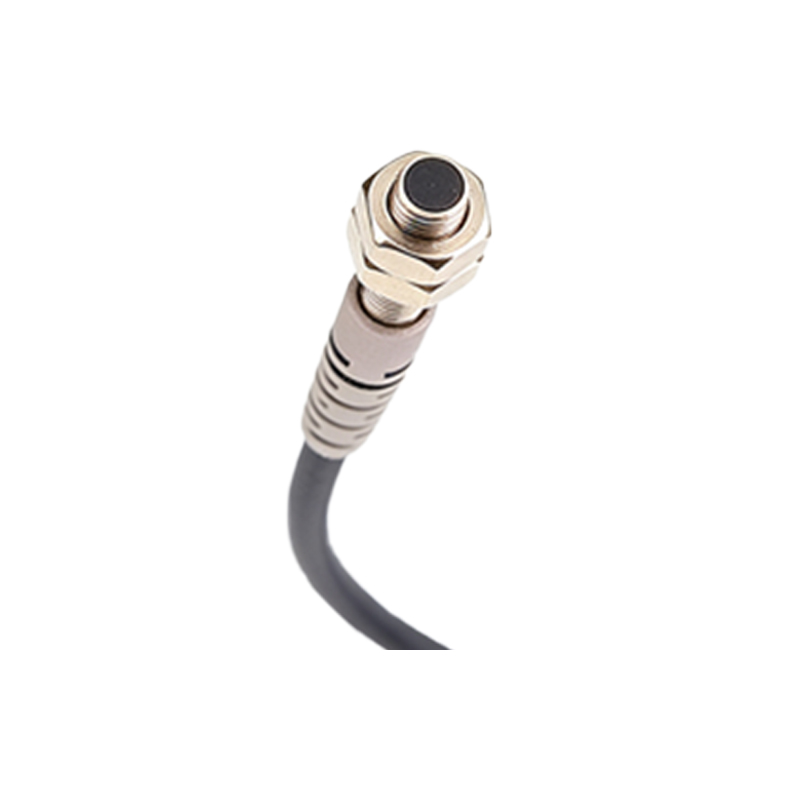
Key Working Principles of Optical Sensors for Servos
Optical sensors for servo motors operate on the principle of light interruption or reflection. In a typical transmissive setup, a light emitter and detector are aligned, and the servo shaft’s rotation interrupts the beam, generating pulses that correspond to angular displacement. Reflective sensors use a target surface to bounce light back to a detector, enabling non-contact measurement. For high-resolution feedback, optical encoders incorporate a patterned disk—either incremental or absolute—where light passes through slots or reflects off marks. The sensor’s photodiode or phototransistor then converts these light variations into digital signals, processed by the servo drive to calculate motor position with sub-micrometer precision. This method offers immunity to electrical noise, making it ideal for high-speed automation.
Application-Specific Sensor Selection for Servo Motors
Selecting the right optical sensor depends on servo motor parameters such as rotation speed, torque, and environmental conditions. For high-speed applications exceeding 10,000 RPM, incremental optical encoders with fast response times (e.g., 1 MHz bandwidth) are recommended, as they provide accurate pulse trains without delay. In harsh settings with dust or vibration, sealed reflective sensors with IP67 ratings ensure reliable operation. Absolute optical encoders are preferred in multi-axis robotic arms, as they retain position data even after power loss, eliminating homing sequences. Engineers should also consider signal type—TTL outputs for short-distance communication or RS-422 for noise-immune long runs—to match the servo drive’s input requirements.
Common Failure Modes and Mitigation Strategies
Despite their advantages, optical sensors in servo systems face failure risks from contamination, misalignment, and component aging. Dust or oil accumulation on the emitter or detector can reduce light intensity, causing erratic pulses or complete signal loss. To mitigate this, install sensors with protective lenses or use air-purge systems in dusty environments. Vibration-induced misalignment, common in high-torque servos, may be addressed by robust mounting brackets and optical feedback loops that recalibrate periodically. LED degradation over time, typically after 50,000 hours, requires periodic testing of light output levels; replacement schedules based on operational hours prevent unexpected downtime. Regular cleaning with isopropyl alcohol and lint-free wipes maintains sensor accuracy.
Integration Best Practices for Industrial Systems
Integrating optical sensors with servo drives demands attention to wiring, shielding, and software configuration. Use shielded twisted-pair cables for signal transmission to minimize electromagnetic interference from motor phases. Ground the cable shield at the drive end only to avoid ground loops. In the servo drive’s parameter settings, configure sensor resolution (e.g., 1000 to 5000 pulses per revolution) and triggering edge (rising or falling) to match the encoder’s specifications. For absolute encoders, ensure the communication protocol—SSI, BiSS, or EnDat—aligns with the drive’s interface. Testing sensor alignment with a laser tool during installation verifies that the light beam is perpendicular to the encoder disk, maximizing signal integrity.
Future Trends in Optical Sensor Technology for Servos
Advancements in optical sensor technology are enhancing servo motor capabilities. Miniaturized MEMS-based optical sensors now offer resolutions up to 24 bits in compact packages, suitable for micro-servos in medical devices. Fiber-optic sensors, immune to electrical noise and capable of operating at extreme temperatures (up to 200°C), are emerging for hazardous environments. Additionally, smart optical sensors with integrated signal processing and diagnostic features, such as self-calibration and predictive maintenance alerts, are being adopted in Industry 4.0 ecosystems. These innovations reduce downtime and improve servo system reliability, paving the way for more agile and precise automation solutions.