In the world of industrial automation and precision measurement, non-contact sensing technology plays a pivotal role. Among the various options available, the eddy current proximity sensor stands out for its reliability, accuracy, and robustness in challenging environments. This article delves into the operational principles, key applications, and distinct benefits of these versatile sensors.
The fundamental working principle of an eddy current proximity sensor is based on electromagnetic induction. The sensor typically consists of a coil wound around a ferrite core, which is energized by a high-frequency alternating current. This process generates an alternating magnetic field that extends from the sensor's active face. When a conductive target object enters this magnetic field, circular electrical currents, known as eddy currents, are induced on the surface of the target. These eddy currents, in turn, generate their own magnetic field, which opposes the original field produced by the sensor coil. This interaction causes a change in the impedance of the sensor's coil. The integrated electronics within the sensor detect this change in impedance, which is directly proportional to the distance between the sensor and the target. This change is then converted into a usable output signal, typically an analog voltage or current, or a digital switch signal.
A critical characteristic of this technology is that it only responds to electrically conductive materials. The strength of the eddy currents, and thus the sensor's sensitivity, depends heavily on the target material's electrical conductivity and magnetic permeability. Ferromagnetic materials like iron and steel produce the strongest signal and allow for the longest sensing ranges. Non-ferrous metals such as aluminum, copper, and brass have lower permeability, resulting in a reduced sensing range that must be factored into system design. Non-conductive materials like plastics, ceramics, or wood do not generate eddy currents and are therefore not detectable by standard eddy current sensors.
The applications for eddy current proximity sensors are vast and span numerous industries. In manufacturing and machinery, they are indispensable for precise position and displacement measurement. Common uses include monitoring the vibration and axial position of rotating shafts in turbines, motors, and compressors. They provide critical data for predictive maintenance, helping to detect unbalance, misalignment, or bearing wear before catastrophic failure occurs. In metalworking and CNC machining, these sensors are used for tool wear monitoring, part presence verification, and end-position detection of cylinders and valves. The automotive industry relies on them for testing engine components, measuring throttle position, and checking gear tooth profiles.
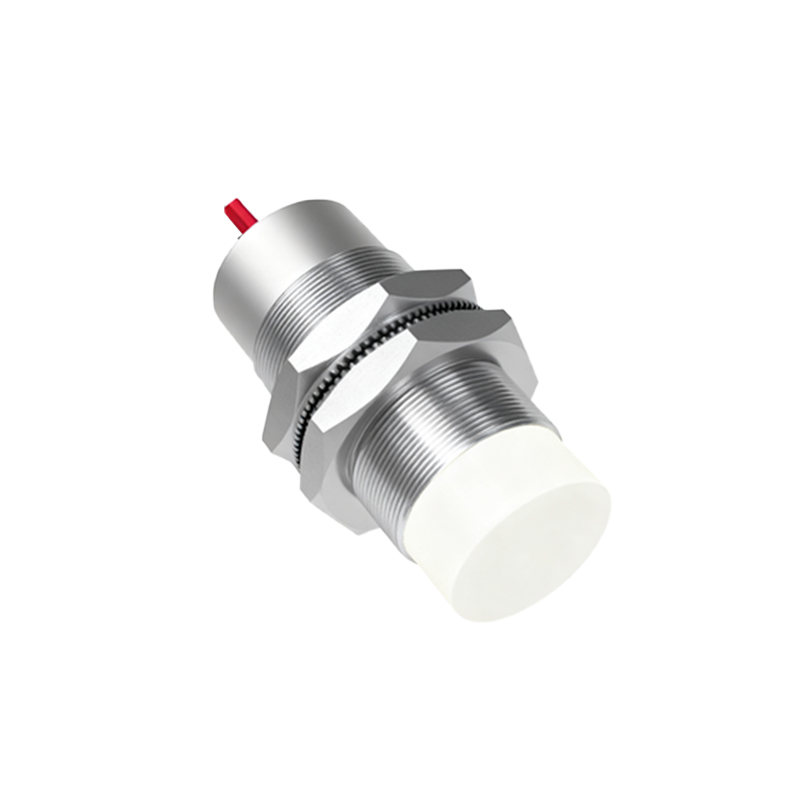
Several key advantages make eddy current sensors the preferred choice for many demanding applications. First, as a non-contact technology, they eliminate mechanical wear on both the sensor and the target, ensuring long-term stability and repeatability. They are capable of measuring very small displacements with extremely high resolution, often in the sub-micron range, and can operate at very high response speeds, making them suitable for dynamic measurements. Furthermore, they are highly robust. The sensing element is usually encapsulated in a stainless steel housing, making them resistant to dirt, dust, oil, coolant, and other contaminants commonly found in industrial settings. They are also inherently immune to magnetic fields and unaffected by the material between the sensor and target, provided it is non-conductive. This allows them to measure through non-metallic materials, such as a painted surface or a thin plastic window.
When selecting an eddy current sensor, several factors must be considered. The target material is paramount, as it dictates the necessary sensitivity and the effective sensing range. The required measurement range and resolution must align with the application's precision needs. Environmental conditions, including temperature extremes, pressure, and exposure to chemicals, will determine the required housing and cable specifications. Finally, the output signal type must be compatible with the downstream control system, whether it's a 4-20mA analog loop, a 0-10V signal, or a digital PNP/NPN switch.
In summary, eddy current proximity sensors offer a unique combination of high precision, ruggedness, and non-contact operation. Their ability to function reliably in harsh conditions while providing accurate measurements of conductive targets makes them an essential component in modern industrial systems, from power generation and aerospace to precision manufacturing and robotics. Understanding their principles and capabilities is key to leveraging their full potential for improving efficiency, quality, and safety.