Understanding the Core Principle of Detection
The precision of a photoelectric sensor is fundamentally tied to its operating principle. In industrial settings, sensors use light beams (often infrared, visible red, or laser) to detect the presence, absence, or distance of target objects. The accuracy of measurement depends on the sensor's ability to distinguish between the emitted light and ambient light interference. For instance, a retro-reflective sensor relies on a reflector to bounce the beam back, but if the target is highly glossy, it may cause false readings. Engineers must select the sensing mode—through-beam, diffuse, or retro-reflective—based on the material properties and environmental conditions. Laser-based sensors often offer higher resolution due to their narrow, coherent beam, making them ideal for detecting small or fast-moving parts in assembly lines.
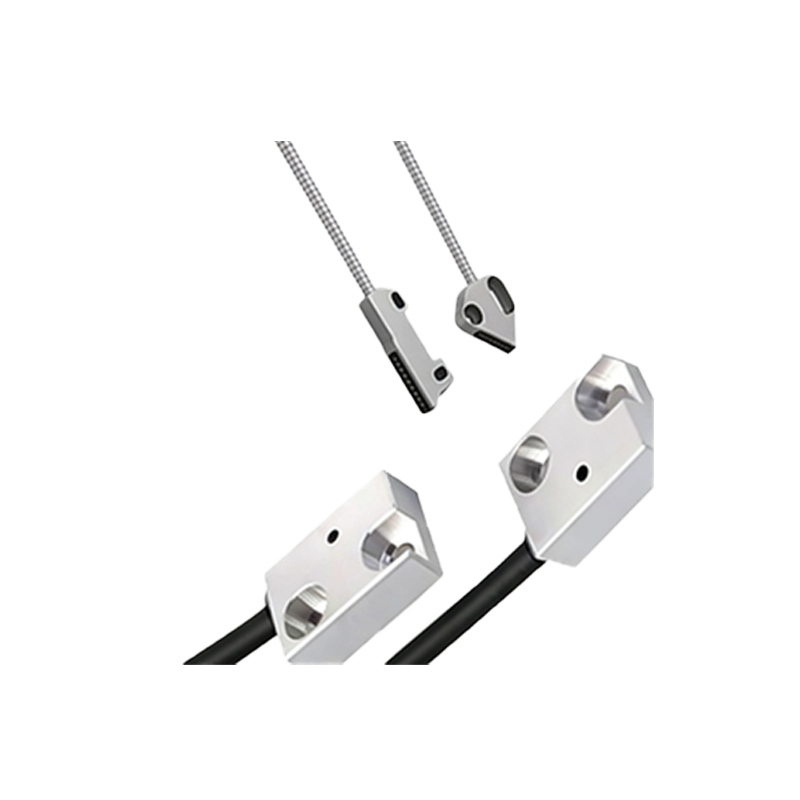
Environmental Factors Affecting Stability
Industrial environments pose significant challenges to sensor precision. Dust, smoke, and vapor can scatter the light beam, reducing the effective range and causing signal drift. Temperature fluctuations also impact the performance of semiconductor components inside the sensor, altering the wavelength stability. For example, in a steel mill, ambient temperatures exceeding 50°C can shift the sensor's detection threshold. To mitigate this, engineers should use sensors with built-in temperature compensation and IP67 or higher ingress protection ratings. Additionally, ambient light from welding arcs or high-intensity discharge lamps can saturate the receiver, leading to false triggers. Shielding the sensor with optical filters or using modulated light (pulsed at a specific frequency) helps reject stray light interference.
Target Surface Characteristics and Material Behavior
The surface finish, color, and material composition of the target directly influence sensor precision. A matte black surface absorbs more light than a shiny metallic one, requiring a higher gain setting, which may introduce noise. For transparent objects like glass bottles, a diffuse sensor may fail to detect edges, while a polarized retro-reflective sensor can overcome this by filtering out reflections. Similarly, rough surfaces scatter light unevenly, reducing the effective sensing distance. Engineers must calibrate the sensor's sensitivity and hysteresis to match the target's reflectivity. In high-speed packaging lines, even a 0.1mm variation in target alignment can cause detection errors, making beam spot size and alignment critical.
Response Time and Switching Frequency
In dynamic applications, such as counting parts on a conveyor belt, the sensor's response time dictates its precision. A fast response time (e.g., 0.5 ms) allows the sensor to detect high-speed objects without missing pulses, but it also makes the system more susceptible to noise spikes. Conversely, a slower response filters out transient signals but may miss rapid events. Engineers must balance the sensor's switching frequency with the target velocity. For example, a sensor with a 1 kHz switching frequency can reliably detect objects moving at 10 m/s if the target width is at least 10 mm. However, if the target has irregular edges, the sensor's trigger point may vary, introducing jitter. Using a discrete output with adjustable time delay or a fail-safe logic (e.g., light-on/dark-on) can improve consistency.
Electrical Interference and Grounding Practices
Precision is also compromised by electrical noise from nearby motors, inverters, or welding equipment. Poor grounding or improper cable routing can induce voltage spikes on the sensor's signal line, causing false triggers or missed detections. To maintain accuracy, engineers should use shielded twisted-pair cables and avoid running sensor lines parallel to high-power cables. Additionally, the sensor's power supply must be stable within ±10% of the rated voltage; fluctuations can alter the receiver's threshold level. In critical applications, using a sensor with a built-in microcontroller for self-diagnostics and digital filtering can enhance noise immunity. Regular calibration against a known standard, such as a test target, ensures long-term reliability.