Overview of Photoelectric Sensors
As an electrical engineer in the automation industry, understanding the different types of photoelectric sensors is crucial for selecting the right component for your application. Photoelectric sensors use light beams to detect objects, and they are widely used in packaging, material handling, and robotic systems. Based on the operating principle and design, these sensors can be broadly divided into three main categories: through-beam, retro-reflective, and diffuse. Each type offers distinct advantages depending on the environment, distance, and target characteristics.
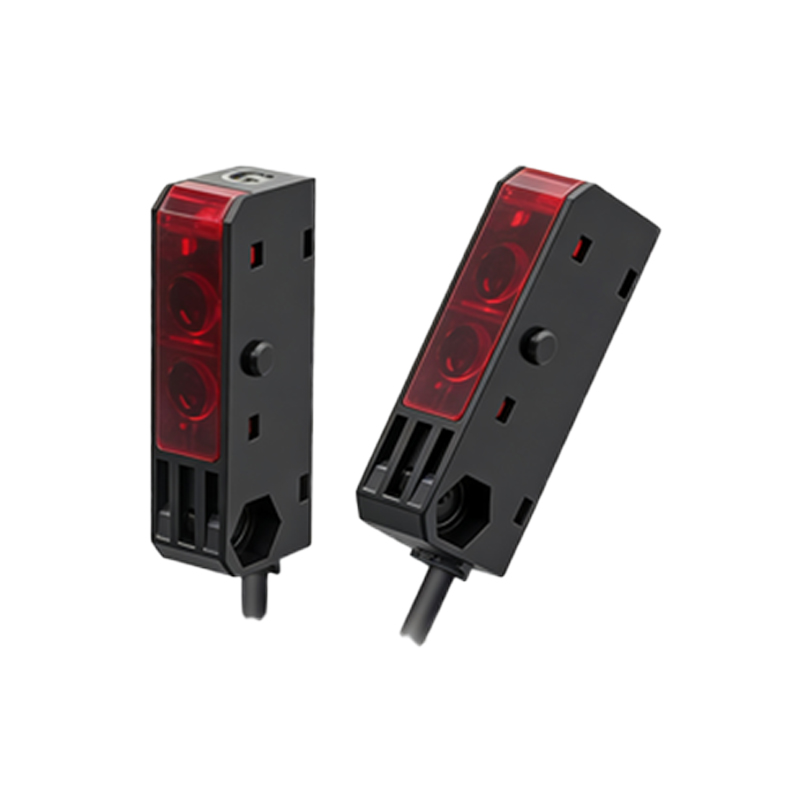
Through-Beam Sensors: The Most Reliable Solution
Through-beam sensors consist of two separate units: a transmitter and a receiver. The transmitter emits a continuous light beam to the receiver, and the sensor triggers when the beam is interrupted by an object. This design provides the longest sensing range, often exceeding 30 meters, and offers the highest reliability even in dusty or dirty environments. However, installation is more complex because both units must be powered and aligned. For critical safety applications, I recommend through-beam sensors due to their immunity to target color and surface reflectivity.
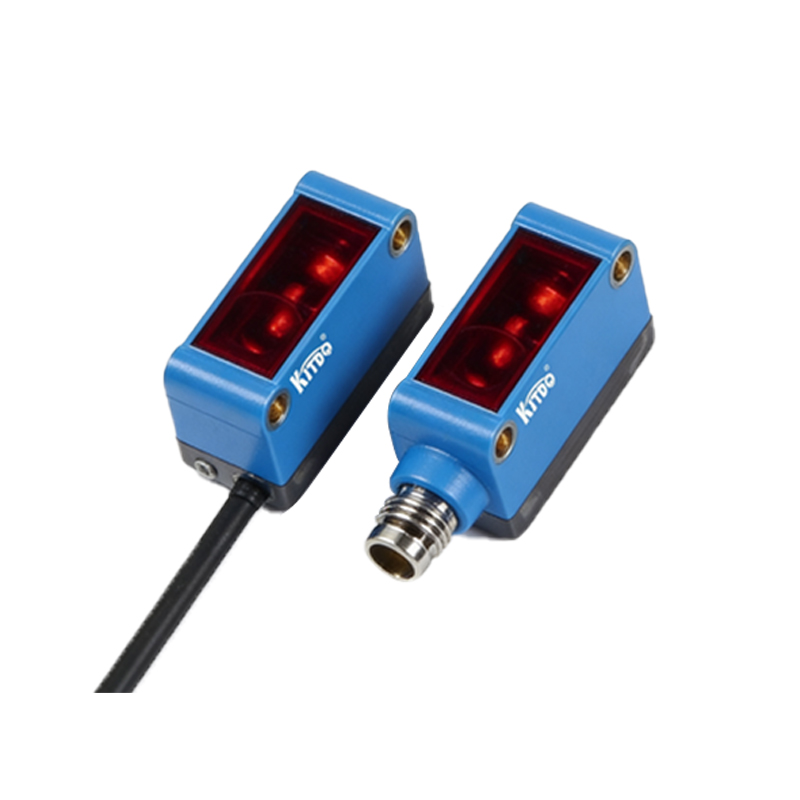
Retro-Reflective Sensors: Ease of Installation with Good Performance
Retro-reflective sensors combine the transmitter and receiver in a single housing. They work by emitting light toward a reflector, which returns the beam to the receiver. When an object blocks the light path, the sensor activates. These sensors offer a shorter range than through-beam types, typically up to 10 meters, but they simplify wiring and alignment. A key point for engineers is to ensure the target is not highly reflective, as false detections may occur. For applications requiring moderate range and quick setup, retro-reflective sensors are a standard choice.
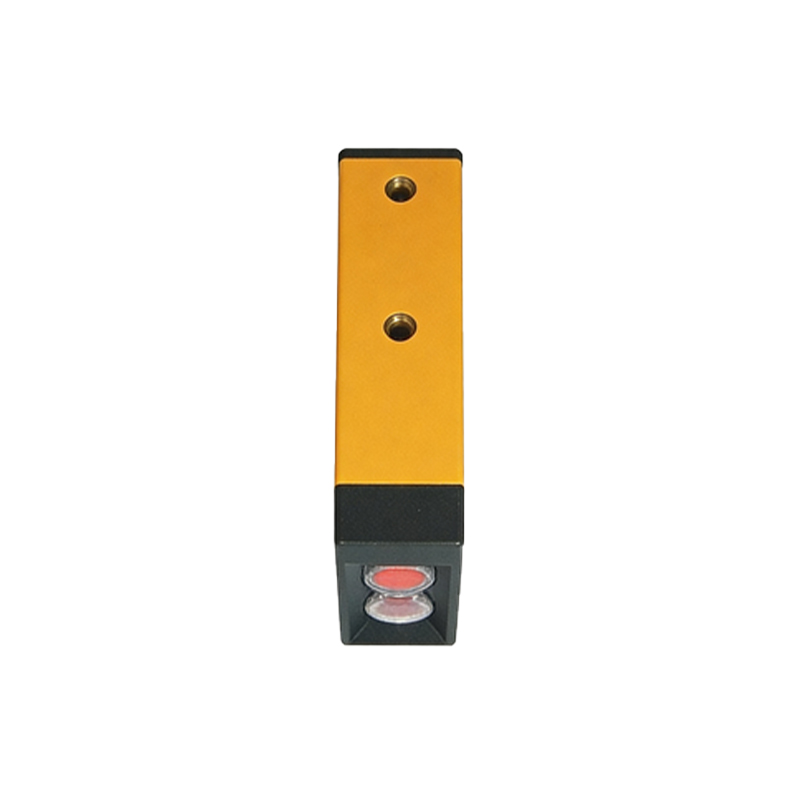
Diffuse Sensors: Versatile and Cost-Effective
Diffuse sensors also have the emitter and receiver in one unit, but they detect light reflected directly from the target surface. There is no separate reflector. The sensor triggers when the reflected light intensity exceeds a threshold. These sensors are compact and easy to mount, but the sensing range is limited to about 2 meters and is highly dependent on target color, texture, and angle. For detecting dark or matte objects, you may need to adjust sensitivity or use a background suppression variant. Diffuse sensors are ideal for short-range applications in conveyor systems.
Specialized Variants: Background Suppression and Fiber Optic
Beyond the three main types, engineers should be aware of specialized photoelectric sensors. Background suppression sensors use triangulation to ignore objects beyond a set distance, making them perfect for detecting small parts against a reflective background. Fiber optic sensors, on the other hand, use glass or plastic fibers to separate the electronics from the sensing head, which is useful in high-temperature or confined spaces. These variants are often necessary in demanding industrial settings.
Conclusion and Selection Criteria
In summary, photoelectric sensors can be divided into through-beam, retro-reflective, and diffuse types, with additional options like background suppression and fiber optic sensors. When choosing a sensor, consider factors such as sensing range, target material, environmental conditions, and installation constraints. As an engineer, I always advise starting with the application requirements and then matching them to the sensor's capabilities. Proper selection ensures reliable operation and reduces maintenance costs in automated systems.